Community Connection Part One - IndiaFOSS 2026
This is the part one of our interactions with the booth visitors at the IndiaFOSS 2026 conference. While handing out special Fedora Project branded swags, we were the conduits for the community's sentiments both as users and contributors to free and open source software projects like that of ours.

We took some time to interact with the booth visitors at the IndiaFOSS 2026 conference's Red Hat Community Booth. While representing Fedora Project on the event grounds and handing out special swags, we were the conduits for the community's sentiments both as users and contributors to free and open source software projects like that of ours.
09:36am IST
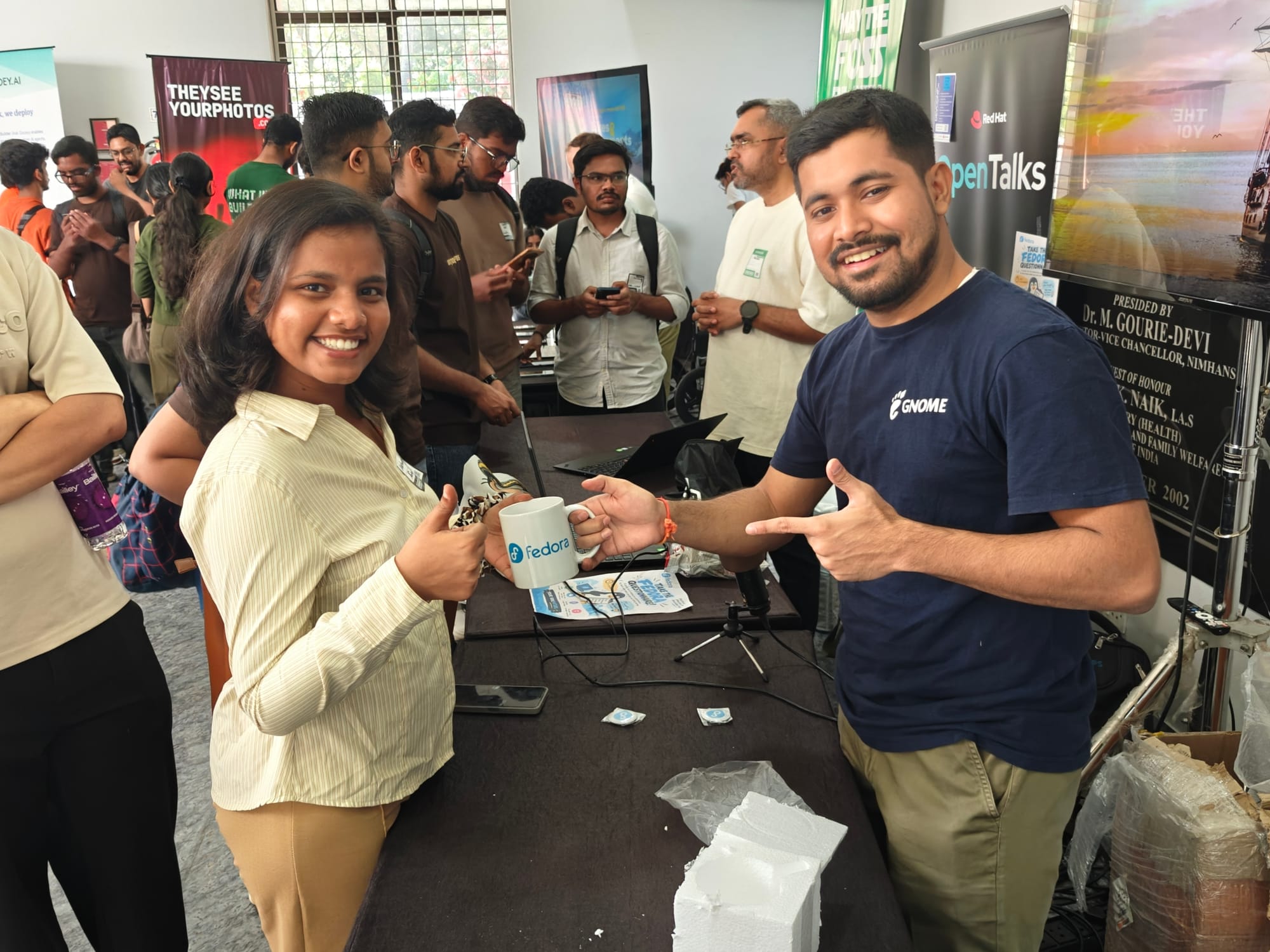
- Zorin OS vs. Fedora Linux
Both use GNOME and yet Zorin OS offers a more Windows-like experience out of the box, while Fedora Linux provides a comparatively stock GNOME experience. - Software Freshness
Zorin benefits from Ubuntu's stability, but its software packages can be considerably older as compared to Fedora Linux where updates arrive much faster after testing. - Fedora's Positioning
The distribution bridges the contentious gap between beginner friendly distributions and faster moving ones, by balancing software freshness and overall stability. - Raspberry Pi
Fedora support ARM64, and various other architectures, including Raspberry Pi, but the releases can take longer to arrive sometimes due to the closed kernel sources. - Experimentation Encouraged
Fedora Linux is worth trying on any hardware for general purpose users but there is no need to replace whatever works if it already meets your requirements. - Foundational Freedom
Users should explore GNU/Linux distributions based on curiosity and learning rather than simply switching for the sake of it to face workflow problems. - Distribution Movements
Fedora Linux is a natural intermediate step before experimenting with more advanced GNU/Linux distributions like Arch Linux, Gentoo Linux and others. - Experimental Education
College students should consider experimenting with GNU/Linux distributions to learn the internal parts without risking their everyday systems in the process. - Generative Enhancements
Generative systems should be treated as a tool that enhances human capabilities rather than a replacement for human involvement in software development. - Usage Responsibility
Generated codebase require proper requirements gathering, human oversight and deep auditing to ensure that the result does not lead to poor outcomes. - Learning Fundamentals
Beginners should avoid excessive dependence on AI tooling, in order to help long-term capabilities and build strong fundamentals with basic documentation. - Dependent Consumerism
Free services can create dependency with providers potentially introducing restrictions with enshittification, so users should remain mindful of privacy concerns. - Privacy Engagements
In Fedora Project community, we value meaningful conversations and useful feedback over collecting emails in exchange for our promotional merchandise. - Getting Started
Documentation writing and quality assurance are excellent beginner starting points, as they help with bridging the gap between users and contributors. - Advanced Contributions
They can gradually move towards issue tracking, design creation, codebase writing and community management, as they grow familiar with the ecosystem. - Container Security
Podman comes bundled with Fedora Linux with the support for rootless execution of container payloads along with first class SELinux support.
10:00am IST
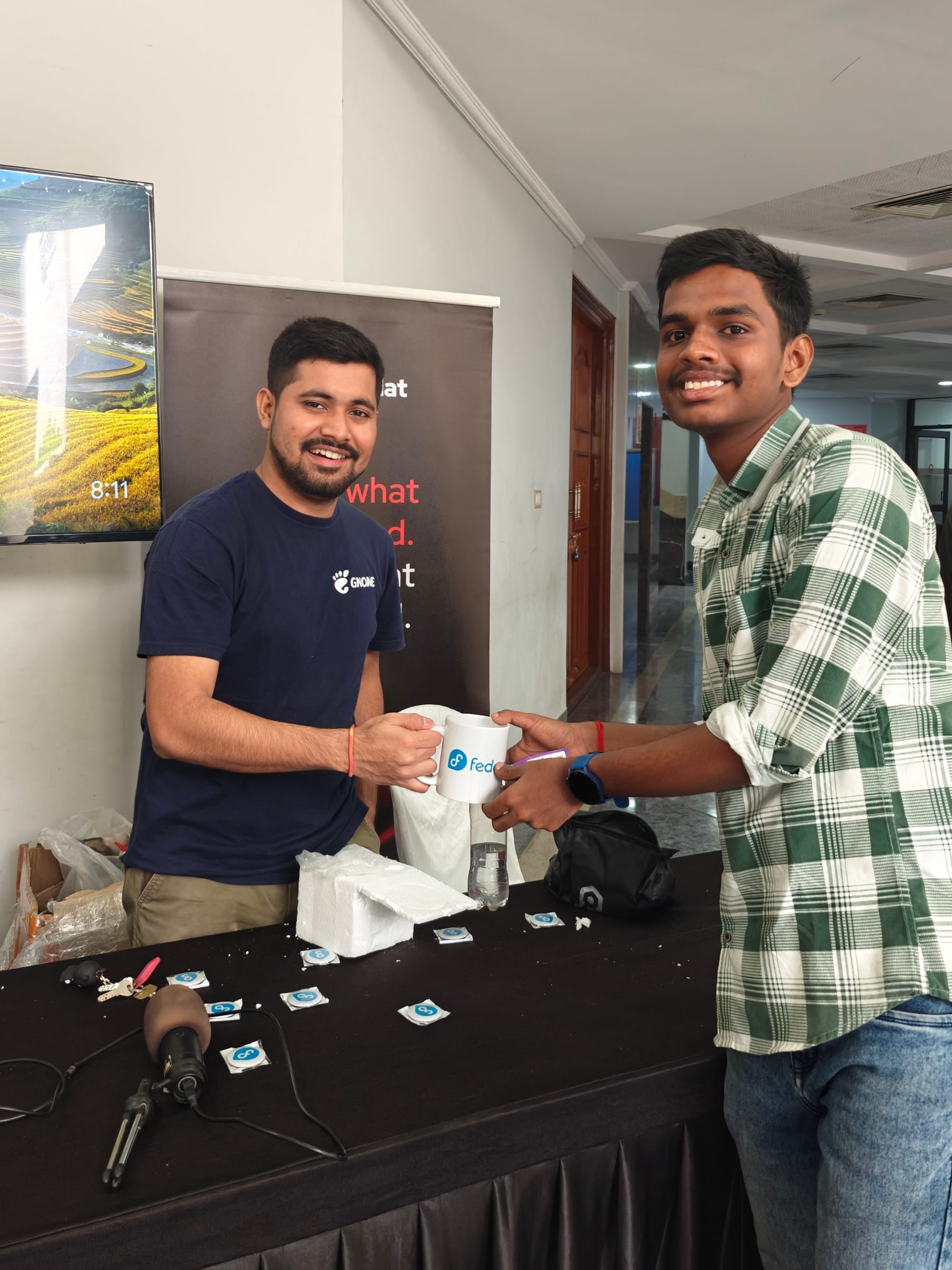
- Ubuntu Linux vs. Fedora Linux
Fedora Linux releases every six months while Ubuntu LTS prioritizes five year support and hence, the former delivers newer software much faster. - Upstream First
Fedora Linux aims to ship upstream updates within a shorter timeframe, often around a week after release, whereas Ubuntu paces behind for stability. - Innovation Focus
Fedora Linux distinguishes itself with adopting emerging technologies and leading the pack before they become mainstream across other distributions. - Controversial Standards
Systemd adoption was controversial at its time, but it soon found its way into major contemporary GNU/Linux distribution shortly after our example. - Enterprise Security
Using SELinux, Fedora Linux provides strong system-level protection, with Podman for lightweight rootless container execution against Docker. - Staying Current
Newer development tools with Fedora Linux releases help users and builders to cater for the stakeholders of today and tomorrow, and not of yesterday.
10:08am IST
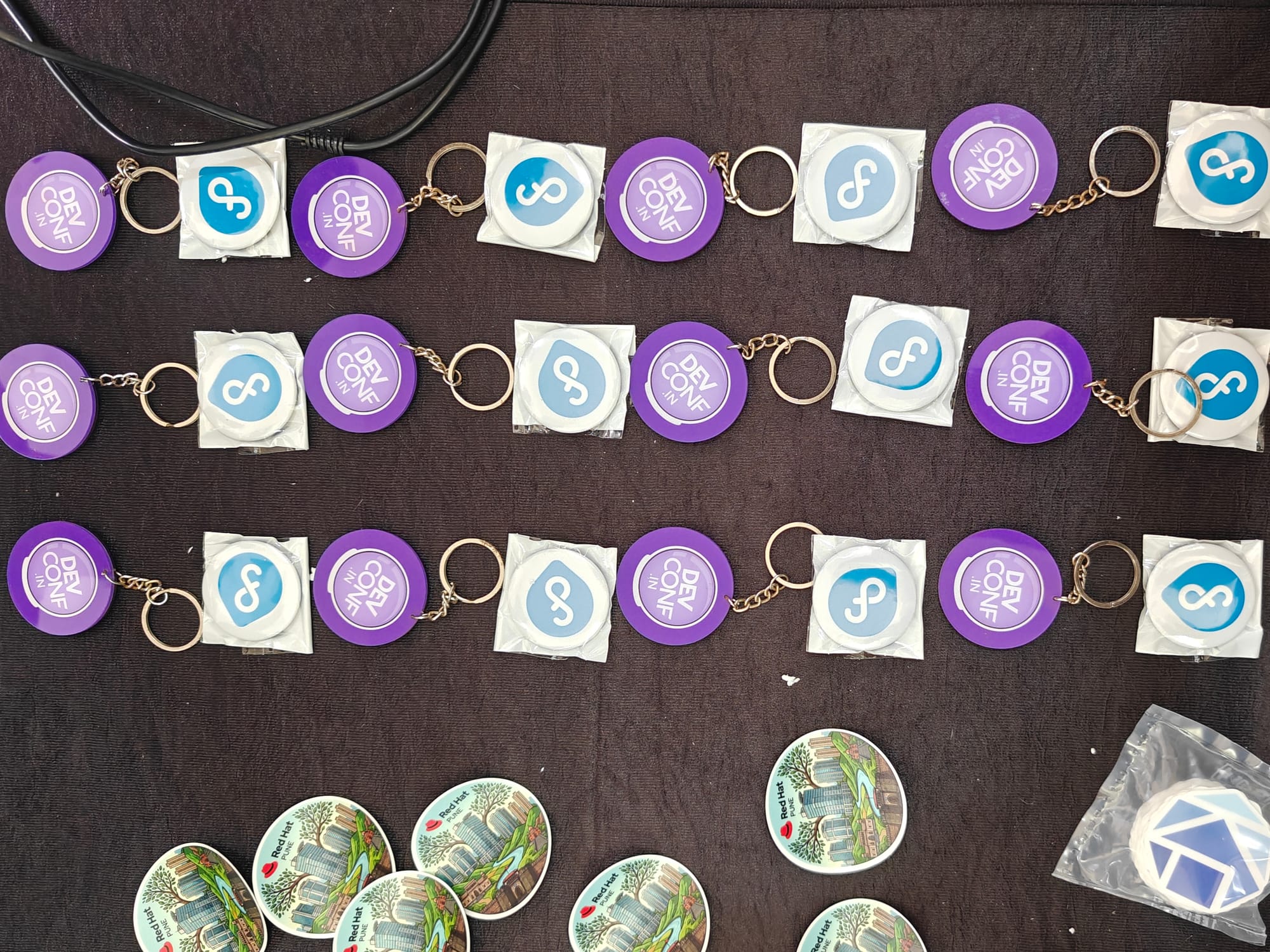
- Leading Edge
Fedora Linux prioritizes delivering recent software updates while maintaining usability and stability of the general GNU/Linux distribution experience. - Balancing Updates
Fedora Linux aims to deliver updates relatively quickly, typically within a week of its upstream release, while holding back broken updates until fixed. - Community Maintenance
With a heavy reliance on voluntary developers and community maintainers, Fedora Linux attempts shipping updates as quickly as possible. - Security Updates
CVE addressing security patches are prioritized and pushed as soon as they are ready to be shipped to minimize the vulnerability exposure period. - Quality Assurance
An integrated update management system allows community members to test proposed updates before wider GNU/Linux distribution adoption ensues. - Getting Involved
Contributors can help test updates without from virtual machines and live environment without replacing their existing operating systems here.
10:16am IST
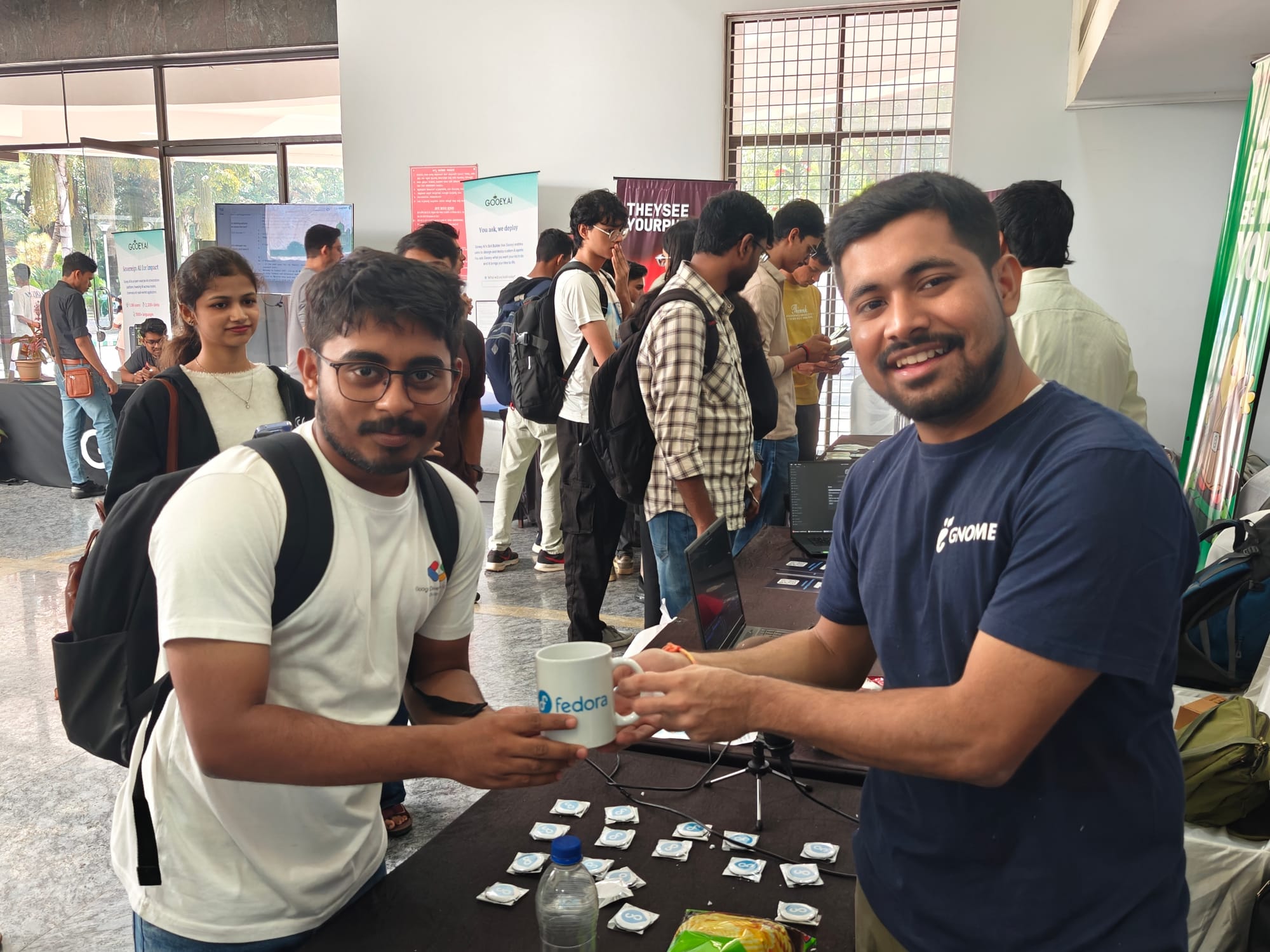
- Educational Institutions
Fedora Linux is adopted in St. Joseph Engineering College, Mangalore across their computer systems, for student development and general purpose. - Contribution Pathways
One need not be a programmer to contribute to Fedora Project, when they can do so through designing, documentation, testing, triaging and other ways. - Packaging Technologies
Flatpak's fully open-source nature and support for federated infrastructure is preferred over Snap's centralized software serving approach by the folks. - Upstream Innovation
Fedora Linux introduces technologies such as Pipewire and Wayland that eventually greatly influence other GNU/Linux distributions down the road. - Enterprise Contributions
Fedora Linux serves as the upstream foundation for CentOS Stream and ultimately, Red Hat Enterprise Linux so the contributors have the agency. - Career Opportunities
Students are encouraged to explore opportunities through Red Hat's career portal and learn about various roles within the organization communities.
10:26am IST
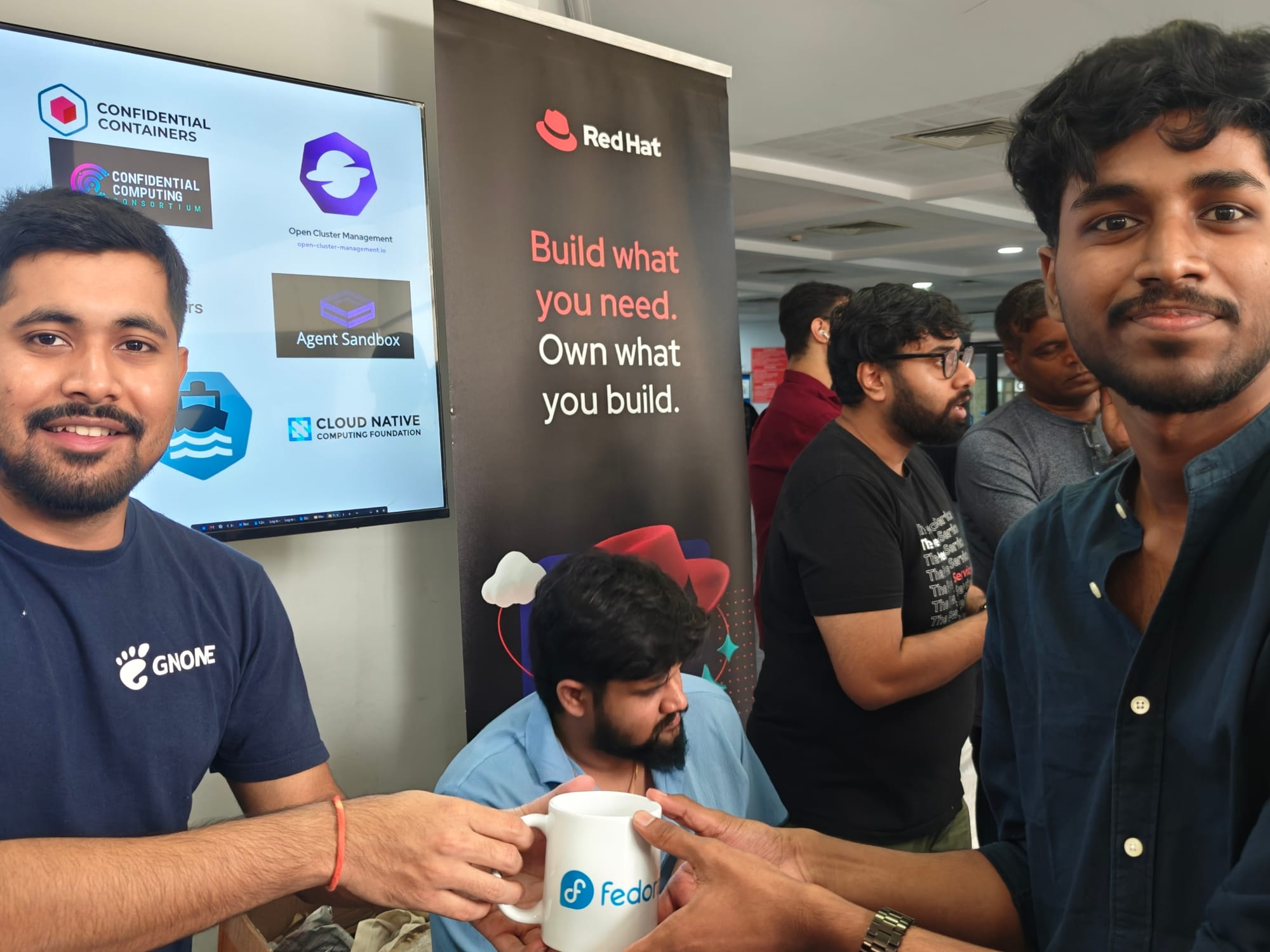
- Agent Security
How do we identify compromised polluted autonomous agents within a swarm of AI agents operating towards a shared initially provided goal? - Ring Architecture
How elevated memory access privileges could help understand the potential fault when malicious activity reaches the deeper memory layers? - Without Logging
Identifying malicious autonomous agents without execution footprints can be quite the challenge with the entire ecosystem being treated as a black box. - Compromise Detection
Determining memory access history, and isolating affected regions could help prevent further compromise, which was also in Anthropic's research.
10:48am IST
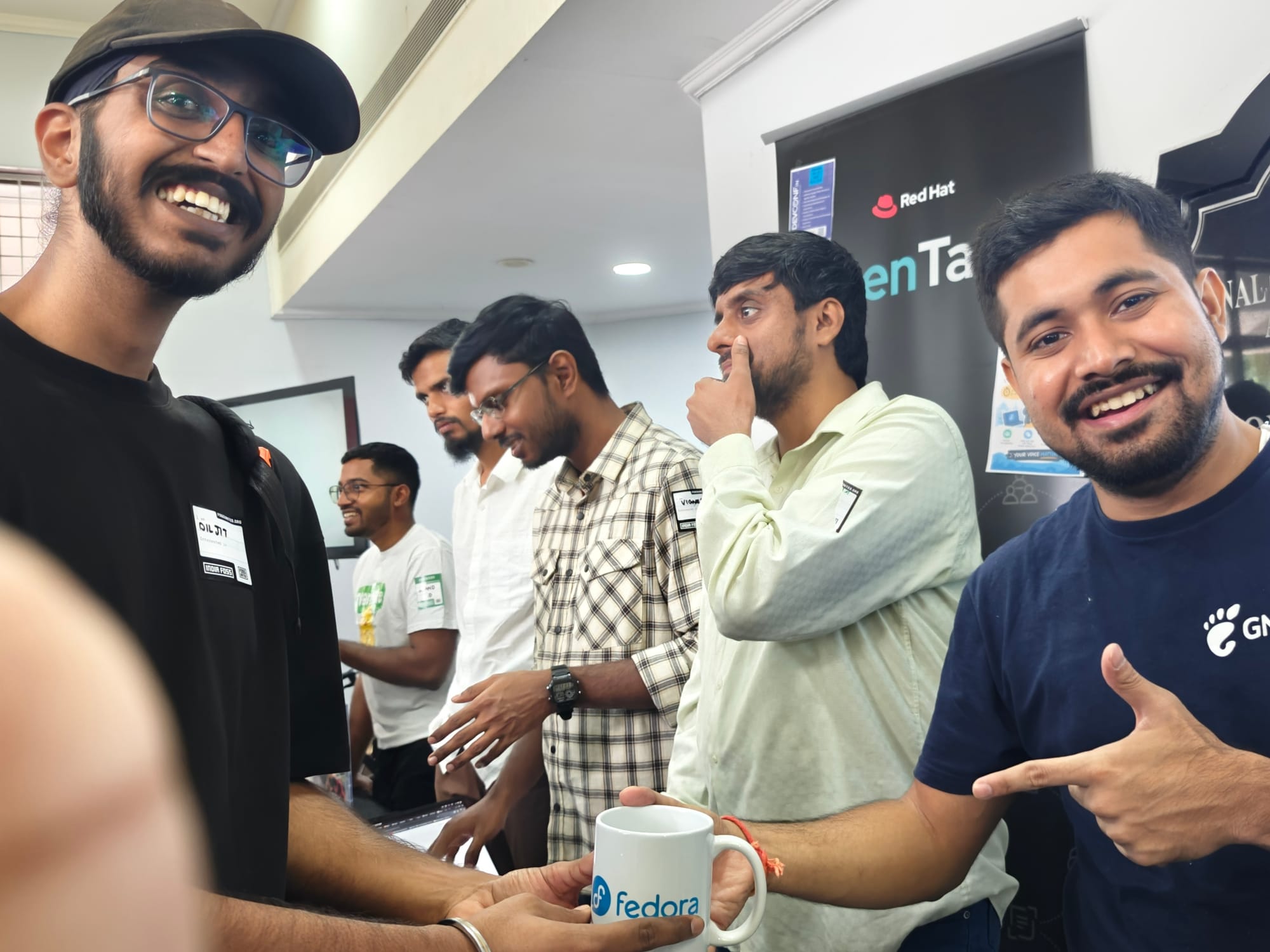
- CentOS Evolution
From having limited upstream contribution to having unlimited midstream exposure, CentOS Stream helped evolve the entire ecosystem. - Midstream Bridge
CentOS Stream helps bridge Fedora Linux and Red Hat Enterprise Linux by being an intermediate platform for development and security.
10:56am IST
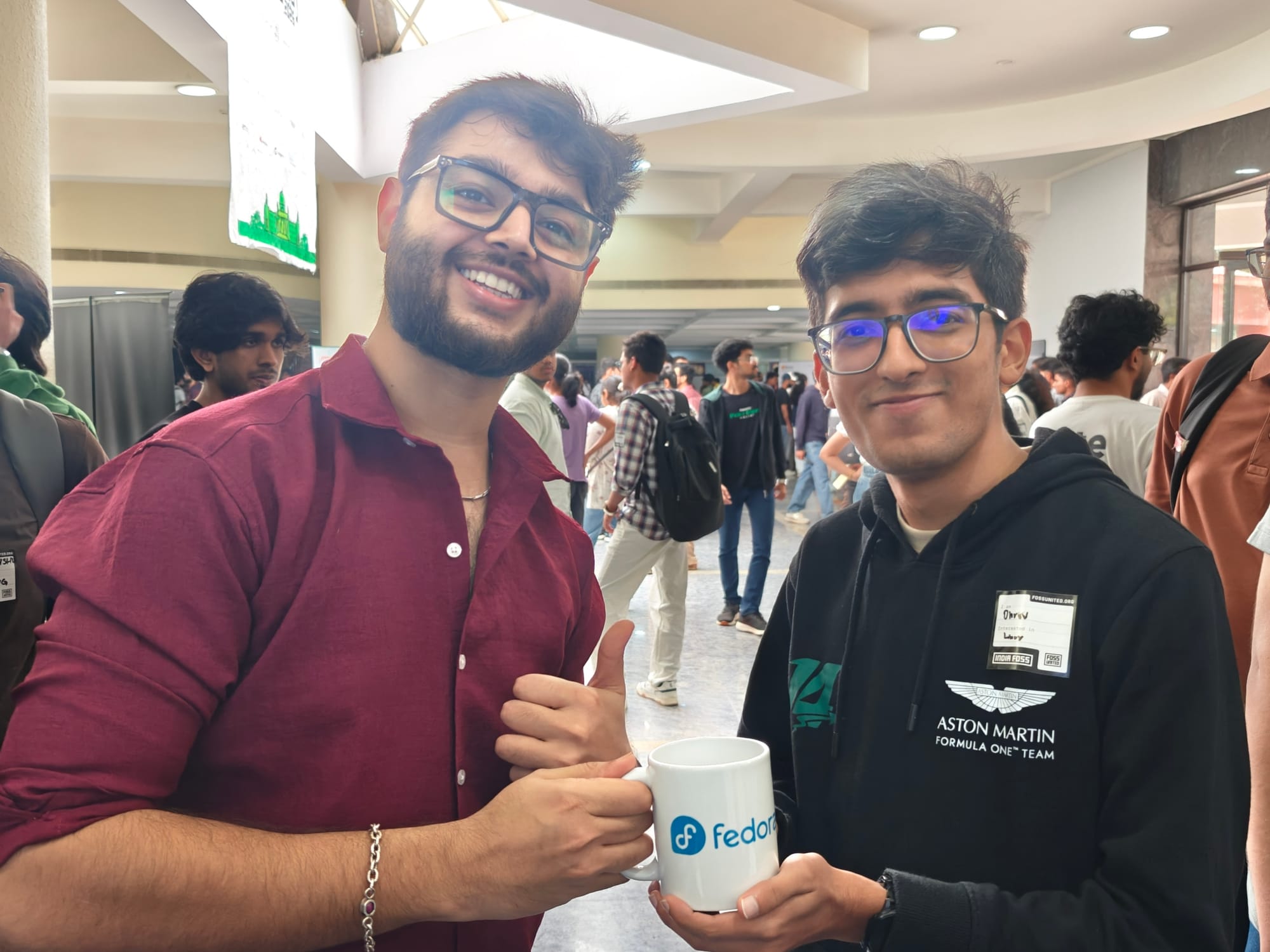
- Personal Experience
Using Fedora Linux first as daily drivers motivates people to contribute back whenever they face issues or identify opportunities in their tools. - Giving Back
Support received by Fedora Project motivates people to contribute in whatever manner they can, while solving real world problem statements. - General Affordability
In various government schools, free and open source software can make technology accessible to students' and teachers' existing devices. - GNU/Linux Entertainment
Various people still depend on Microsoft Windows for graphic drivers and video games particularly from vendors like AMD and/or NVIDIA. - Community Driven
Communities collaborate to address security issues and software bugs that have been identified by users who have faced similar incidents. - Starting Small
People should not feel pressured to become core maintainers immediately when they could start small with fellow contributors to rely on.
11:20am IST
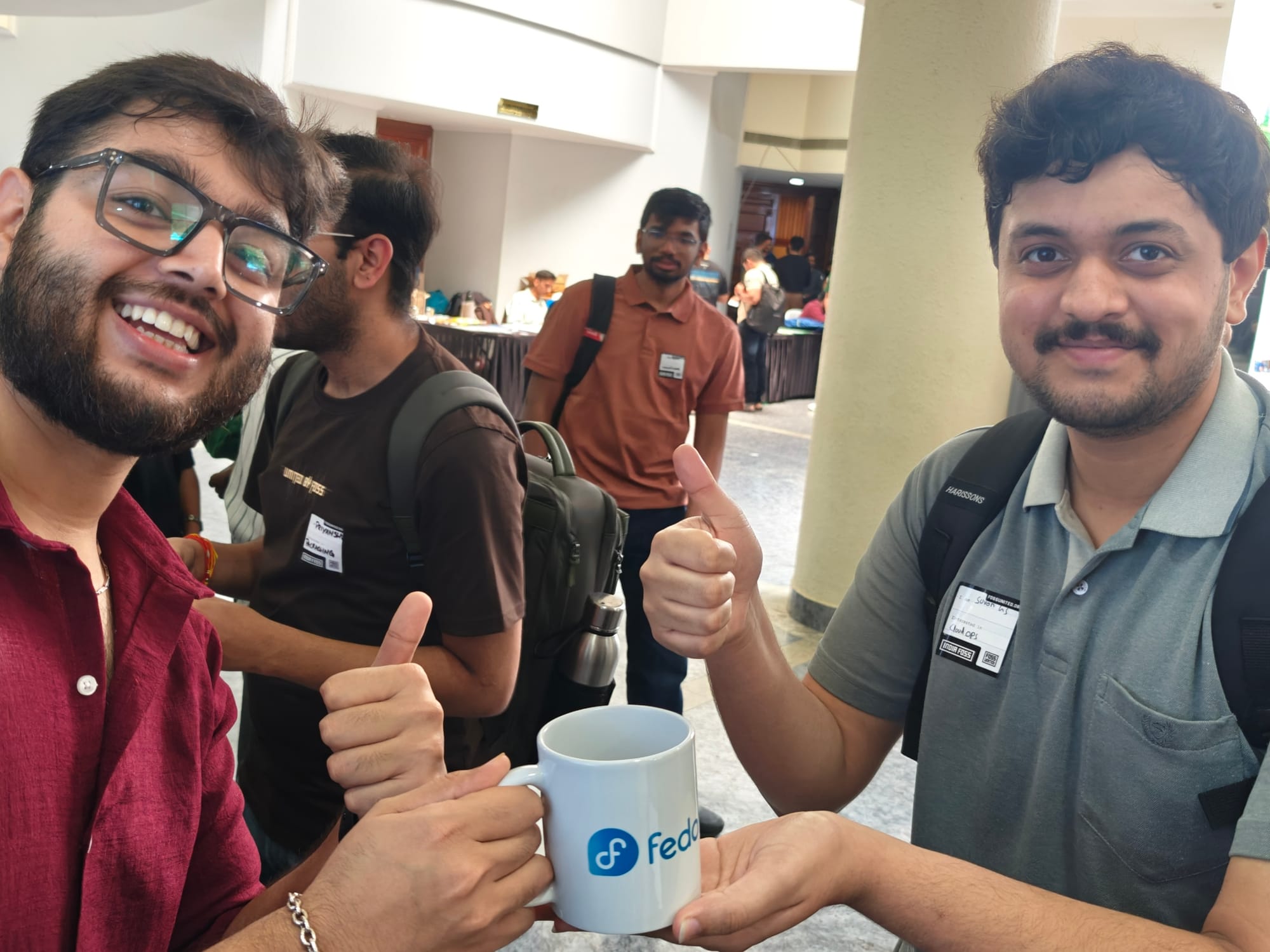
- StratOS Linux
Using Bedrock Linux to integrate components from multiple alternatives to allow users to combine packages, kernels, components in here. - Kernel integration
Fedora Linux's official kernel was demonstrated to be integrated with custom dotfiles and SwayFX environment to include DNF installer.
11:26am IST
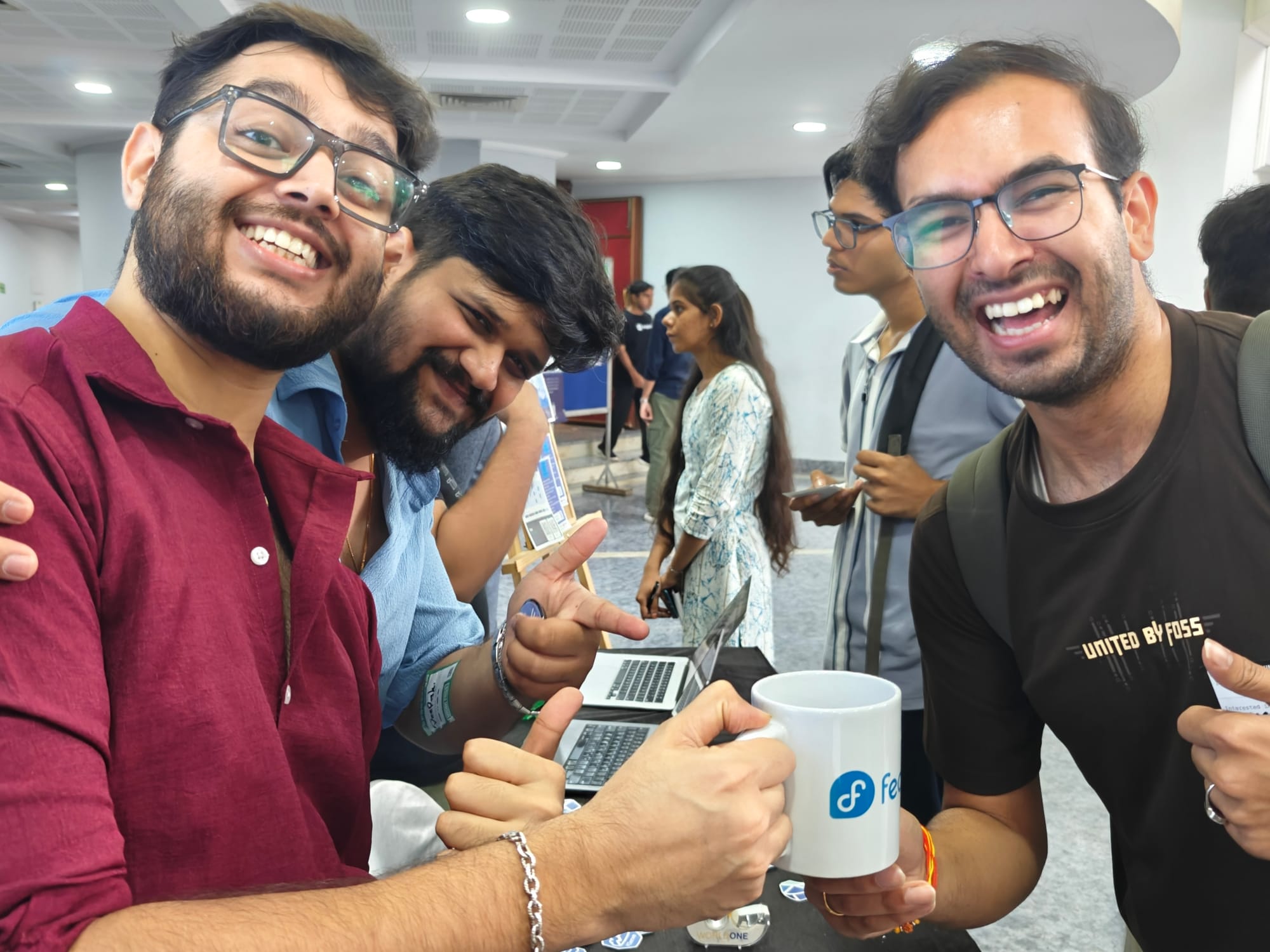
- Battleship Gaming
Gridlock, a battleship inspired videogame written purely in Rust and GTK4 UI with minimal memory footprint was demonstrated live. - Development Environment
They mentioned how Fedora Linux enabled them to build on the most recent codebase and toolkit, with just how fast we ship the updates.
11:34am IST
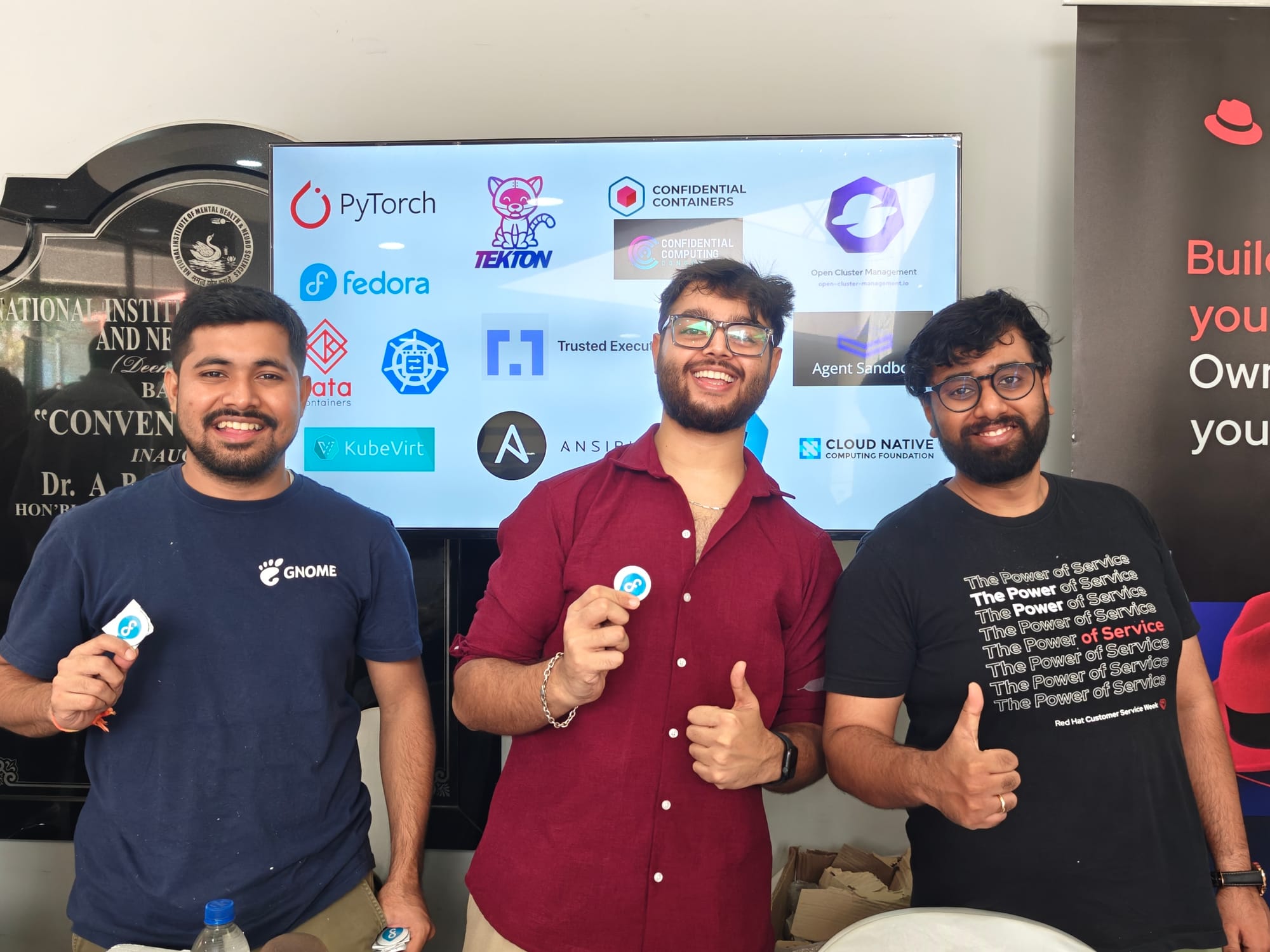
- Open Background
With humble start from beginner alternatives to moving into NixOS from the first year of the college education, NixOS was used for four years. - Blue Experience
After initial experiments with Manjaro Linux, Fedora Linux outgrew the popularity for its mature ecosystem and maintenance practices it has. - NixOS Adoption
Finally settling into NixOS after years of distrohopping, it was realized that the NixOS workflow suits them the best with Fedora Linux after it. - Declarative Configuration
Like NixOS, Fedora Linux's Atomic Variants also support declarative configuration, thus providing them alternatives for trying it again. - Contribution Potential
Interest was expressed in helping Fedora Linux evolve more on system configuration drawing inspiration from contemporary alternatives. - Proposed Pathways
With an encouragement to document ideas, identifying issues and opening discussions through the active Fedora Atomic forums, they departed.