Day One - FOSSAsia 2026
Switching one long day at FOSSAsia 2026 for another longer one, the first day of the Bangkok event on 09th March 2026 was a whirlwind of free and open source software collaboration having everything from running booths to community networking and from comparative benchmarks to collectible hunting.

After kicking off the FOSSAsia 2026 proceedings with the "choose-your-adventure-flavoured" Community Day, the first day on 09th March 2026 began for me at around 0730am Indochina Time. It took me quite a lot of strength to get myself moving out of bed, but I knew that I had to make it to the conference venue by 1000am Indochina Time to appear in the group photo. I rang up Samyak Jain and we planned to rendezvous downstairs at the hotel reception in about ninety minutes from then. While I had my talk on the Fedora Badges Revamp Project scheduled for the next day, I wanted to ensure that I was able to find some time to rehearse it at least twice per day leading up to the scheduled time. Fifteen minutes were not enough for the number of topics I wanted to cover as a part of my presentation, and as such I wanted to use it as an appetizer or an entry point for those interested to explore the project by themselves. I headed downstairs to get some breakfast bites after having connected with my friends and family from back home. The choices were more or less the same as yesterday, but this time around, I elected to stick with the greens as much as possible, just as Samyak did.
This change in my dietary preference gave me a first-person perspective on just how difficult it ends up being for someone who is vegetarian. While Samyak had his collection of "just-pour-warm-water" packaged food, I had to stick mostly with noodles and salad for the most part. When it came to the origin of the meat products, you would not want your guesses to go wrong, and the language barrier could pose a real problem for the specifics. After an okayish refueling, we stepped out of the hotel premises into a humid Thailand at around 0945pm Indochina Time and were able to reach True Digital Park West in about ten minutes from then. Thankfully, the venue was a whole lot more crowded than the previous day, with a variety of community booths either getting placed or attended by visitors. While this day (and the next day) were exclusive to ticketed personnel, the crowd was definitely a whole lot more than the free-of-charge Community Day (of the day before). I split from Samyak as he left with one of the FOSSAsia 2026 community volunteers to obtain his attendee badge. As I already had the speaker badge, I could dive in headfirst into all the booths and friends that we had on the ground there.
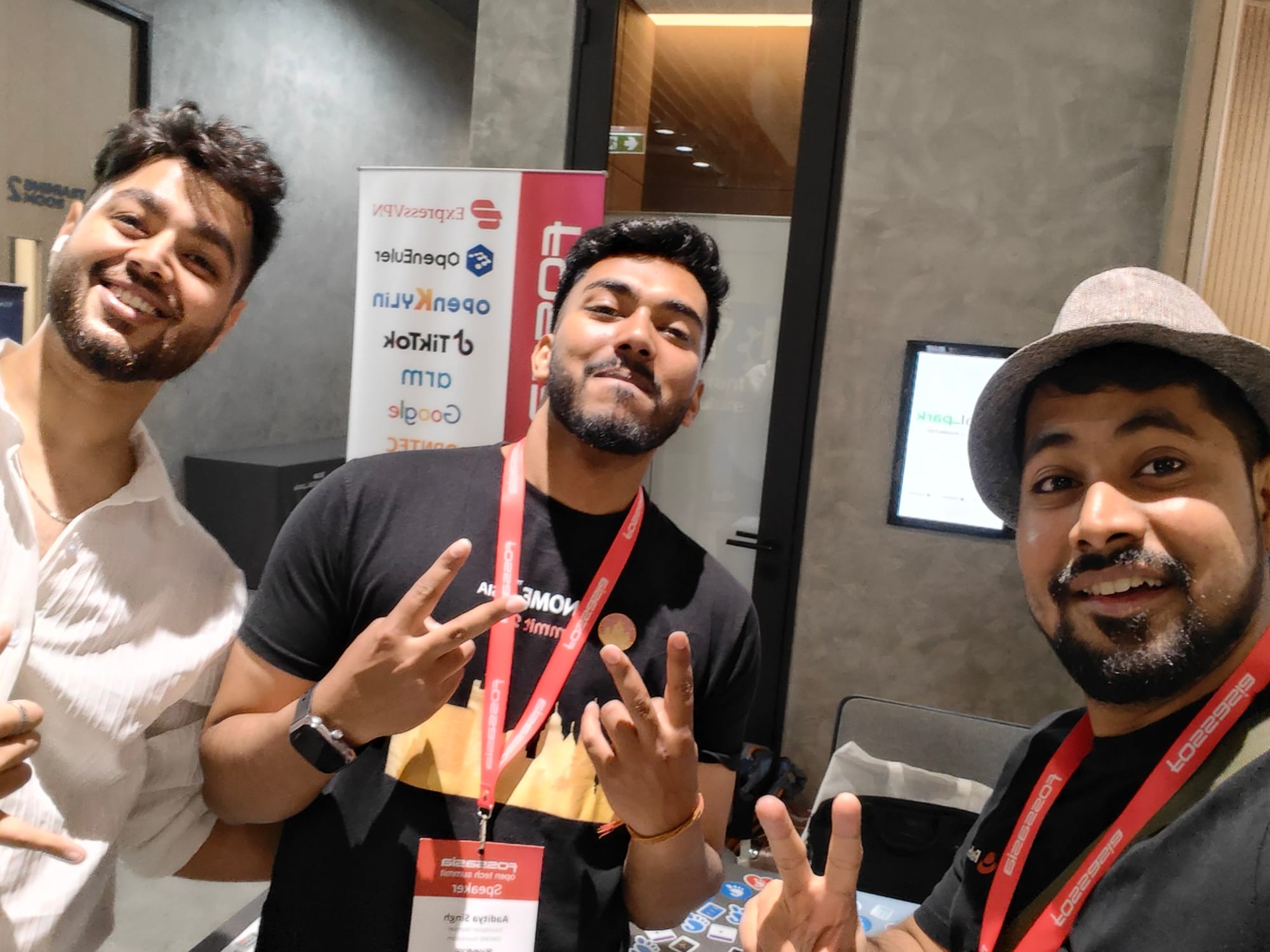
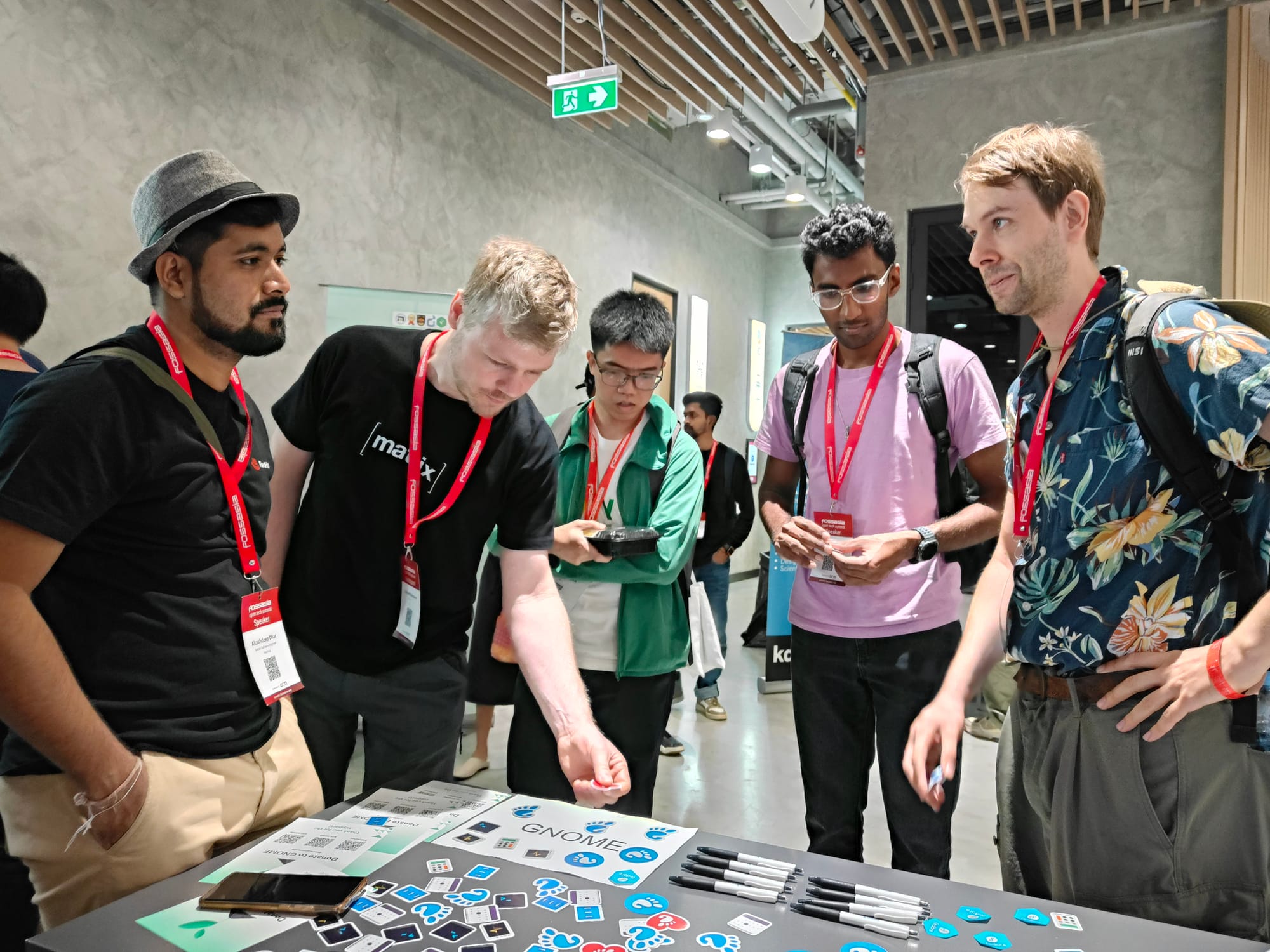
One of the first folks I met up with was, of course, Aaditya Singh from the GNOME Foundation, who was setting up the community booth by himself. With one more pair of hands, we made quick work of the booth setup as we placed both the Fedora Project stickers beside the GNOME Foundation stickers on display there for picking. Aaditya mentioned that he had been still rocking the Fedora Workstation installation that he had set up during the GNOME Asia 2024 event, where I gave away flash drives with distributions having the premier GNOME desktop environment. As he set up his exhibition laptop, he wanted to promote the vanilla GNOME desktop experience which, in his opinion, could not be done better than it was on Fedora Workstation. Funnily enough, we had the KDE e.V. community booth a corridor apart from the GNOME Foundation community booth. Trying not to read too much into the poetically inclined booth arrangements, I decided to visit them next once I was done setting up the operations with Aaditya. Amidst all the upcoming developments there, Tomas was pleased to share his work on the Konsole KDE terminal emulator with various advancements.
From live previews of image thumbnails and semantic colors to proactive sharing of directory layouts and drag-and-drop operations, Tomas' improvements felt really impactful in the quality-of-life areas for any general terminal emulator user. This put the Konsole KDE terminal emulator miles ahead of the container-first terminal emulator, Ptyxis, in my personal opinion. I did have questions about the security of this approach, as some files could be malicious in nature (especially SVG files when it came to image assets), but since Konsole relied on pre-generated thumbnails, this was not a problem. No files were executed in the attempt to make the proactive previews available to the users, and that gave me peace of mind to top off my already excited overall feeling about the feature improvements. After meeting up with Pongsakorn S., another KDE e.V. community member, and picking up some stylish badges, I left a portion of the Fedora Project stickers to be shared from their community booth as well. It was important to commemorate the fact that since the release of Fedora Linux 42, the KDE Plasma variant of Fedora Linux had stepped up to become an actual edition instead of just being a spin.
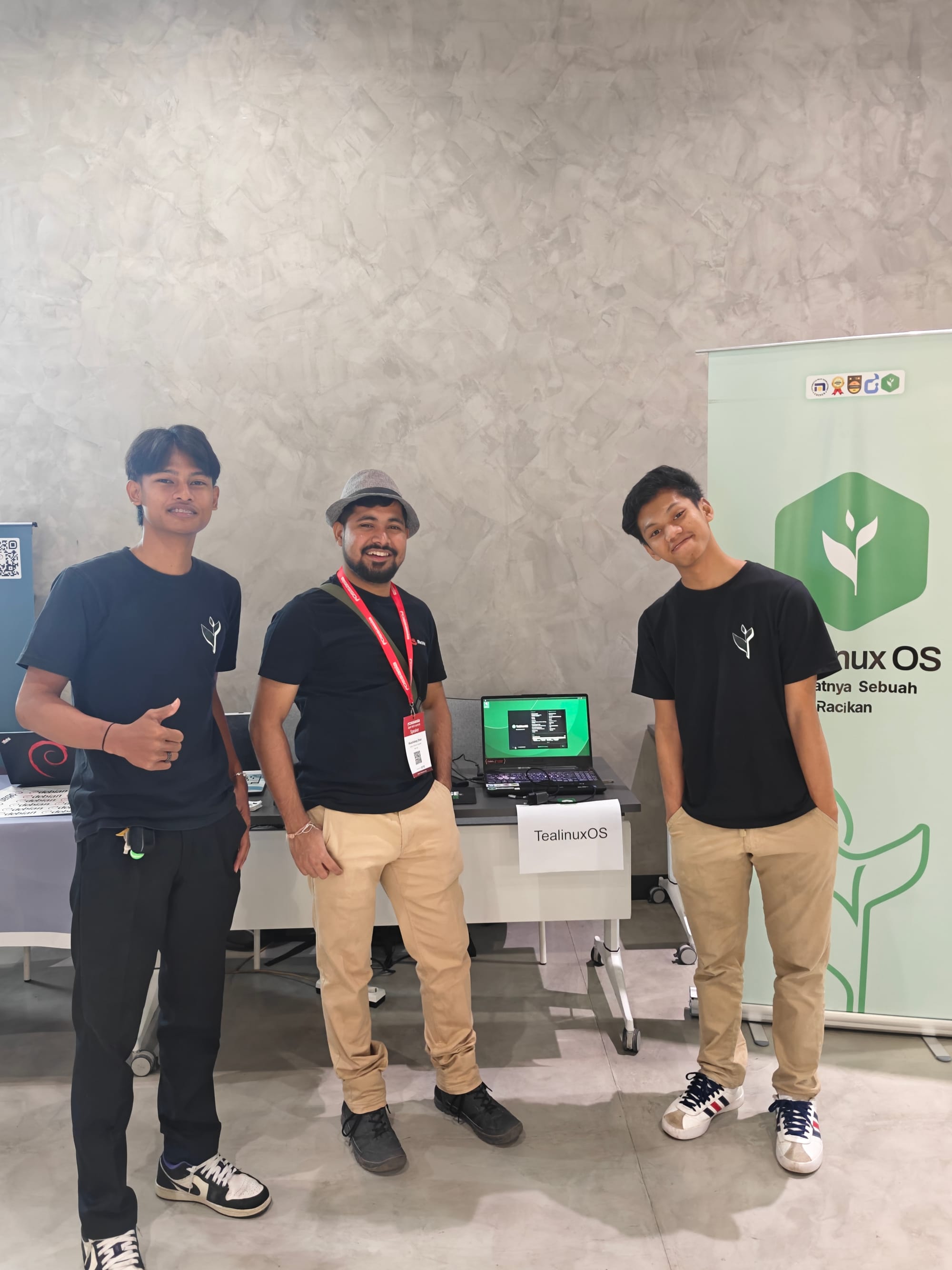
With Samyak returning to the GNOME Foundation community booth, Aaditya was no longer staffing by himself, so I went ahead to have a conversation with the folks at the Debian Project and the TeaLinuxOS Project community booths. It was interesting to note that they had their ground operations set up as early as 0830am Indochina Time. Chatting with the likes of Ananthu CV and Harry LBI from both the community booths respectively gave me distinctive perspectives on their projects and their involvements. While the stalwart Debian Project community has been around for a while, my interest was piqued to see just how TeaLinuxOS made the Arch Linux distribution usable by normal users with the use of the Calamares Installer and curated OOBE tooling. On being requested for advice from our steadfastly evolving Fedora Linux operating system, I emphasized just how important it is for the documentation to have clarity and to be accessible. A lot of contributors to a free and open source software project come from its pool of users, so it cannot be understated just how important it is to ensure that users are treated as first-class citizens and that their issue statements are taken seriously.
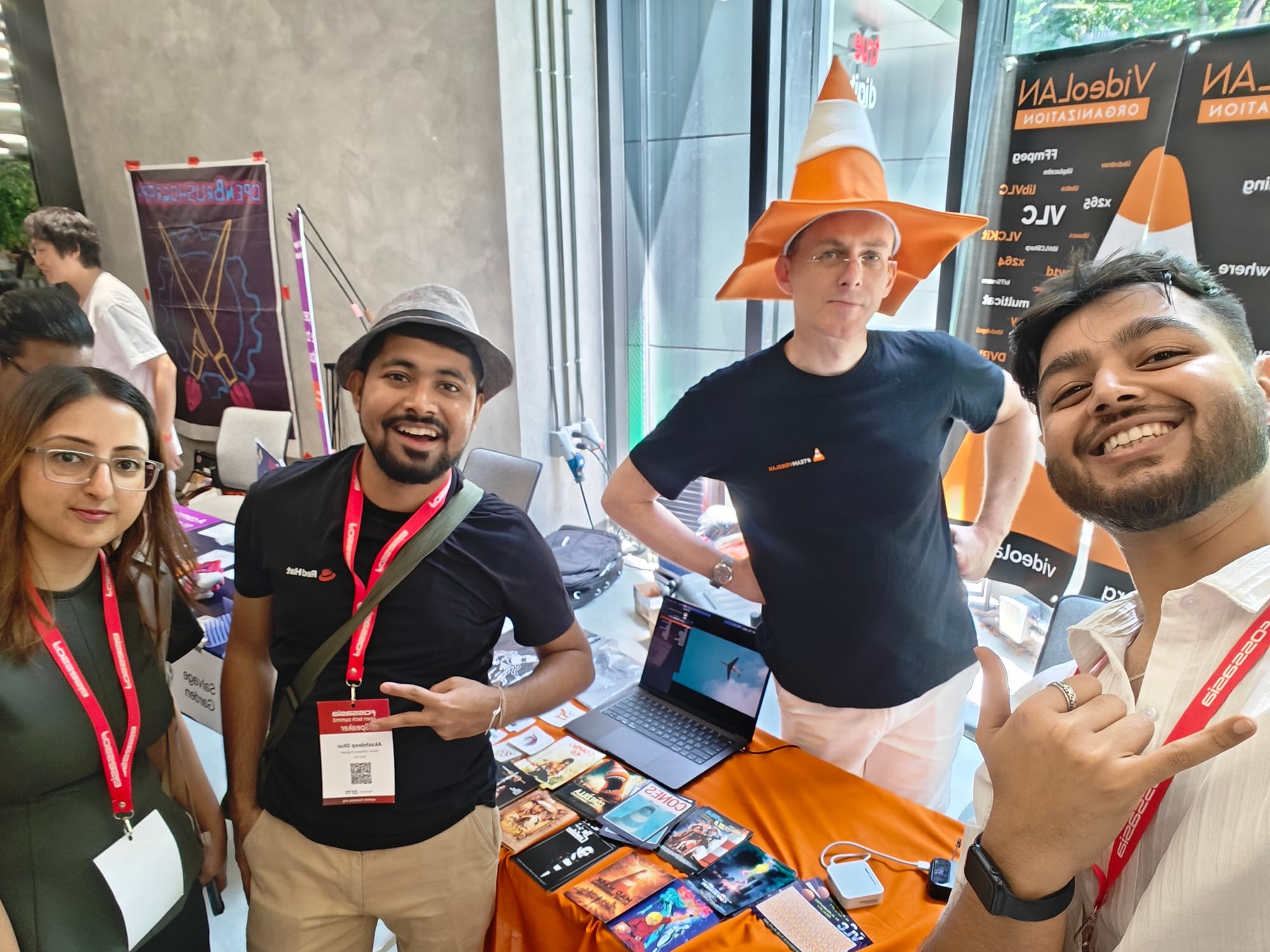
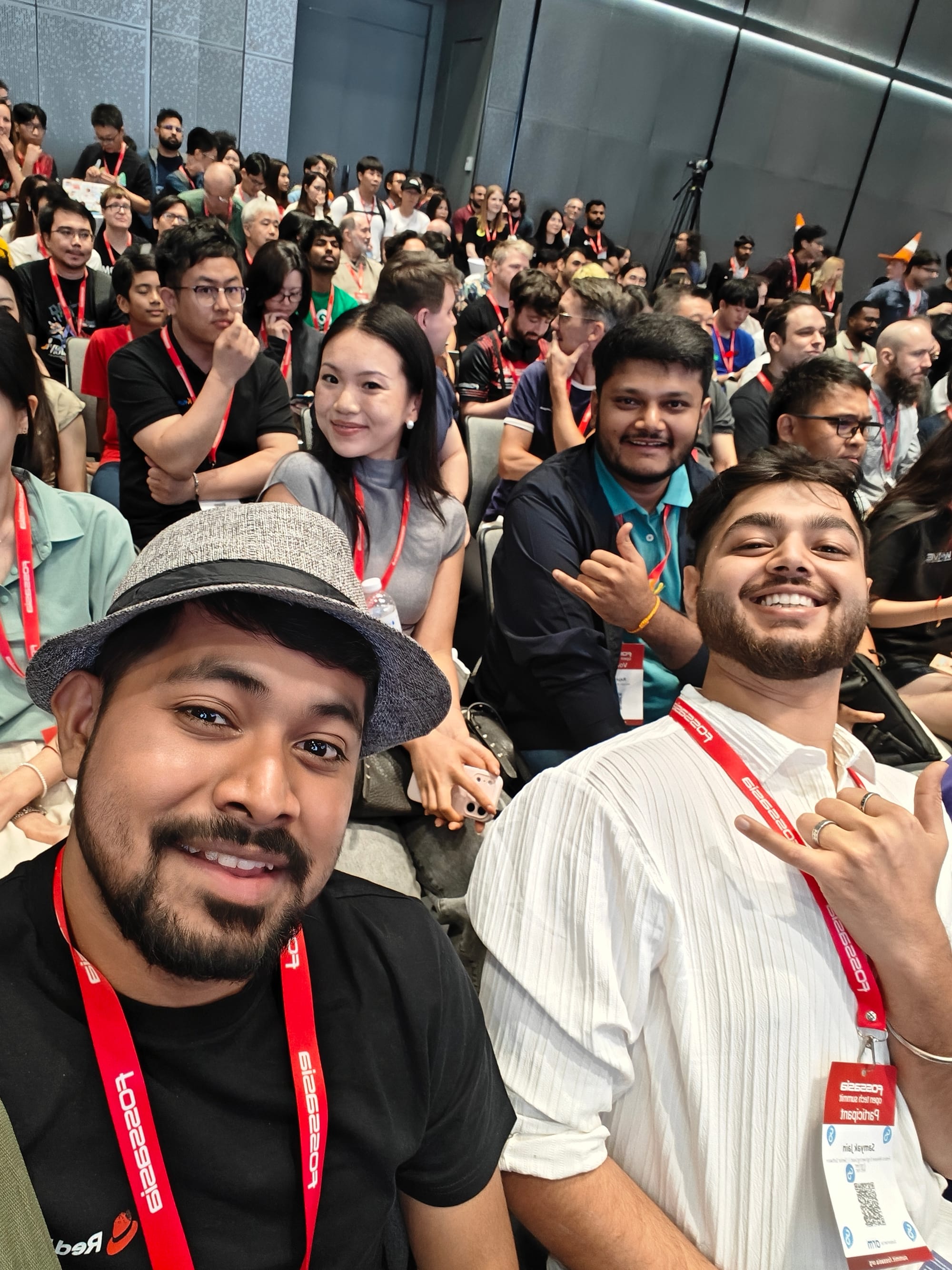
I departed further into the wider collective of community booths after having taken some pictures with these folks at their community booths. I was halted at the entrance by Wendy Ha, who was just arriving at the conference venue then and wanted me to meet a CNCF ambassador from Japan. Our (rather, short-lived) conversation was put to an end by Rajan Shah, who was seeking out folks from Red Hat and IBM Corp for a group photo. I pulled in Samyak, and with the likes of Shivraj Patil, Veerkumar Patil, Deepesh Nair, and Gaurav Kamathe from Red Hat and a bunch of others from IBM Corp, we had photographs both in front of the FOSSAsia conference venue entrance and in front of the long escalator. This is where I met Soumyadip Choudhury, another colleague from Red Hat, from my hometown, and we spent some time chatting before we headed into the large hall for the FOSSAsia community group photo. I was glad to note that, in an attempt to avoid large commotion, the participants could stay right where they were in their seats and the photo would be taken from the event stage, while only those who were at the extreme periphery were requested to make it to the middle part of the hall.
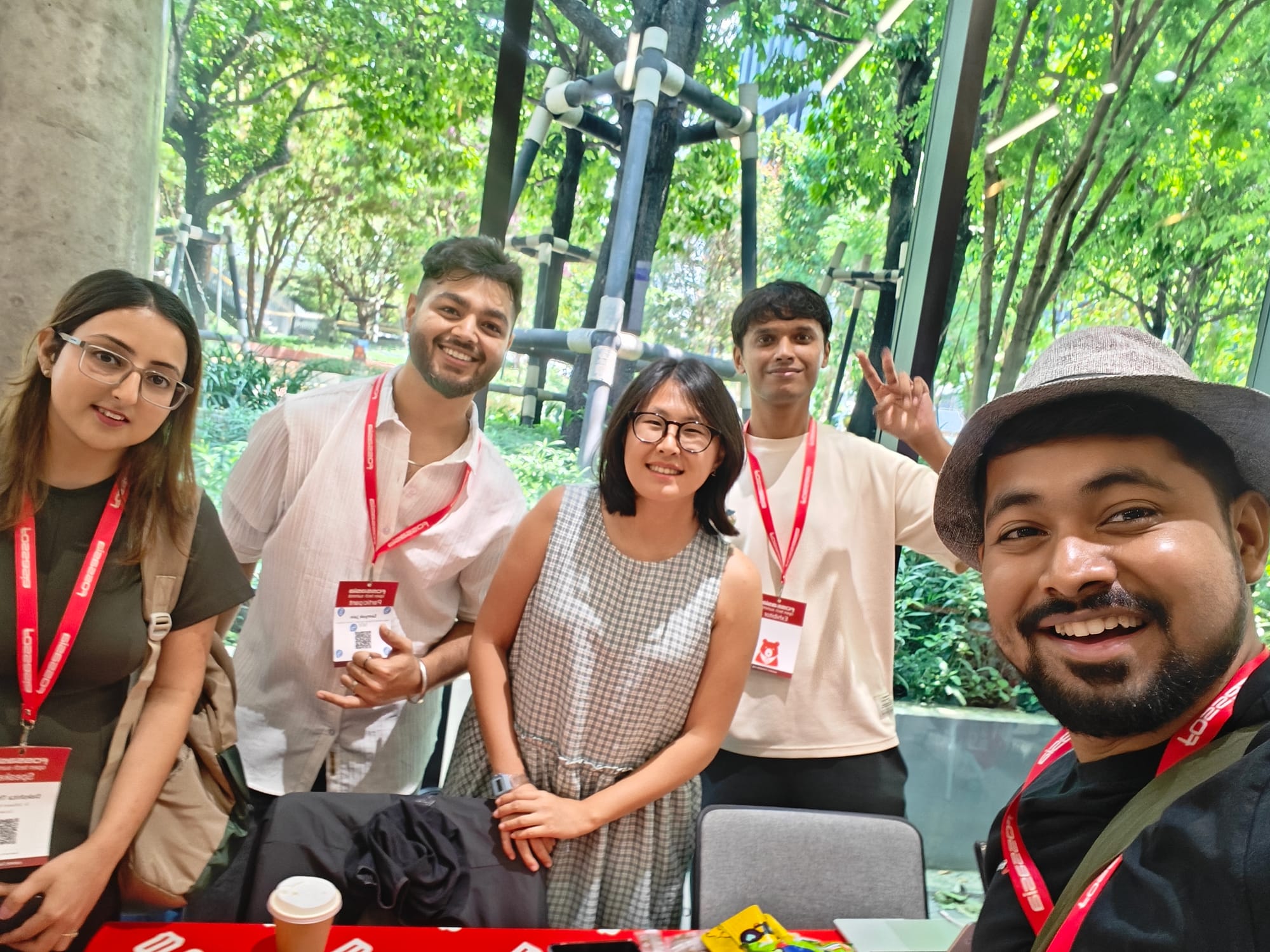
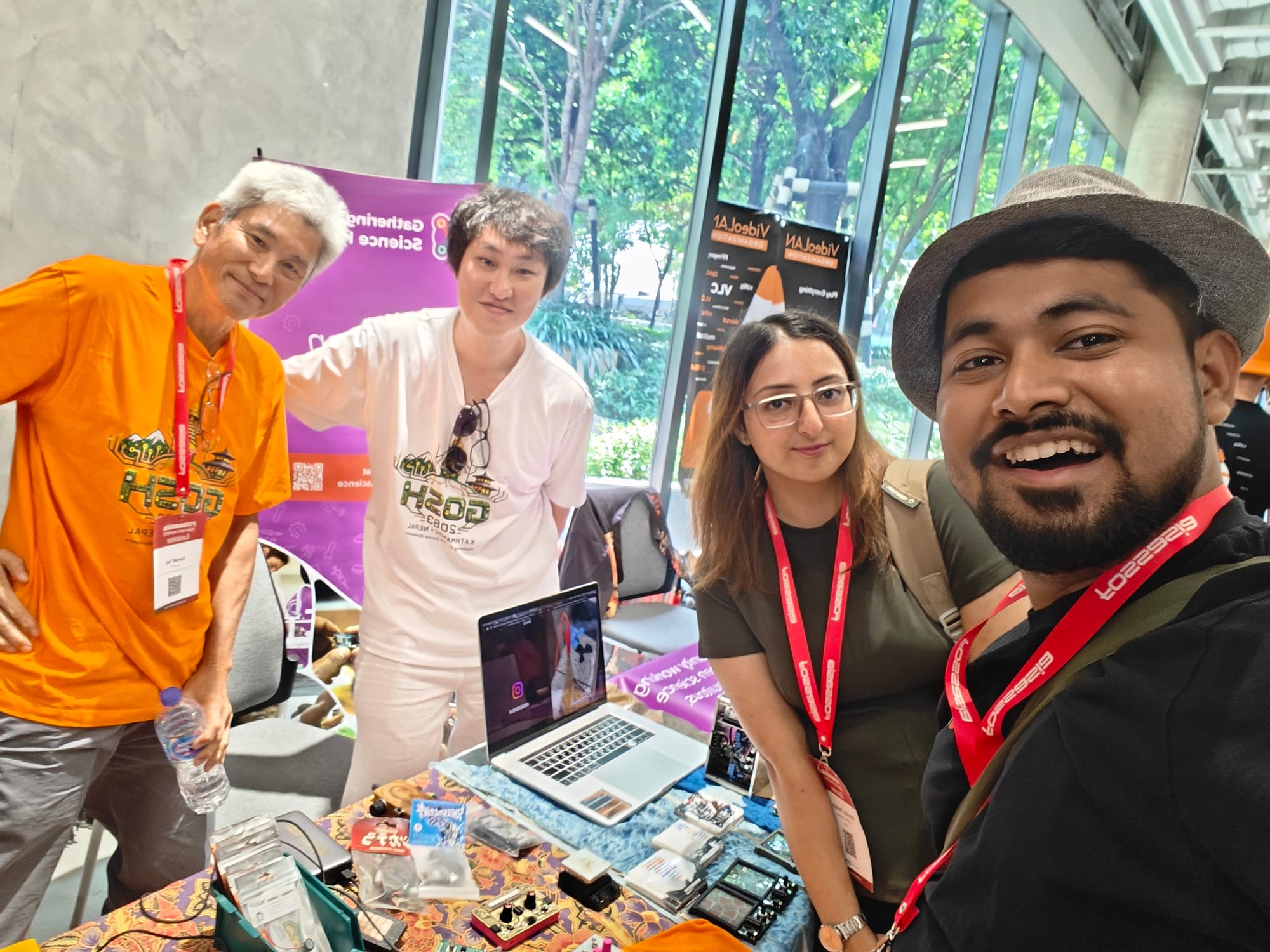
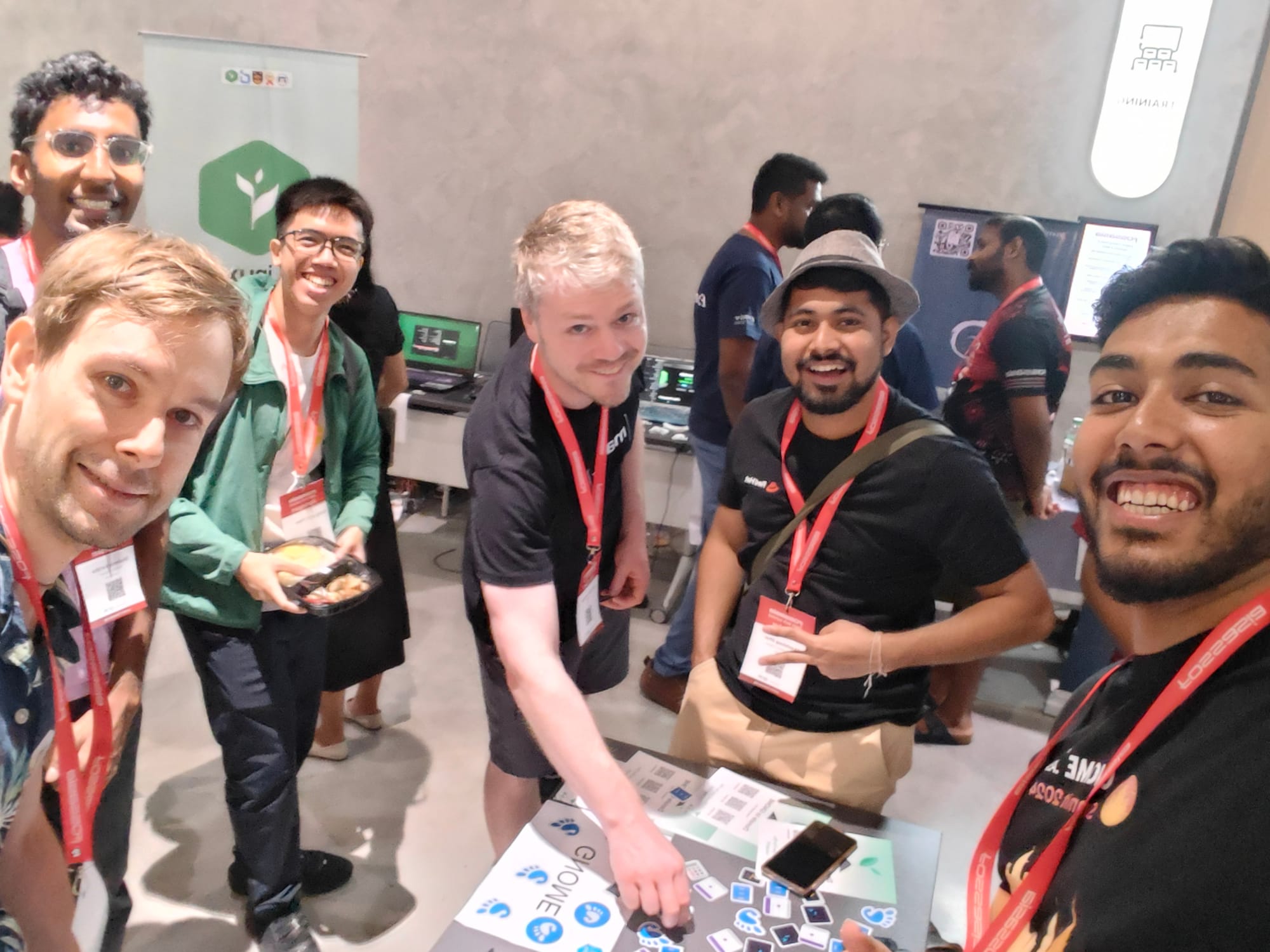
As most of our Red Hat collective was already together at the center, all we had to do was enjoy the event hosts' excellent oration while we put out our best poses for the cameraman. We also did not miss the opportunity to take some selfies by ourselves while we were at it, because the audience population was only going to get thinner from here on out for the day. Once we were through with those pictures, Samyak and I ran into the likes of Pritesh Kiri and Dakshita Thakkar, who happened to be attending the event for the first time just like us. Heading out to visit the community booths together, we began by interacting with folks working on ESP32x-powered 2D robotic drawing computers and 3D-printer-powered accessibility-focused appliance designs. Not only did we get to see the demonstration, but we also got to experience how a differently abled person could use a Sony DualShock 4 controller with just one hand and how a pencil-triggered nail cutter could prevent folks from getting hurt. This was followed by a visit to the VideoLAN Project community booth, consisting of what looked to me like mostly disinterested staff members tending to the booth visitors as and when they saw fit.
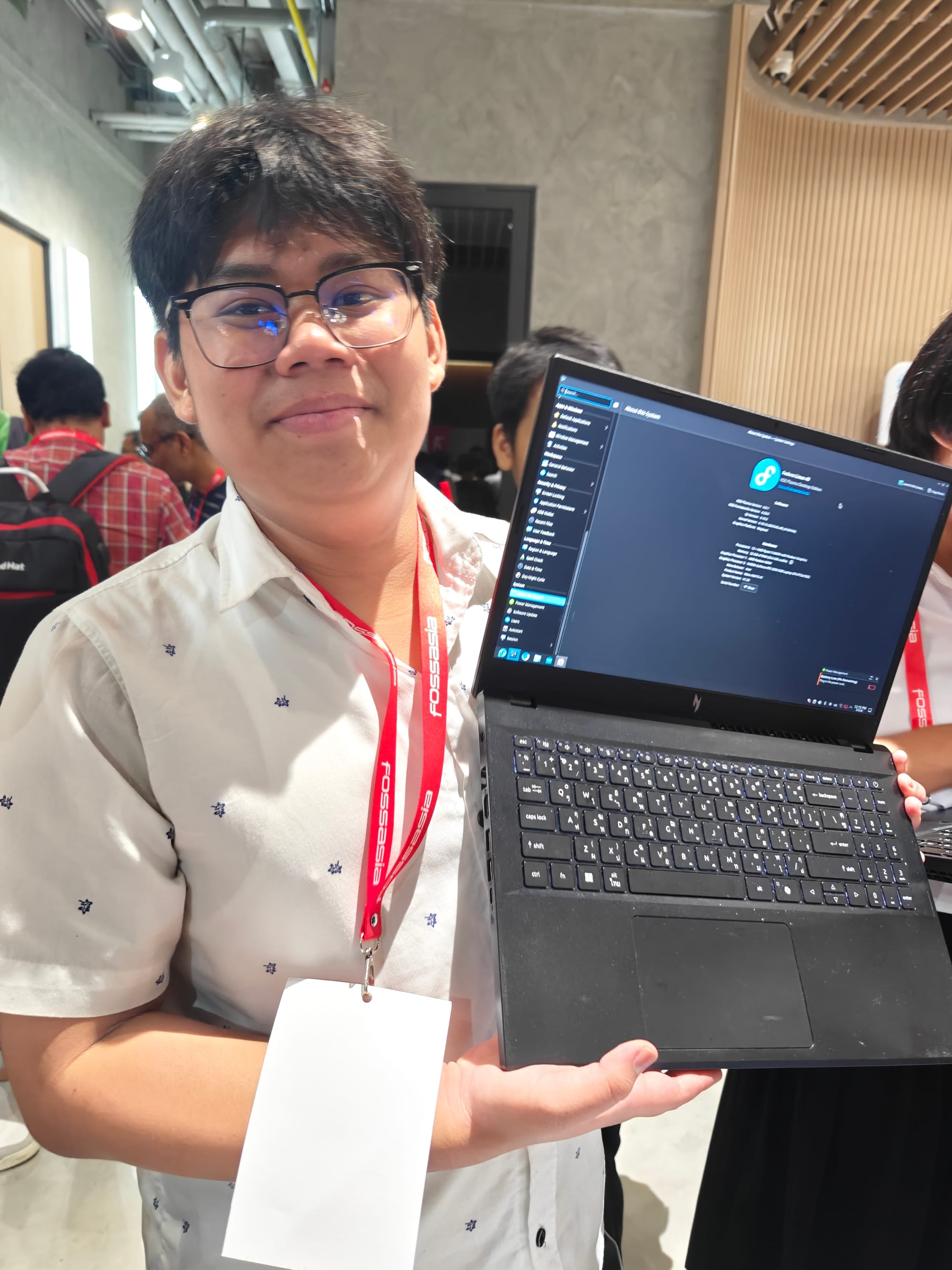
After helping ourselves to the postcard prints featuring the famous VideoLAN Project's parodies of famous movies, we moved over to the Matrix Project and database-related community booths. With their booth placements also made beside one another, it was interesting to know from them what they had to offer that their alternatives did not. Skipping through the dishearteningly unoccupied FLOSS Fund community booth, I met Samyak again at the Google Summer of Code community booth. It was great to catch up with Stephanie Taylor after having met her during FOSDEM 2025, and she also graciously provided us with some swag for having participated in the program as a mentee (for Samyak) and as a mentor (for myself). We returned to the GNOME Foundation community booth while being surrounded by an enthusiastic group of folks who were contributors to both the GNOME Foundation (through donations) and the Fedora Project (through contributions). Not only were they thrilled to find us there, but they also went a step ahead by proudly showing off their Fedora Linux installations (most prominently of which were Fedora Silverblue and Fedora Kinoite) from their laptops.
Manifest #08
Stellar moments like these always end up re-energizing my resolve to support free and open source software in ways that I could. Getting to interact with folks like these who were just as resolute about the Fedora Project as I was made this trip already worthwhile, even though we had a couple of days ahead of us. They mentioned just how they regularly organized their local Fedora Linux installfest events to help with the adoption of our Fedora Project's primary offerings and also participated in the regularly organized testing events in our engineering community. While I could not provide them with the means to make donations as they wanted to contribute further, I requested them to propose their event through the officially ratified Fedora Mindshare event process. Being the model open source citizens that they were, I wanted to ensure that they did not have to spend out of their own pockets to organize Fedora Project events while ensuring that they were well equipped to host one in the already underrepresented APAC region. Increasing the Fedora Project's APAC representation was already at the top of my list, and this interaction only ended up centering my commitment towards this mission.
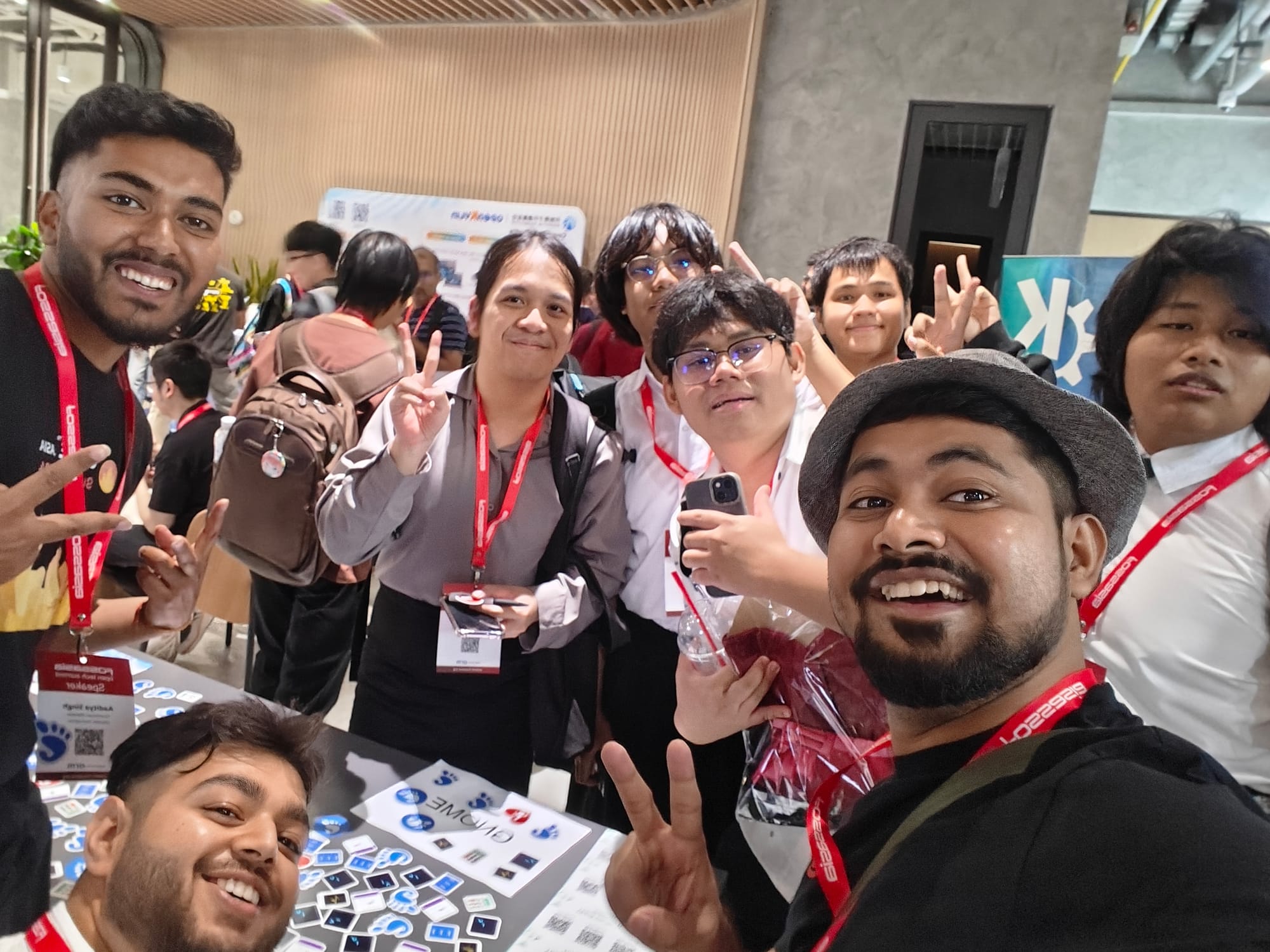
They magically had the intrinsic understanding of just how badly we need contributors to be onboarded and retained within the community to ensure the longevity of a project. A lot of times, it eventually ends up falling on the shoulders of a flywheel person when someone from the community has to depart for some reason. We did not even have to share what was upcoming in Fedora Linux, as they even had an alternate Fedora Rawhide installation handy for development purposes. As the event owner for the Fedora Project's community presence at FOSSAsia 2026, a part of me still felt bad to have missed out on having a dedicated separate community booth at the conference. Sure—we felt right at home with the folks from the GNOME Foundation and KDE e.V., but we could very well have taken advantage of being the prominent RPM-based distribution there on site. A great deal of the community conversations would have then made their way directly to our community booth instead of us having to seek them out as event prospectors in all of our interactions. Instead of dwelling on this situation, I wanted to interact with the booth visitors from a Fedora Project governance member's perspective.
As I was both a part of the Fedora Mindshare and the Fedora Council governance bodies at the time, I used my event presence to hear more about potential opportunities as well as possible approaches towards community outreach from grassroots contributors. Depending on the matter at hand, I could either choose to address the same or pass it over to the teams responsible as a conduit. Finishing off with this heartfelt interaction, I headed over to the OpenKylin Project community booth to connect with the folks working on this downstream distribution of Debian Linux. Apart from its absolute resemblance to the Windows 11 user interface, this provided folks with a pleasant slope of technical learning while they executed their departure from Microsoft's popular operating system. On my technical suggestion, they made it a point to reach out to the downstream packagers because, from the Fedora Project packaging perspective, their packages were either wildly outdated or simply broken, thus hurting their adoption in the RPM-based universe. I also proposed the utilization of Fedora Linux for the development of the project's codebase, as we provided a speedy-moving development toolchain with updates that they could utilize.
While there were presentations and workshops scheduled throughout the first day, I still found myself spending most of my time in the hallway track. It was so easy to find someone I knew (or wanted to connect with) or something I knew (or wanted to know about) in all of the conversations. I also appreciated just how my fellow colleagues from Red Hat participated as volunteers for the event, all while sharing goodwill for potential long-term collaboration with the FOSSAsia organizers. This was around the time that the queue for availing lunch started forming at around 1200pm Indochina Time, so Samyak and I ended up joining in. Unfortunately, we had to push our lunch plans for later to make it to Praveen Kumar's interactive talk on Creating Custom Linux Images Using Bootc Technology and Podman Desktop. Delaying our lunch meals by about fifteen minutes or so allowed us to skip waiting in a long queue, but we did end up getting disappointed to notice that the menu had not changed for that day too. Do not get me wrong - the meal was okay for an obligatory refueling, but it left a lot to be desired when it came to ensuring that whatever ended up on our palate tasted good.
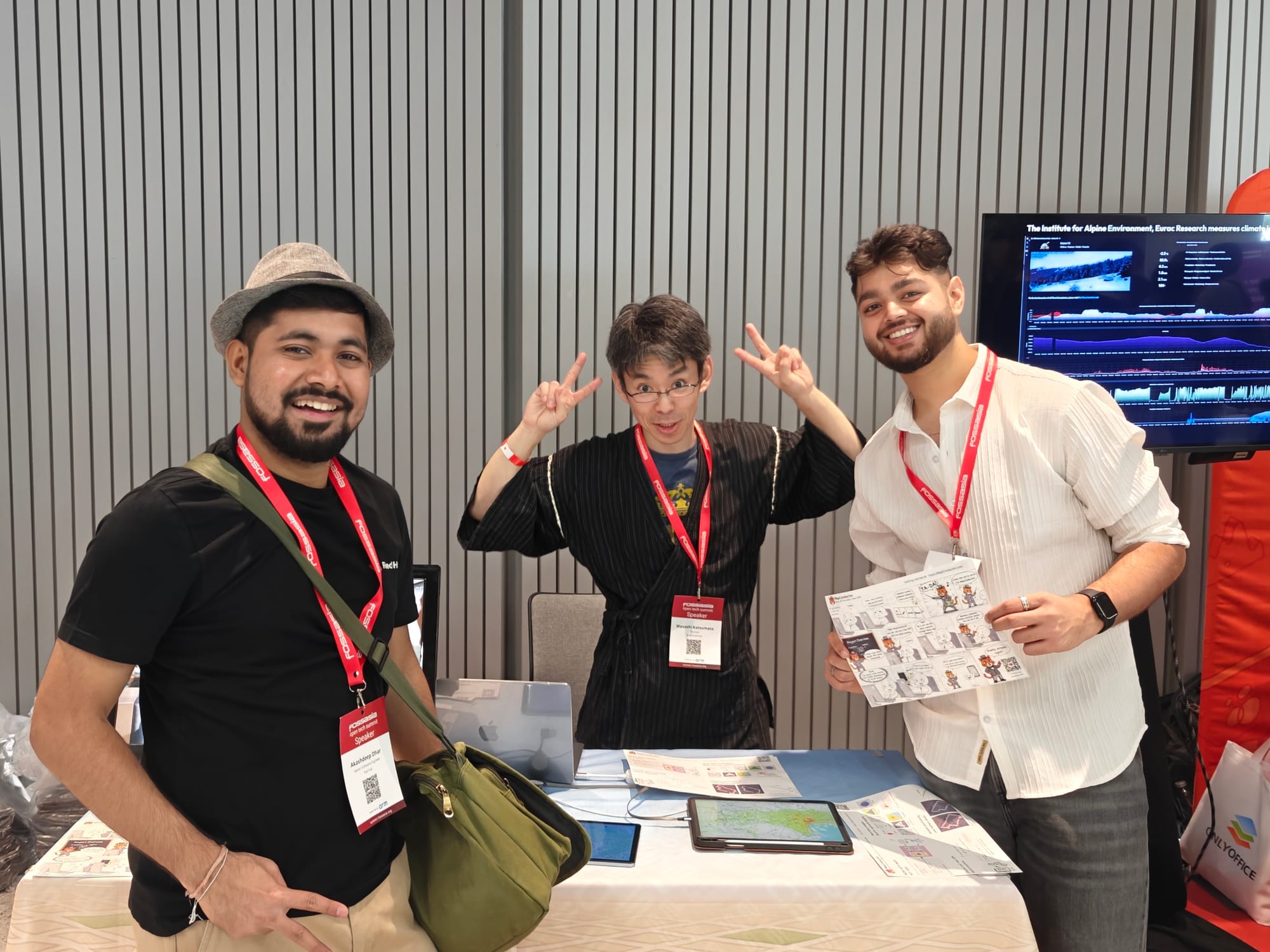
Finishing our meals allowed us to obtain some more energy to visit the community booths that seemed to have popped up later or had absent attendants. We started off with the MapConductor Project community booth, staffed by Masashi Katsumata, who briefed us about how they worked towards unifying all mapping APIs (Application Programming Interfaces) for mobile application map SDKs (Software Development Kits). It was rather intriguing to know how these APIs could be integrated with MCPs (Model Context Protocols) to allow mobile applications to have a semantic understanding of the navigation utility. Using the puzzle question about the number of post offices in Japan was a fascinating way to draw a picture of the important purpose of this community project. We sifted through the ARM Project and RISC-V Project community booths with our discussions around the necessity of an alternative architecture for desktop computing amidst the exorbitant prices of the year 2026. The demos were made using a custom AlmaLinux distribution image flashed on a Raspberry Pi 500 Plus, which had the SBC (Single Board Computer) inside a mechanical keyboard.
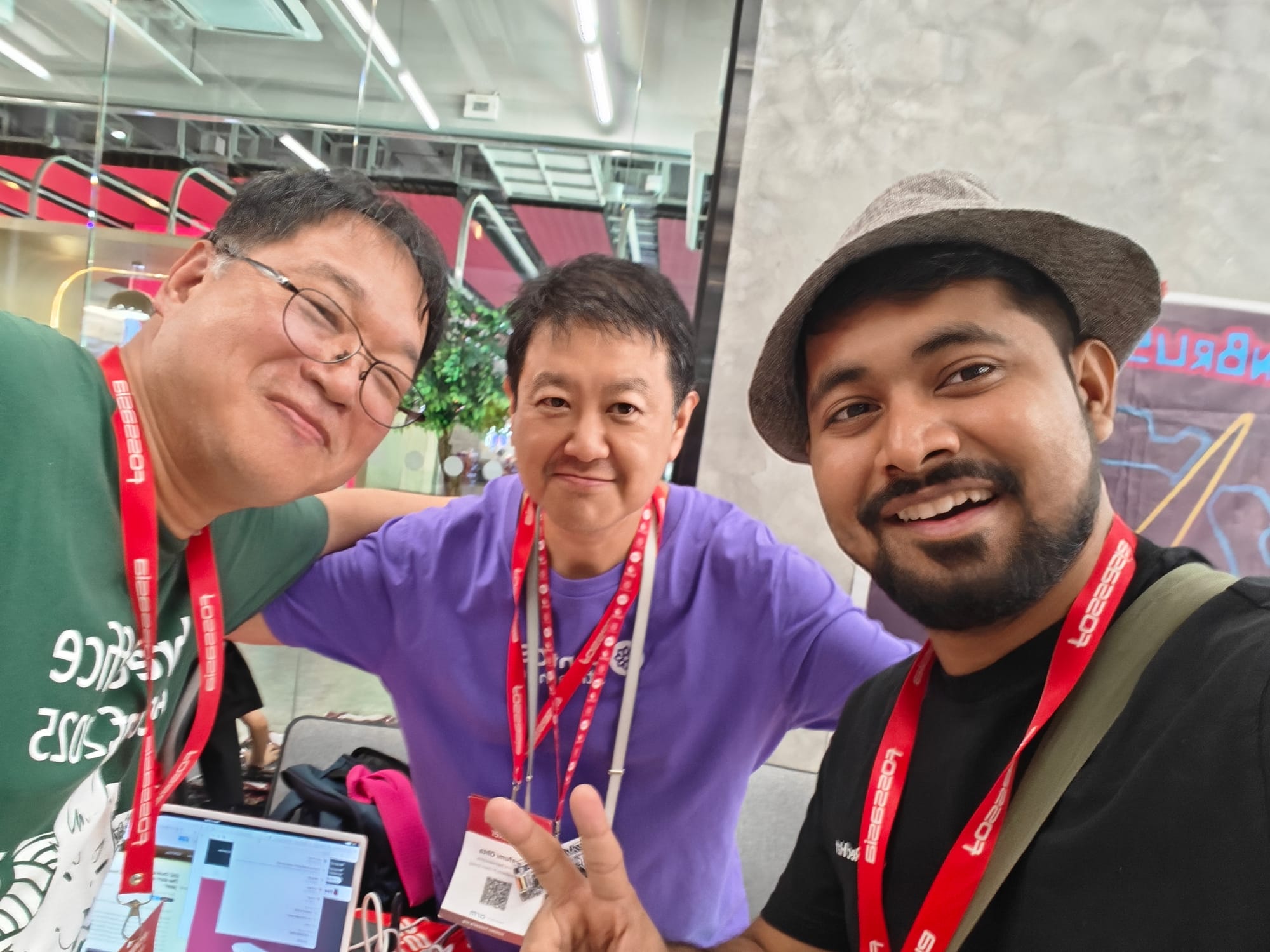
This reminded me of the SyncStar Project that I worked on a couple of years back, when the Raspberry Pi computers were still generally accessible and not prohibitively expensive, as they had become by then. Returning to Aaditya allowed us to meet Rich Bowen, who was just heading out from the workshop at around 0100pm Indochina Time. It was delightful to catch up with him after having met him the last time during CentOS Connect 2025, and he was just as surprised to meet me here, since I was attending FOSSAsia for the first time. Wrapping up our conversations here, Samyak and I headed over to attend Shivani Bhardwaj's demonstration of Hands-on Network Security With Suricata. As someone who primarily works on infrastructure architecture, it was compelling to see just how the project worked both as an intrusion detection system as well as an intrusion prevention system. While her presentation was plagued with a bunch of technical issues related to the presenter's laptop inadvertently suspending, Shivani kept the audience engaged with her admirable showpersonship and funny jokes, giving me something to learn about too when it came to speaking.
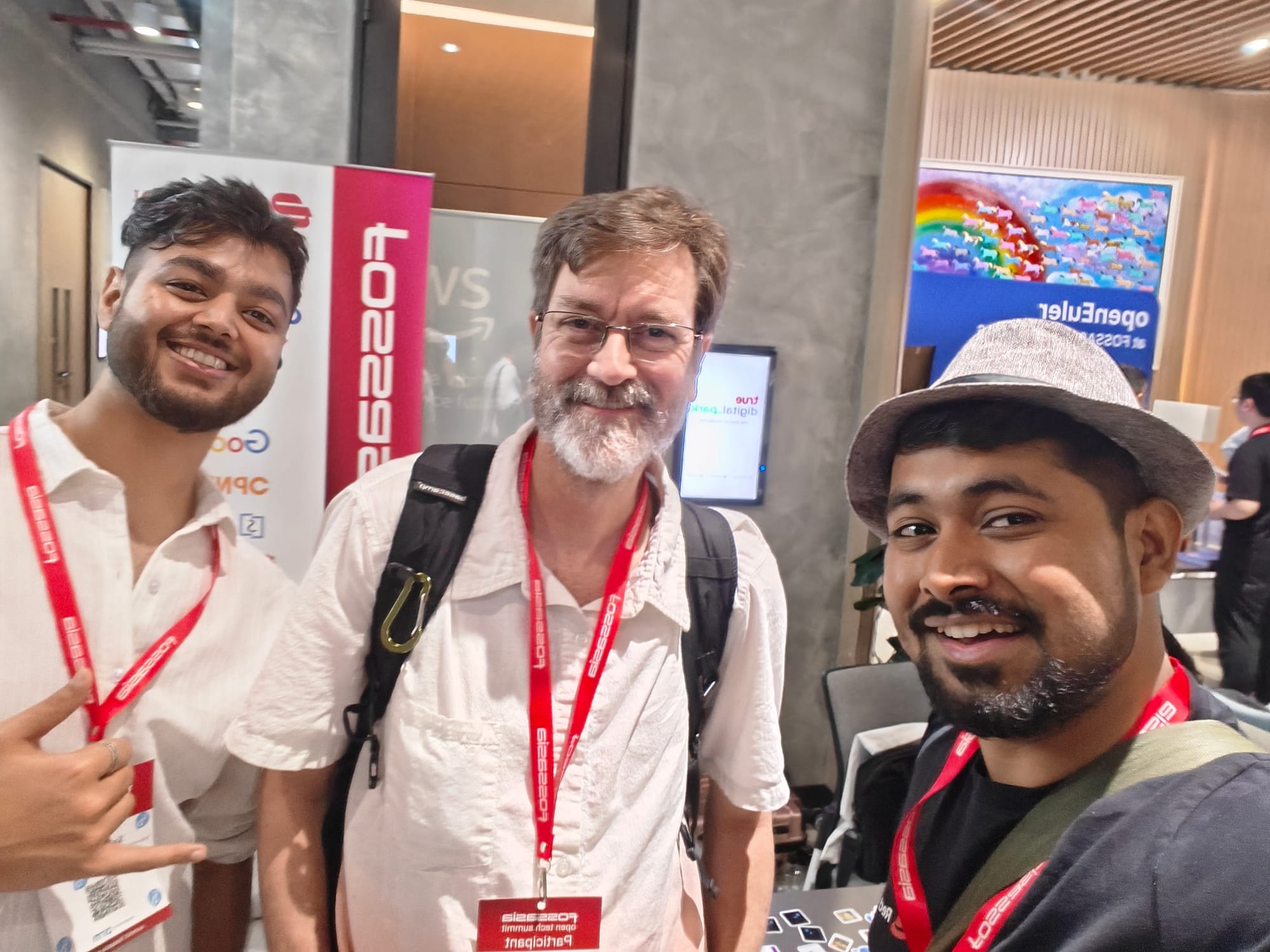
We stayed back in the same hall to attend Peter Membrey's talk on Open Sourcing Secure GPU Workloads in Enclaves as it shared a similar cybersecurity-inclined theme. As he was the Chief Research Officer of ExpressVPN, an organization that was also one of the primary sponsors of the conference, I wanted to understand just how bought in they were with the free and open source software mission. Having gotten a satisfactory answer, I left to get a FOSSAsia tee-shirt and necessary caffeine, since I did not have to join the queue for the identification badge that morning. I was pleasantly corrected when they declined my payment for the FOSSAsia tee-shirt and informed me that this was available at zero extra cost for the event participants. The lack of a proper lunch did manage to keep me awake, but a proper shot of cold coffee was able to finally get me back into the game once I was done exchanging the participant coupons. I hung out with my fellow Red Hat colleagues at the OpenEuler Project community booth before going back to Aaditya's place. Since he had kept a medium-sized GNOME tee-shirt aside for me, it only made sense for me to pledge a certain amount to the community.
And might I add just how attractive of a bargain 100 Thai Baht was in exchange for a white GNOME round-necked tee-shirt, all while supporting the great work that they did! It could not be understated just how often free and open source software communities end up giving you friendships that you cherish for your lifetime. At around 0215pm Indochina Time, we attended Dakshita's presentation on Observability for Backend Developers before reaching out to the FOSSAsia volunteers regarding my concerns about the absence of speaker desks in various smaller-sized halls. While my concerns were accounted for by the staffing volunteers there, it was only when Rajan entered the scene that it was not only resolved for the training room that I had my presentation planned for the day after, but also for other associated halls. He mentioned to me how my preemptive concern about my deferred presentation allowed others to benefit too, since it had become unwieldy to use a lower-height general table. After having attended Joe Blubaugh's talk on SQL Expressions in Grafana Dashboards at around 0240pm Indochina Time, I decided to return to the hallway track to have some more conversations.
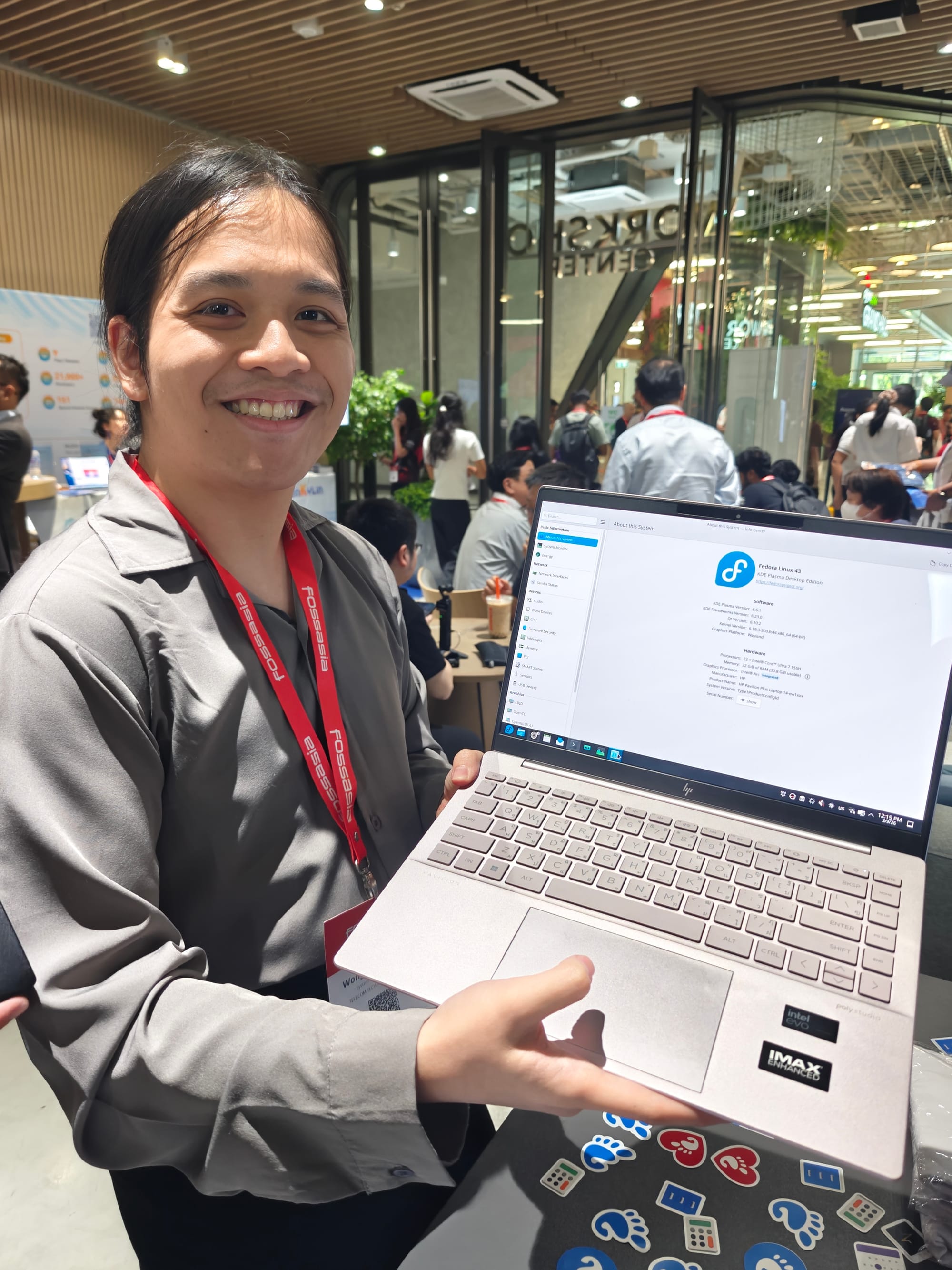
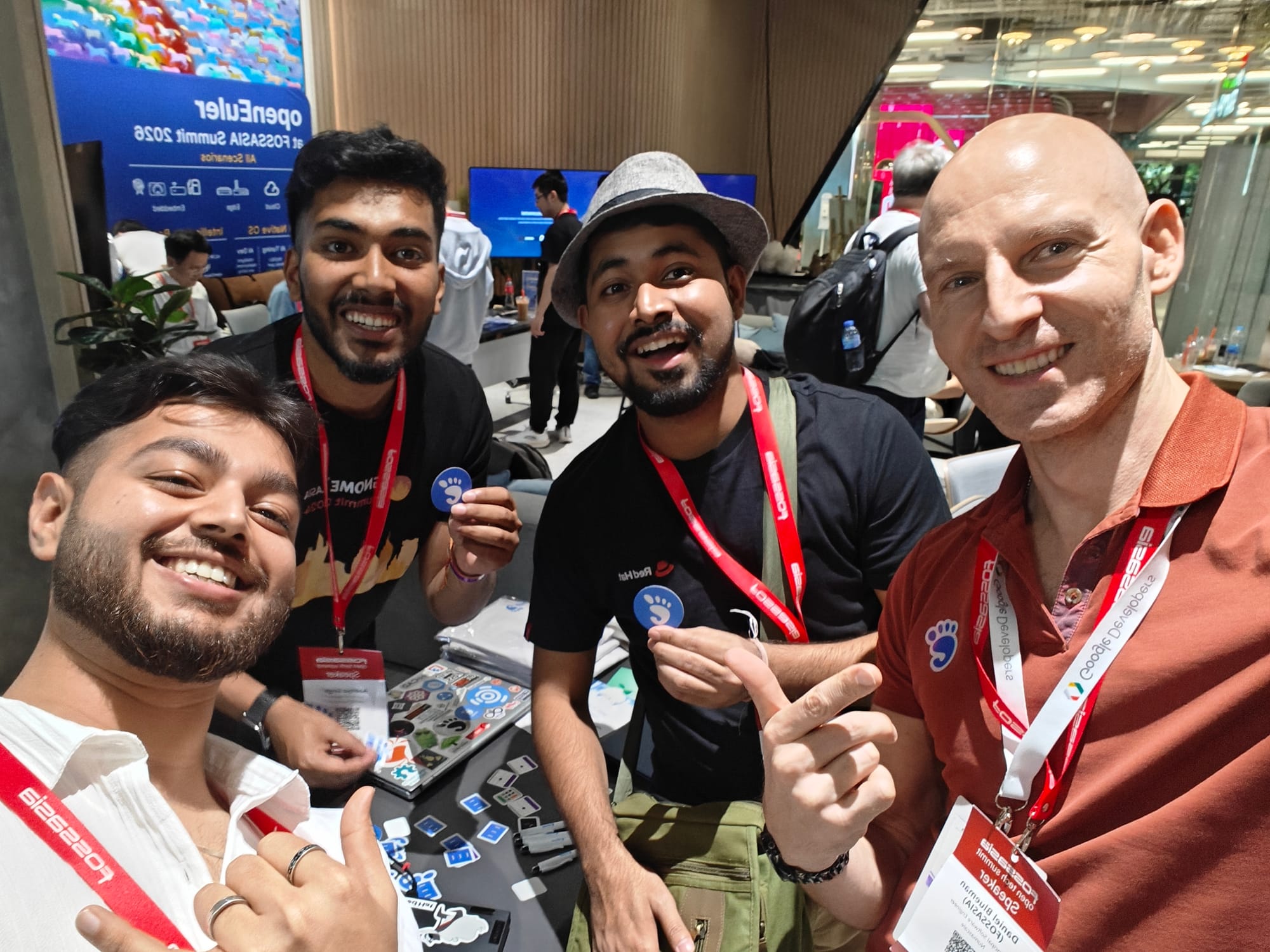
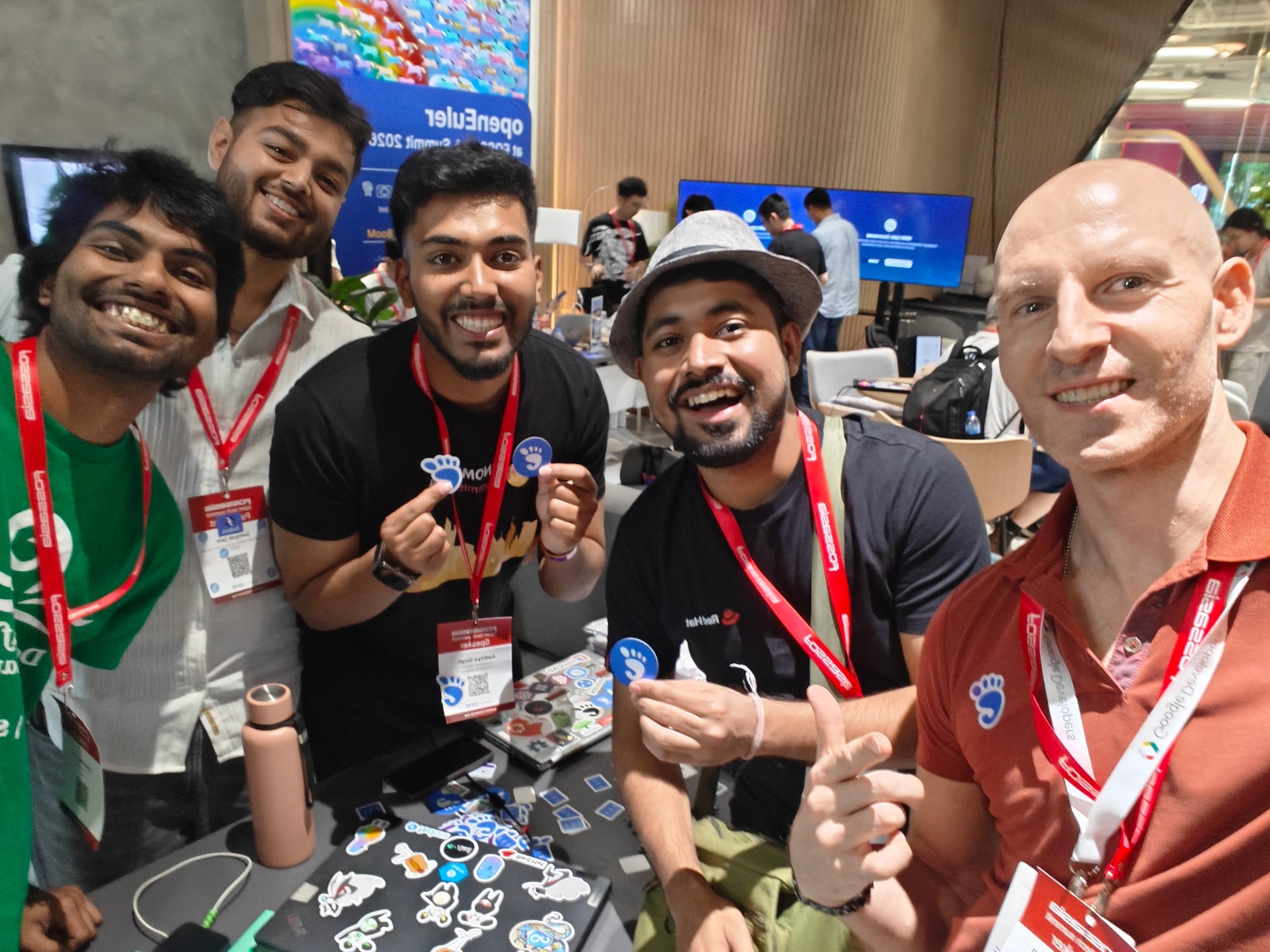
One discussion on internet technologies with the likes of Ananthu and Deepesh at the Debian Project community booth later, we were joined by an extremely enthusiastic Daniel J Blueman at the GNOME Foundation community booth. Since he had presented his talk about Linux on ARM (Advanced RISC Machines) Laptops earlier that day, he wanted to have a comparative study of how different both the architectures were on a quantitative level. While our collective had a qualitative understanding of just how efficient ARM-based SOCs (System On Chips) were as compared to the widely available x86-based CPUs (Central Processing Units), stress-ng testing (as requested by him) could help paint an accurate picture. While the tests were running on both Aaditya's power-deprived laptop and Daniel's cool-running laptop, he was appreciative of the attempts made to make Fedora Linux work on ARM-powered Apple MacBooks and general-purpose ARM-powered laptops. Although the initial tests gave us an idea about the performance per wattage across both the architectures, we had to dispose of the results as the x86-based laptop was not getting power from the wall, unlike the ARM-based one.
Manifest #17
Of course, we had to have a rematch - not specifically for getting different-looking results but getting genuinely computed ones, and this time around it was the turn for Samyak's Lenovo ThinkPad P16v Gen 1. After making sure that both of these devices were getting enough juice from the power outlet and shutting down the unnecessary applications, we were able to obtain an anecdotal result that put the AMD (Advanced Micro Devices) Ryzen 7 Pro 7840HS CPU miles ahead of the Qualcomm Snapdragon X Elite SoC. This kind of unstructured research was able to draw quite a huge crowd in the second half of the day, and we deduced that while Samyak's laptop was drawing at most about 100 watts from the wall, Daniel's laptop was barely pulling at most around 25 watts. With improved compatibility across various applications and additional efforts in hardware enablement, the ARM-based SoCs could very well be the future of sustainable domestic general computing. After sharing contact details, Ananthu and I had a quick discussion on exploring places that exhibited (or franchised) anime-related swag, especially those from the popular Genshin Impact brand at around 0400pm Indochina Time.
Manifest #18
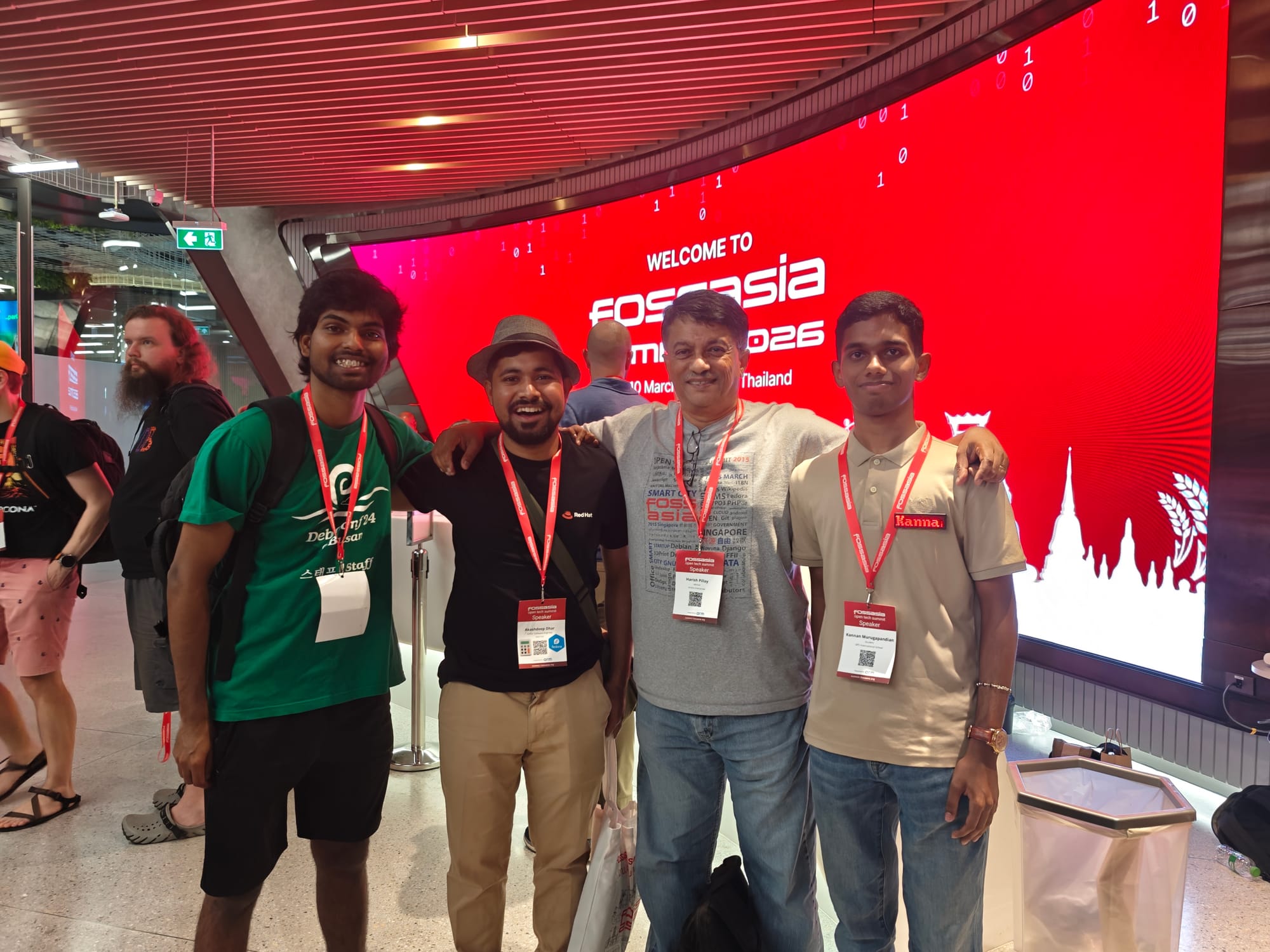
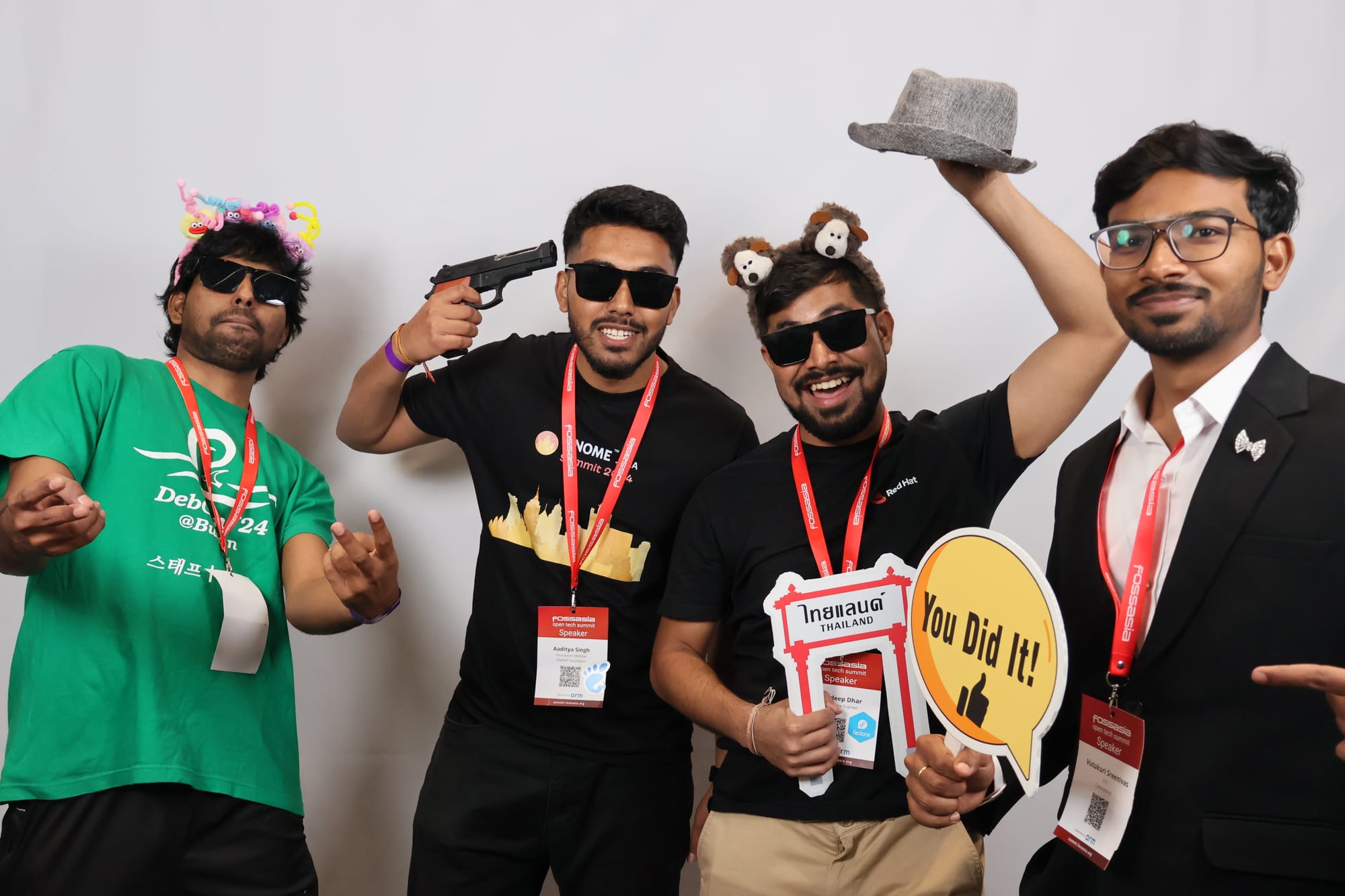
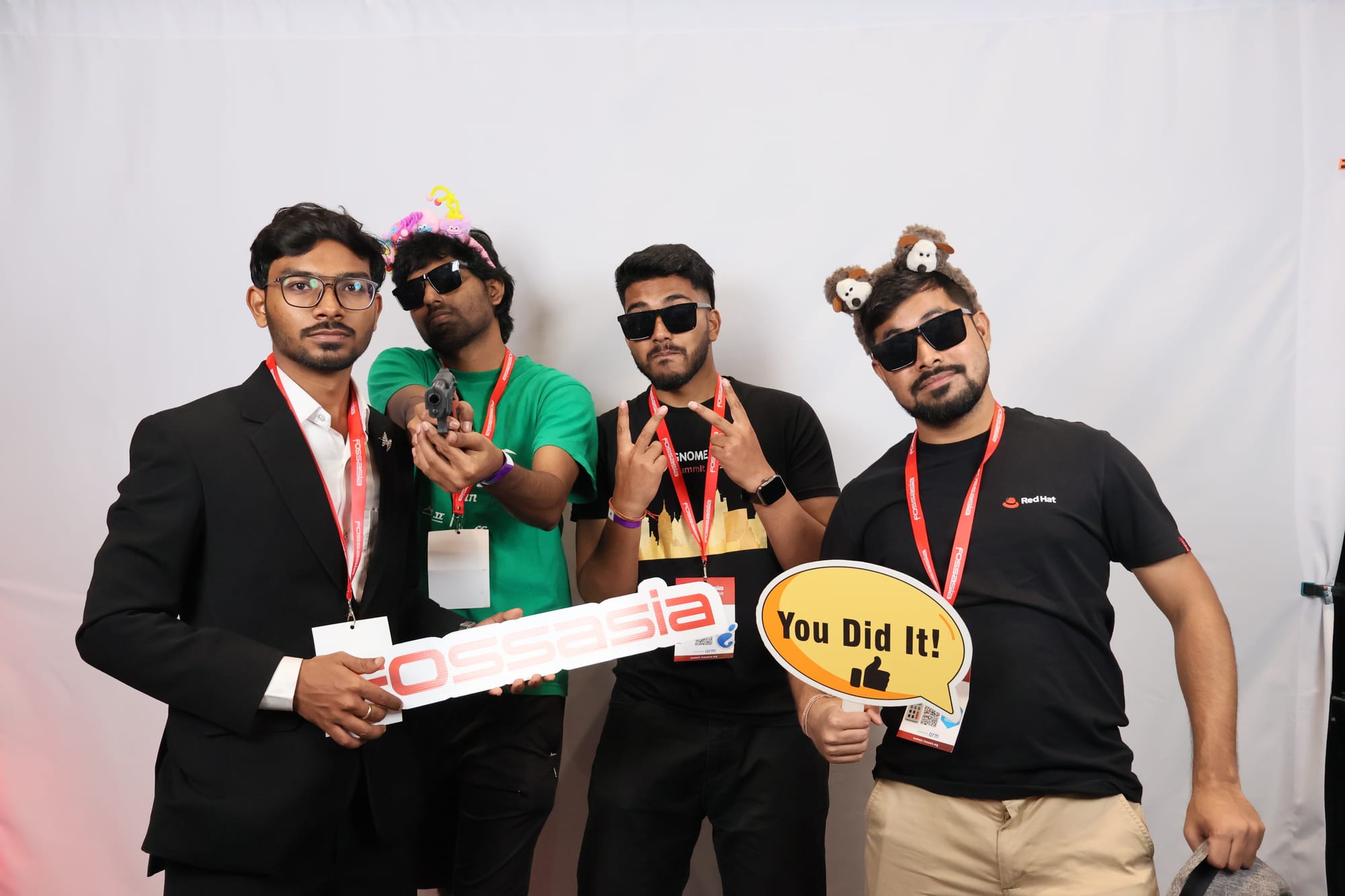
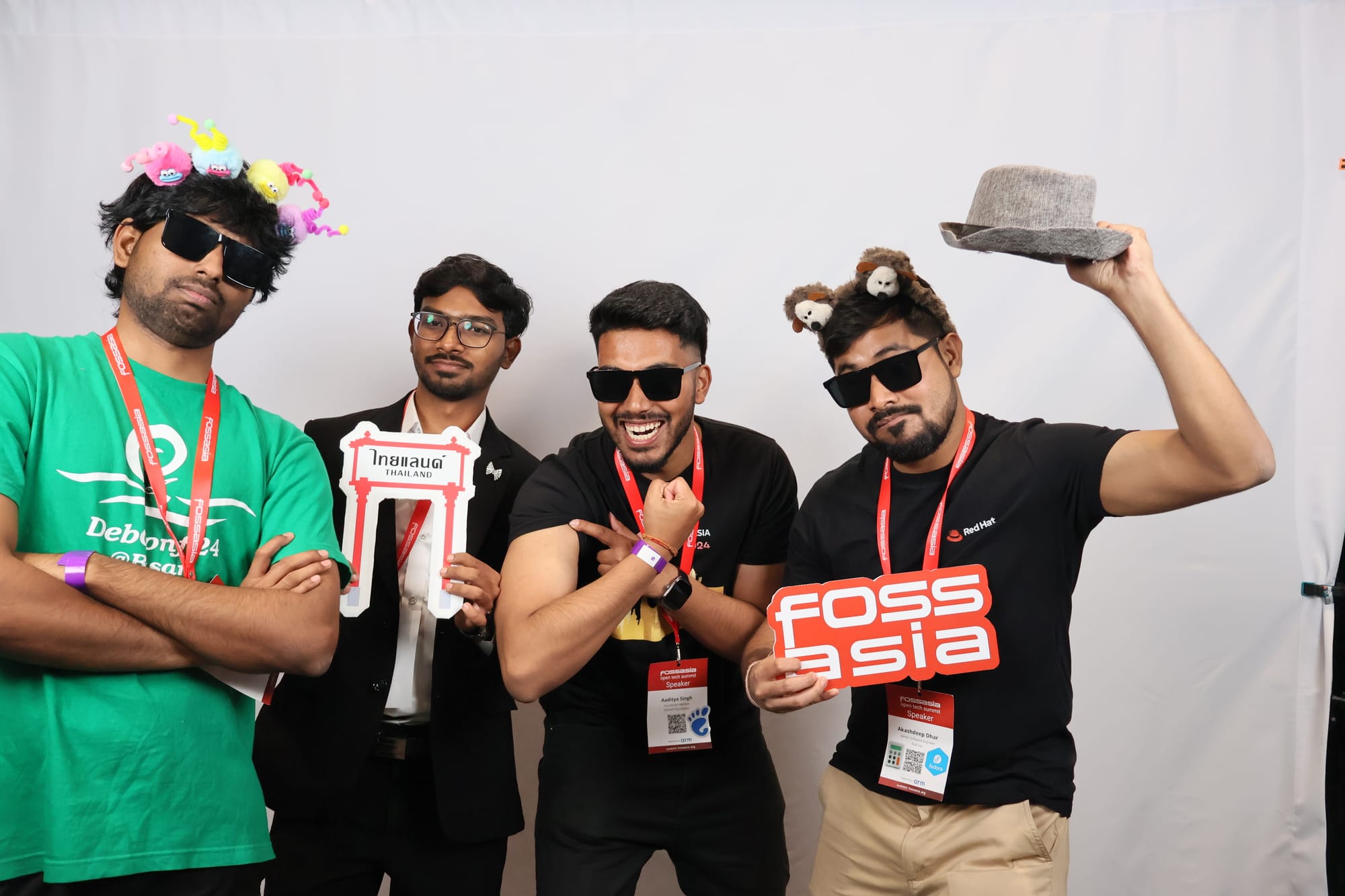
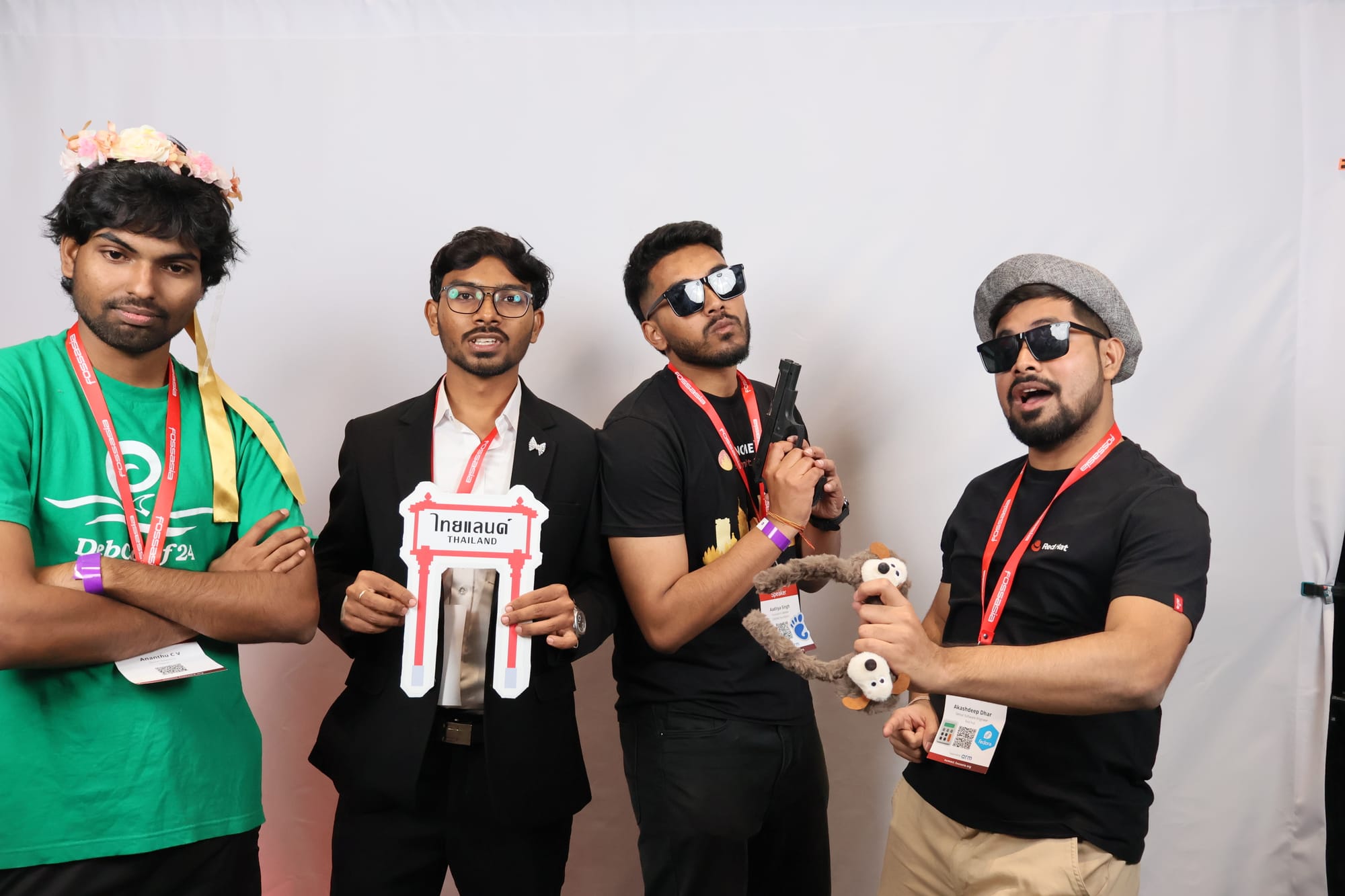
With Samyak on his way back to the hotel room, Aaditya, Ananthu, and Shreenivas (who began hanging out with us at around that time) and I decided to stay back to attend the FOSSAsia Evening Social Event. I seemed to have chosen wisely, as I ended up running into Harish Pillay shortly after in the hallway track, whom I had last met during CHAOSScon EU 2024. In our friendly exchange, he shared how he used Anthropic Claude to generate slide decks based on the speaker notes that he had manually prepared, a process that felt flipped to me, but I was captivated to see the results that he had on display. I noted the effective learning for times with a shorter timeline for proposal submissions without having to compromise on the overall quality. After a couple of photographs with him, I joined back our little gang for a quick round of instant photoshoots with a hilarious set of props. Aaditya and I decided to split from the likes of Shreenivas and Ananthu for the day to have our snack bites at around 0700pm Indochina Time. We enjoyed the Thai cultural performance presented by the event volunteers before I decided to depart swiftly for the newly discovered Animate Store at the MBK Center.
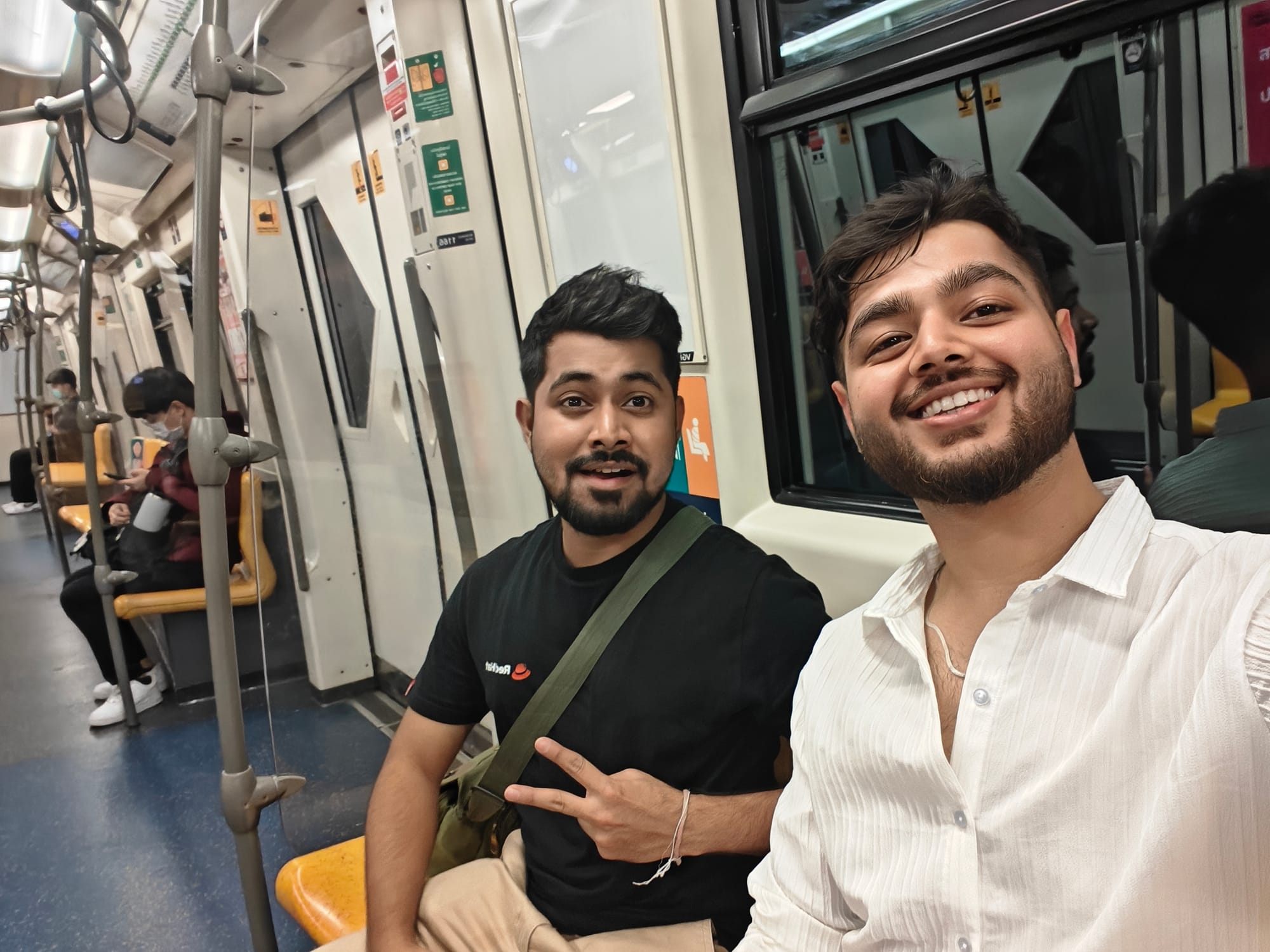
Coordinating with Samyak again, I dropped off my stuff in my hotel room before leaving for the BTS SkyTrain at around 0715pm Indochina Time. Since MBK Center was around a ten-minute walk away from BTS Siam, and so was the Jain temple that he wanted to visit, we decided to travel together. Having one of those rare moments where Samyak was ready to leave before I was, we headed to an ATM to withdraw some money. Just like my arrival day, we had to cough up around 250 Thai Baht besides the actual amount, but that had nearly become something that we had gotten used to. Cash was indeed king in Thailand, and we had to ensure that we had enough money to not require another round of ATM withdrawals. After a forty-five-minute-long journey from BTS Udomsuk, we split at BTS Siam after deciding to meet up there at around 0930pm Indochina Time. Getting local Thailand SIM cards proved to be extremely beneficial, as that allowed us to stay connected with our friends and families while we were navigating the hustle and bustle of Bangkok. We did not worry about the possibility of getting lost during transit, as we could always find our way back to each other.
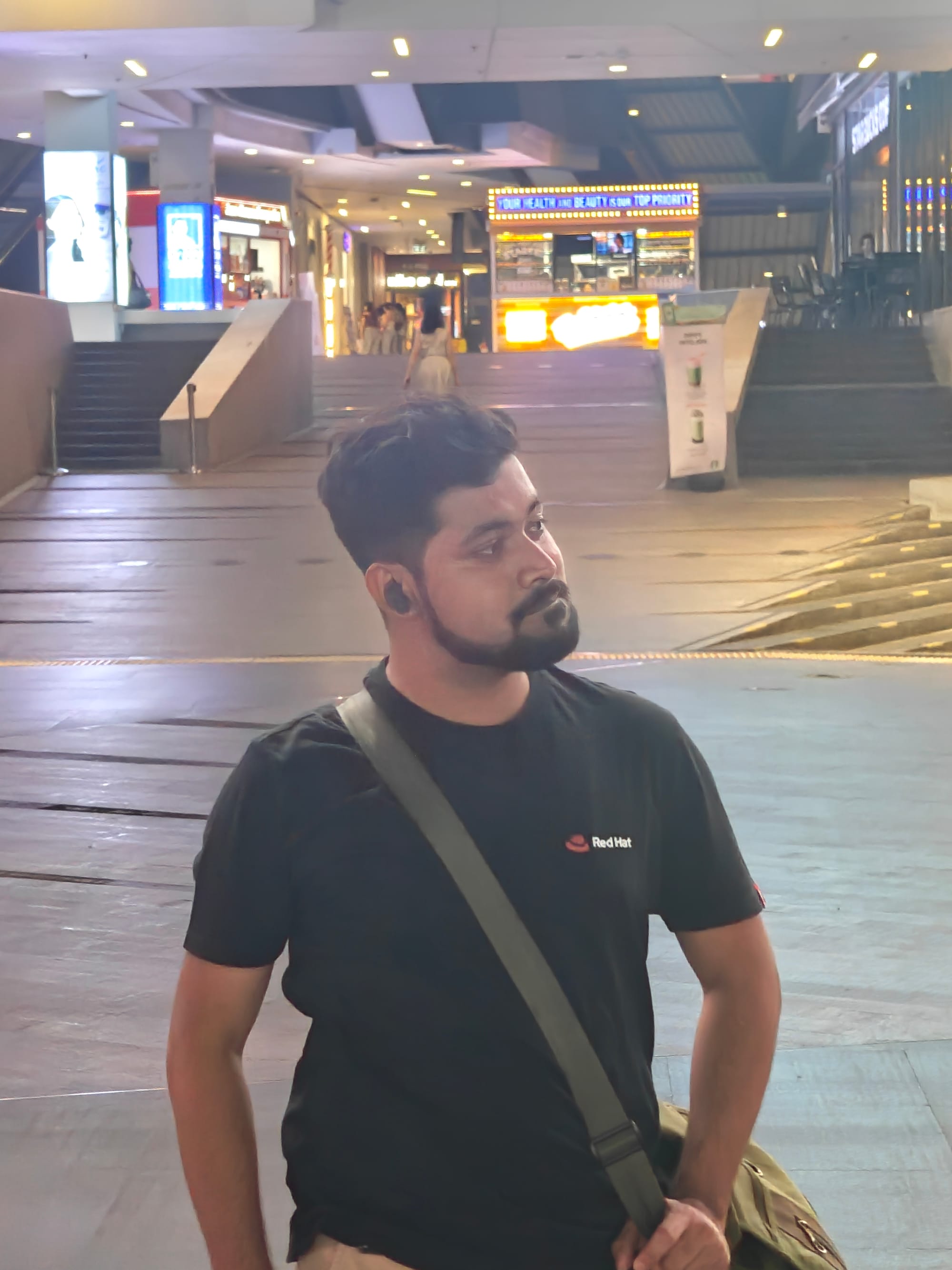
I was able to make it to Animate Store on the seventh floor of the sprawling MBK Center mall by around 0830pm Indochina Time, giving me roughly half an hour before the shop shuttered. Connecting remotely with Shounak Dey from back home, I made the best use of the time to collect some Genshin Impact collectibles for us. After making quite a lot of purchases from the official miHoYo swag catalog, I decided to be on my way back to BTS Siam right when Animate Store closed down for the day at around 0900pm Indochina Time. An uneventful BTS SkyTrain journey later, we found ourselves at BTS Udomsuk at around 1015pm Indochina Time with few choices for Indian cuisine, as most adjacent shops were closed and the farther restaurants would be closed by the time we would have gotten there. After a quick trip to an adjacent SevenEleven outlet and helping Samyak with packaged mineral water bottles from the day before, we decided to order some Indian cuisine takeaways from the Grab application. We decided to call it a day at around 1130pm Indochina Time after sharing a light dinner of some homestyle Indian meal together in my hotel room and going through a round of presentation prep.