Day Two - FOSSAsia 2026
Keeping up the breakneck pace, FOSSAsia 2026's second day on 10th March 2026 had presentations, hackathons, community and conversations - ranging from repositioning chaos to engineering discussions, and from steadfast presentations to governance policies - we did it all before dining at Chinatown.

Before I knew it, I found myself already at the second day of the FOSSAsia 2026 conference on 10th March 2026 after a rather eventful previous day. While I did plan to wake up a little later, I realized that I had to prepare for my presentation on the Fedora Badges Revamp Project that was scheduled later that day. This was the only proposal that got selected, and the other one on the Fedora Forgejo Migration Project did not make it, so I had to ensure that I was well prepared for this. After some rounds of talk rehearsals and some quick bites of breakfast, Samyak Jain and I exited Lumen Bangkok Udomsuk Hotel to be greeted by comparatively cooler weather on that day. Since it was more of the same choices on the breakfast menu, we were able to leave the hotel as early as 0945am Indochina Time. Climbing the long escalator to finally make it to the FOSSAsia 2026 event venue, we noticed just how much the community booth layouts had changed that day. For instance, the GNOME Foundation community booth was now positioned beside those of the Debian Project and the TeaLinuxOS Project.
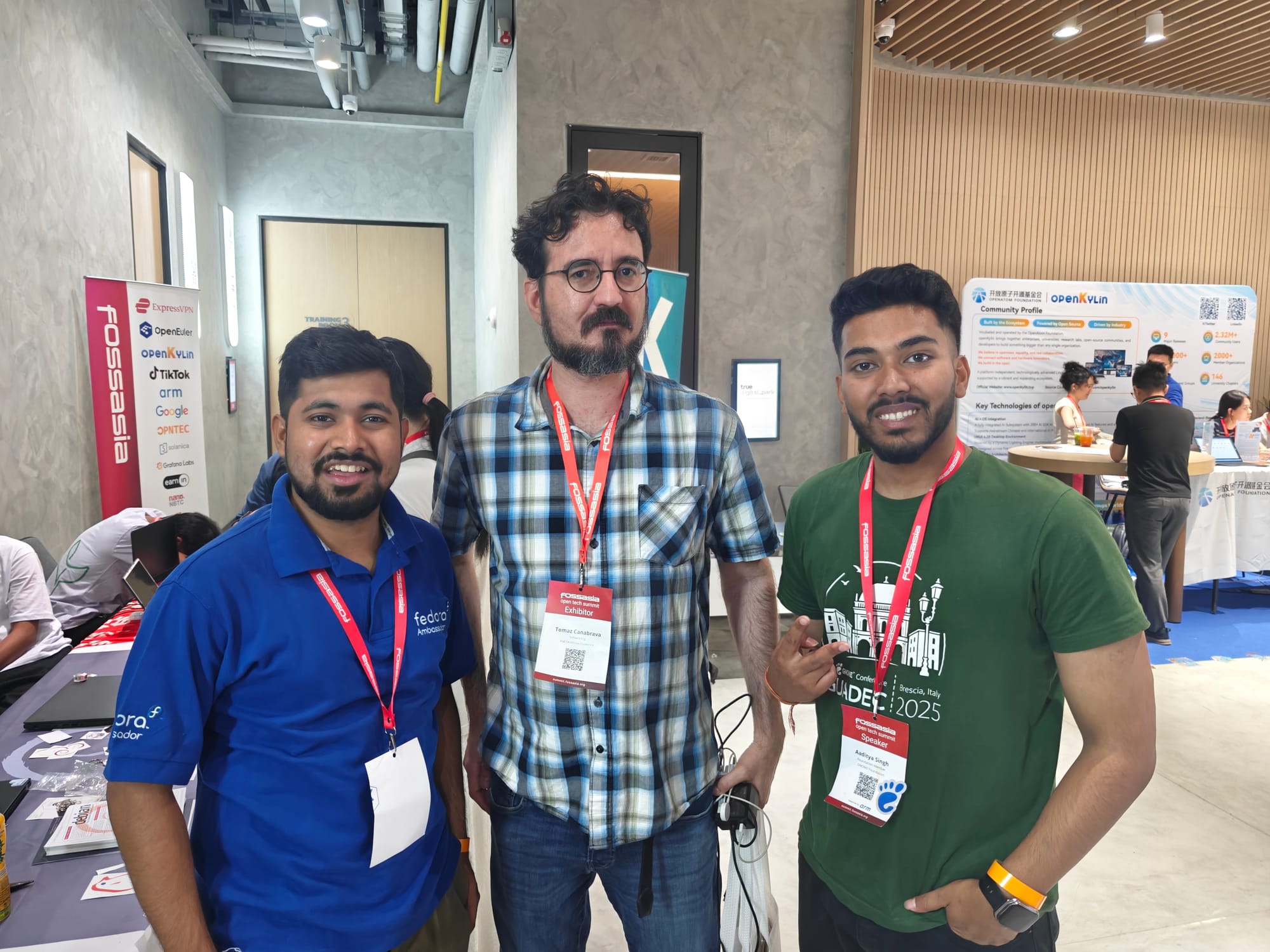
I had a mixed feeling about this, while this did allow for the corridor to be widened, the space for volunteer staffing at the community booths of the GNOME Foundation, Debian Project, and TeaLinuxOS Project was severely restricted. This meant that it was quite a struggle for folks who had to move away from or into the booth locations, as that required the folks around them to be moved as well. Just like the day before, we decided to assist Aaditya Singh with booth operations, all while trying to finish off the last hundred Fedora Project stickers that we had saved up from our participation at DevConf.IN 2026. While we had previously signed up for the ExpressVPN-sponsored FOSSAsia hackathon on Internet Security Development Using Artificial Intelligence, we ultimately decided to give away our designated slot to other younger participants who could not register in time. We discussed just how important this hackathon participation was for budding folks who were getting started with free and open source software, but not so much for us, since we have been around the scene for a long while now.
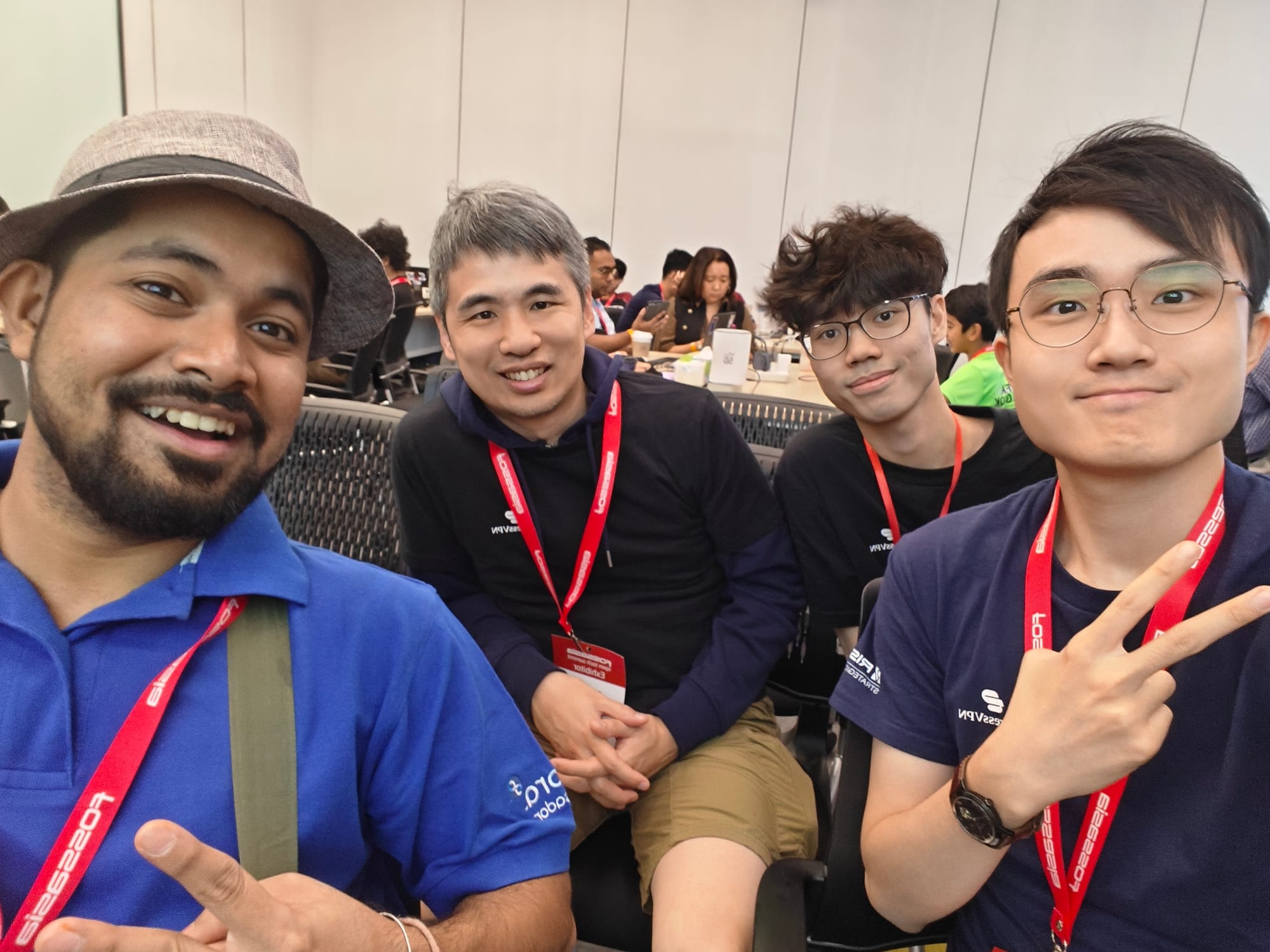
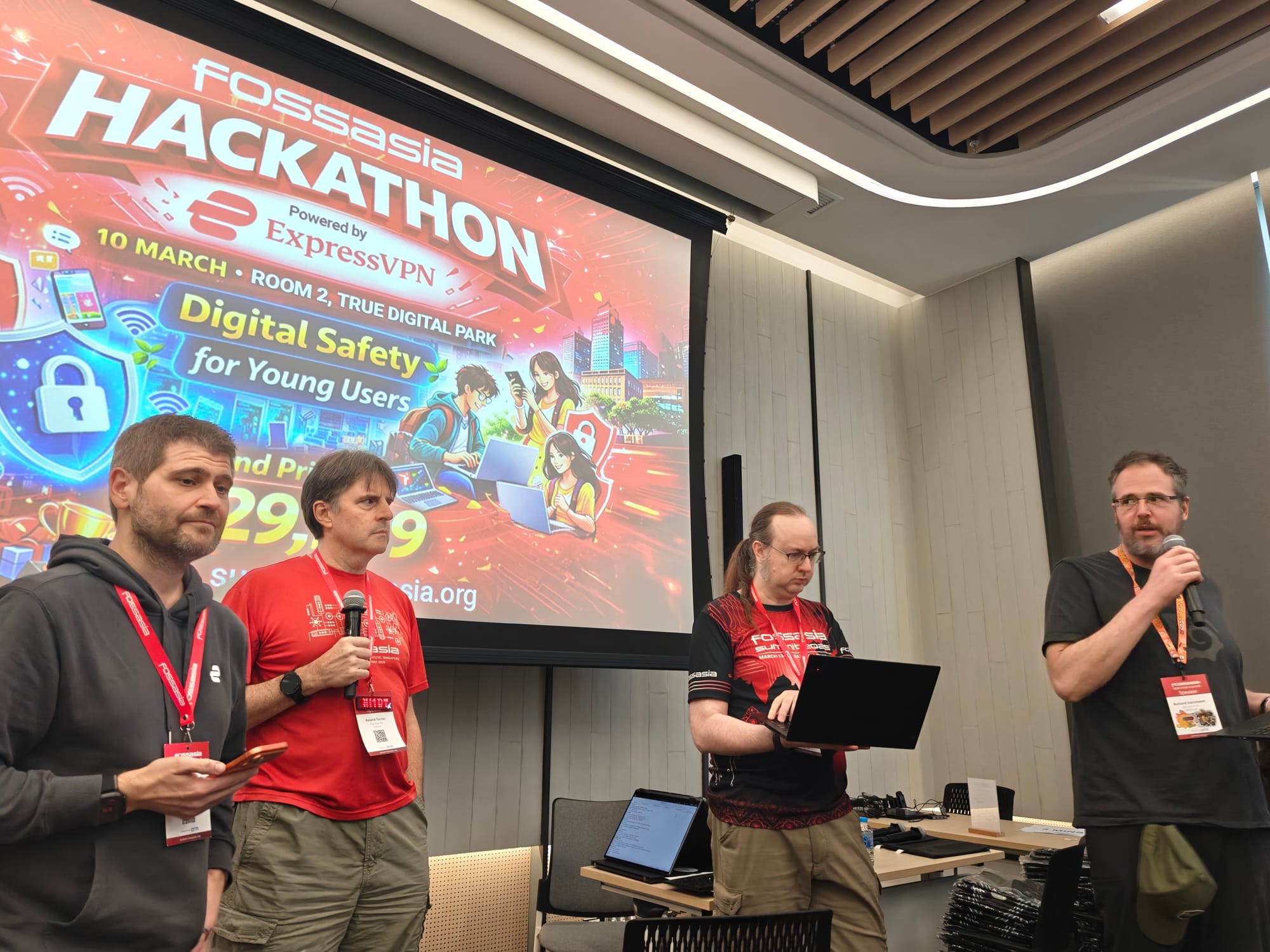
This opened us up further for many impromptu conversations, ideation discussions, booth visits, and of course, scheduled presentations. After leaving Samyak at the hallway track, I headed into a newer arrangement of community booths in the second corridor. Since my work laptop had malfunctioning cooling, which made screeching loud noises, I had to use his laptop to deliver my presentation later that day. Not only did I ensure that I downloaded my slide deck and speaker notes onto his computing device well in advance, but I also took care to avoid display inactivity suspensions and ensure an ample laptop battery charge. After a quick round through the community booths, I headed into the hall where the ExpressVPN-sponsored FOSSAsia hackathon was taking place, purely out of curiosity. Informing one of the co-located volunteers about my involvement as a visitor and not as a participant, they allowed me into the room to chat with the fellow participants. Since the hackathon was duration gated, I took extra care to curb my nosiness and allow the teams to work their magic.
Out of all the participating groups that I interacted with in the competition hall, my conversations with the likes of Saksham Sirohi and Arnav Angarkar about their ideas stayed with me. They knew how they had to limit their actual implementation and were focused on delivering an MVP (Minimum Viable Product) that could be expanded upon. I also took some time to have a quick conversation with ExpressVPN employees who were serving as competition moderators there to understand what they look for in a certain implementation. Getting myself a cup of boba tea (and skipping it because I did not like it), I met up with the likes of Ajinkya R. and Dakshita Thakkar at the hallway track. On returning to the collective, I decided to lend my assistance to Pongsakorn S. at the KDE e.V. community booth as well, besides helping Aaditya at the GNOME Foundation community booth. I learned that he was using OpenSUSE Leap on his personal laptop and was interested in RPM packaging, while I was placing some of the last fifty Fedora Project stickers on the booth table.
In contrast to the unoccupied booths from yesterday, it was endearing to see how the likes of Aaditya and Pongsakorn stood their ground at their respective booths, even when the footfall on the second day was noticeably smaller than the day before. Amidst our conversations, I connected them with each other, and Aaditya even took the chance to showcase the GNOME Foundation community quiz application that he had been working on. Following the community quiz activity idea from the Fedora Project Community Presence at DevConf.IN 2026, he wanted to use the remaining GNOME-styled tee-shirts as prizes for folks who attempted the quiz and got all the answers right at the hardest difficulty. Needless to state explicitly, I gave the quiz a try, not because I wanted another tee, but because I wanted to appreciate what he had been working on. A part of me also wanted to take on this hardest-difficulty question challenge to understand how much I knew about the GNOME Foundation and to see if I could learn things I did not know about the community and its activities in the process.
Collection #1
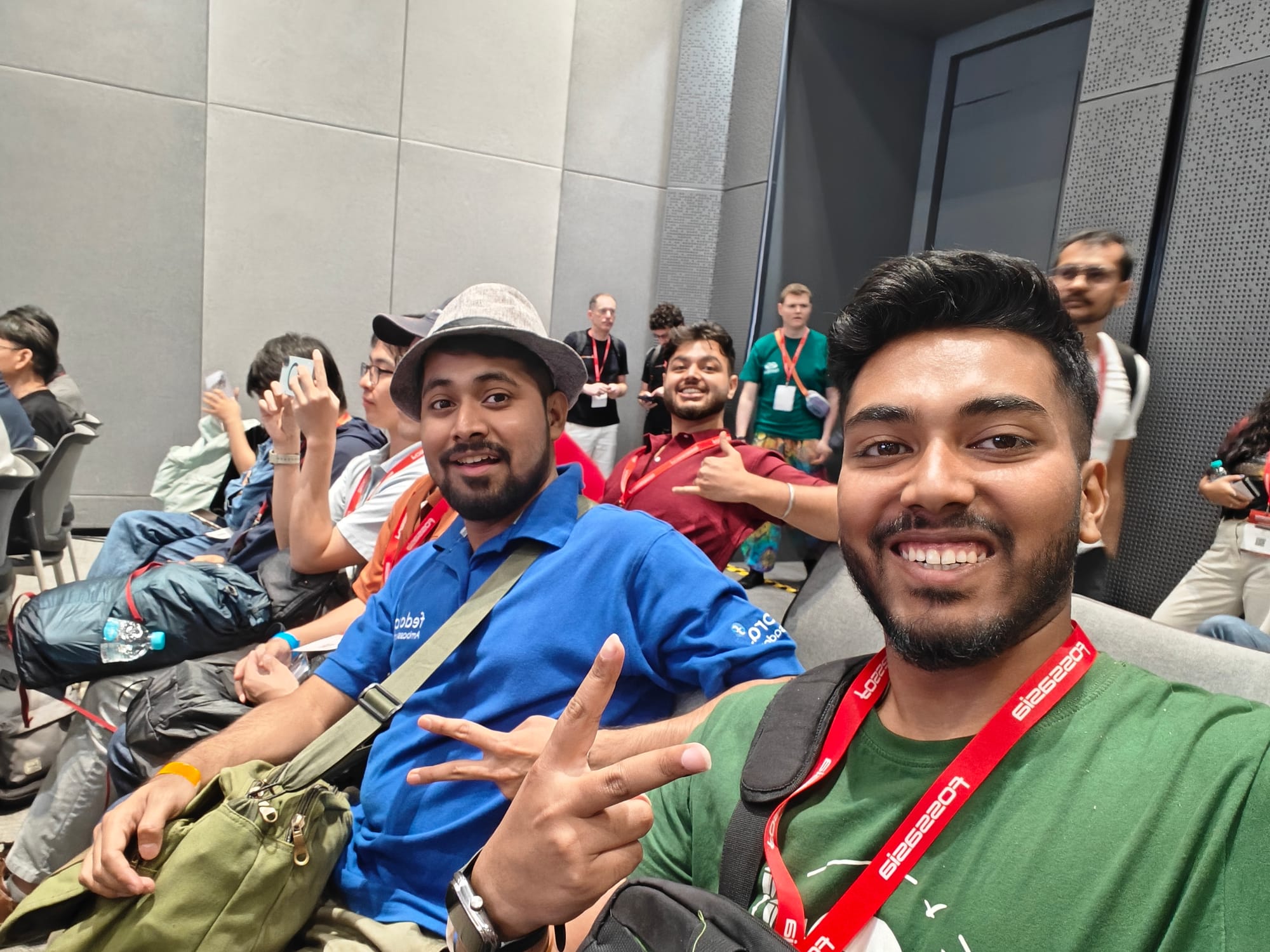
While I got most questions correct on the first attempt, it took me three attempts to get the satisfaction of having all the answers right. Departing from the booth and weaving through a thin collection of mostly booth attendants, event volunteers, and talk presenters, I made it to Mitchell Yue's talk on the Lynx Framework and how it could be used to move from web development to native applications at around 1000am Indochina Time. I was intrigued to learn about this development library, which made use of native bindings for impressive performance. I was even more taken aback (but positively) when I was gifted a ByteDance tee-shirt for asking how it differed from the usual QtWebEngine bindings, as I was well-versed in Qt. This act of brand advocacy definitely seemed to have encouraged the audience to share more feedback or ask more questions during the talk. Heading back to the Debian Project community booth, I shared my experiences from my splurge at Animate Store from the previous day with Ananthu CV before helping Abhijit PA get some cold coffee from the reception desk.
Collection #2
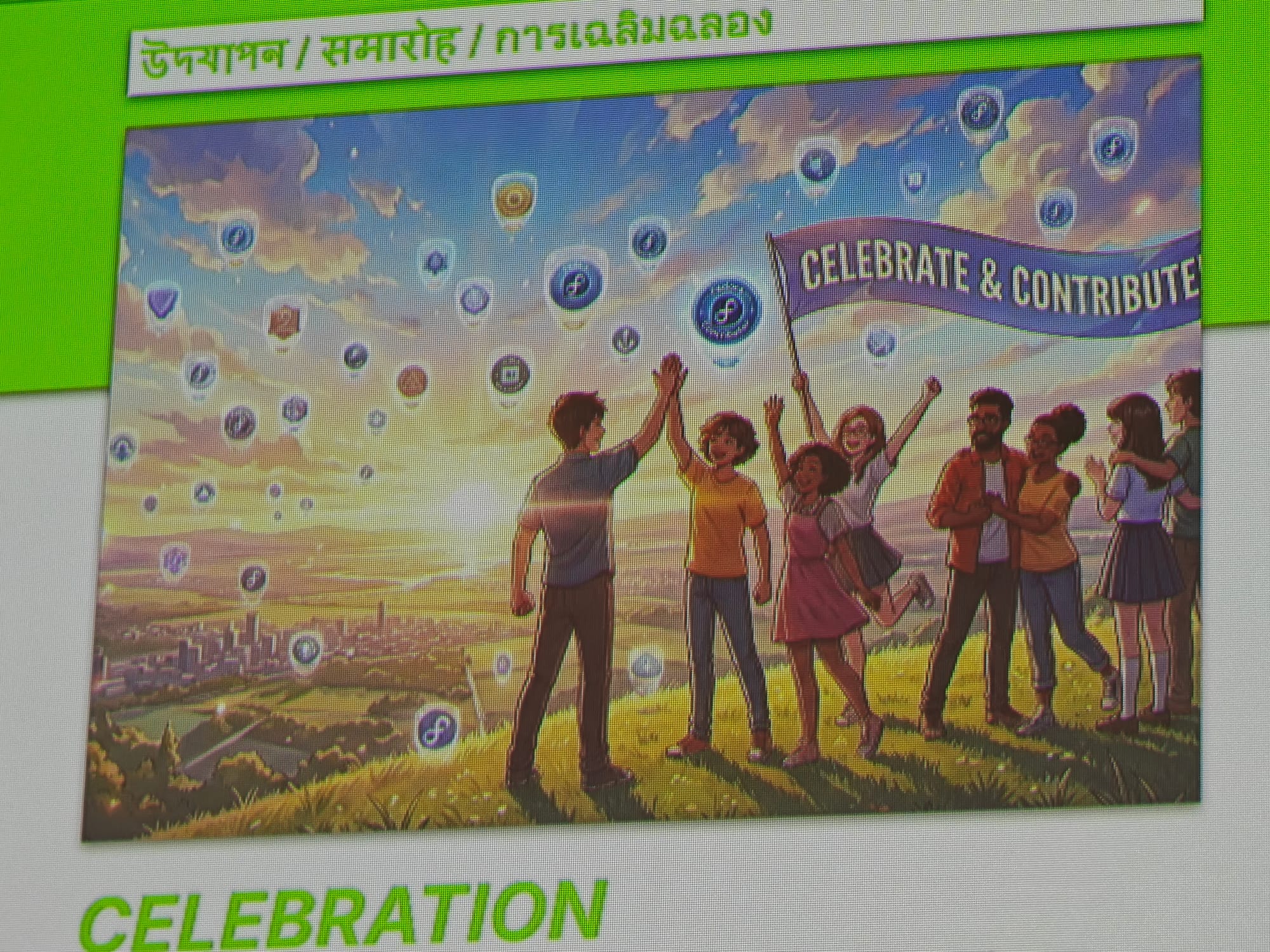
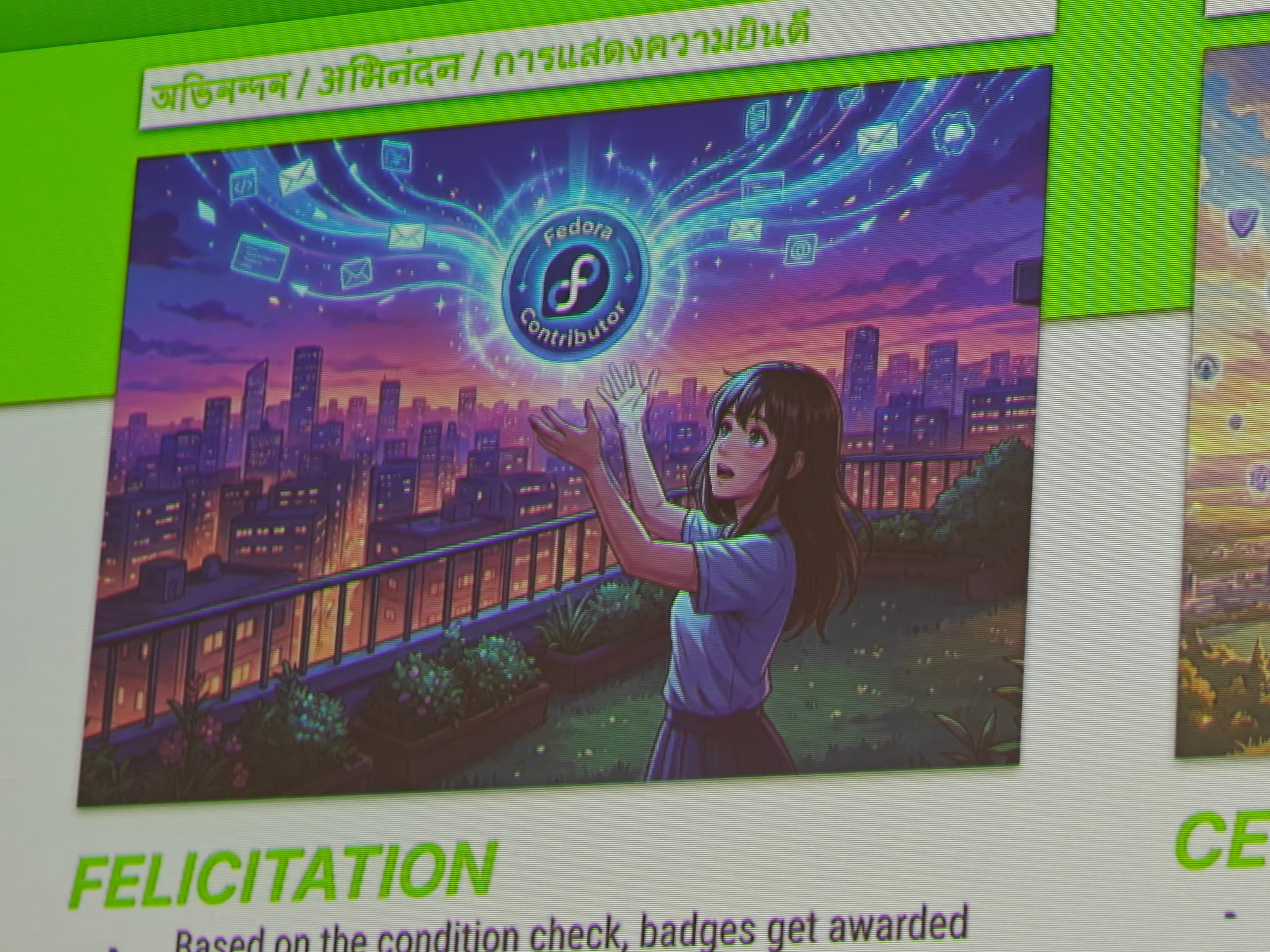
We were also joined by Shreenivas at the GNOME Foundation community booth, which allowed us to pace ourselves while tending to questions and feedback from booth visitors. During a brief visit from Daniel J Blueman, he connected with Aaditya to understand where he could report bugs and improvements for the GNOME desktop. He seemed to have been plagued by problems with the use of external monitors on his ARM-based (Advanced RISC Machines) SoC-powered (System on Chips) laptop on his fresh Debian Linux installation. Meanwhile, I wasted no time unofficially promoting my presentation on the Fedora Badges Revamp Project to the enthusiastic folks from the day before who visited our booth. Meanwhile, I also gave a quick demonstration on how RPM packaging works to a relentlessly curious Pongsakorn, who wanted to package their Rust application for Fedora Linux. Using one of my own hobby projects, Loadouts for Genshin Impact, I showed him how to write an RPM specfile and how programming-language-specific macros could help make things easier.
As I was not sure if something like the PyProject RPM Macros for Rust existed, I wanted our conversation to be an entry point for them into the RPM packaging tooling ecosystem. While answering his question about Linux kernel package versioning on Fedora Rawhide, I also fielded a question about conflicting packages from Abhijit. Since he was experienced with how the Debian Linux packaging process would handle this, he was curious to know how RPM package management tools would address the situation. Using various examples of how software packages are related to one another, I explained how this linking not only mapped dependencies but conflicts as well. At around 1230pm Indochina Time, I wrapped up my lunch and connected with Simon Strohmenger, who was visiting the community booth then. He shared how he worked on funding free and open source software events across Europe and supporting critical engineering ecosystem resources and was also curious to know more about what I had to share regarding the AI-assisted Contribution Policy from the Fedora Project.
After sharing contact details with each other, he also checked in with me on whether I would be willing to present a proposal on best practices in contributor onboarding and retention in free and open source software communities. In our conversations, we realized just how crucial it had become to discuss governance policies among grassroots collaborators to ensure that their implementation does not come off as a negative surprise. I also shared my approaches to using LLM (Large Language Model) tooling to assist project maintainers and budding contributors by automatically addressing various low-hanging fruits. Empathizing with how stressful and overwhelming it ends up being for the maintainers and newcomers, respectively, AI tooling could be utilized for these positive purposes instead of worrying about its popularized contemporary taboo perspective. While I could not get him to participate in my Fedora Badges Revamp Project talk later that day, he said that he would send over some of his engineering friends, as he found the general idea of awarding contributions fascinating.
Since there were not a lot of folks present at the event apart from those who had some activity to participate in, Aaditya struggled to distribute the remaining GNOME-styled tee-shirts. On the other hand, we had been extremely successful in distributing the stickers, so we were able to advocate for our projects from the community booth. At around 0130pm Indochina Time, I checked in with the event volunteers about the allegedly malfunctioning livestreaming functionality in one of the presentation halls. Amidst my attempts to have that fixed before my talk began in about three hours, I briefly met up with Saksham again in the hallway, who mentioned his plans to expand the hackathon project, and I shared the idea of "releasing (software) fast and releasing often." It was an absorbing sight to see how the participants at the ExpressVPN-sponsored FOSSAsia Hackathon were helping each other with a gargantuan variety of problem statements. Such a sight (and evidence of friendly competition) is something one would rarely get to see outside of free and open-source software communities.
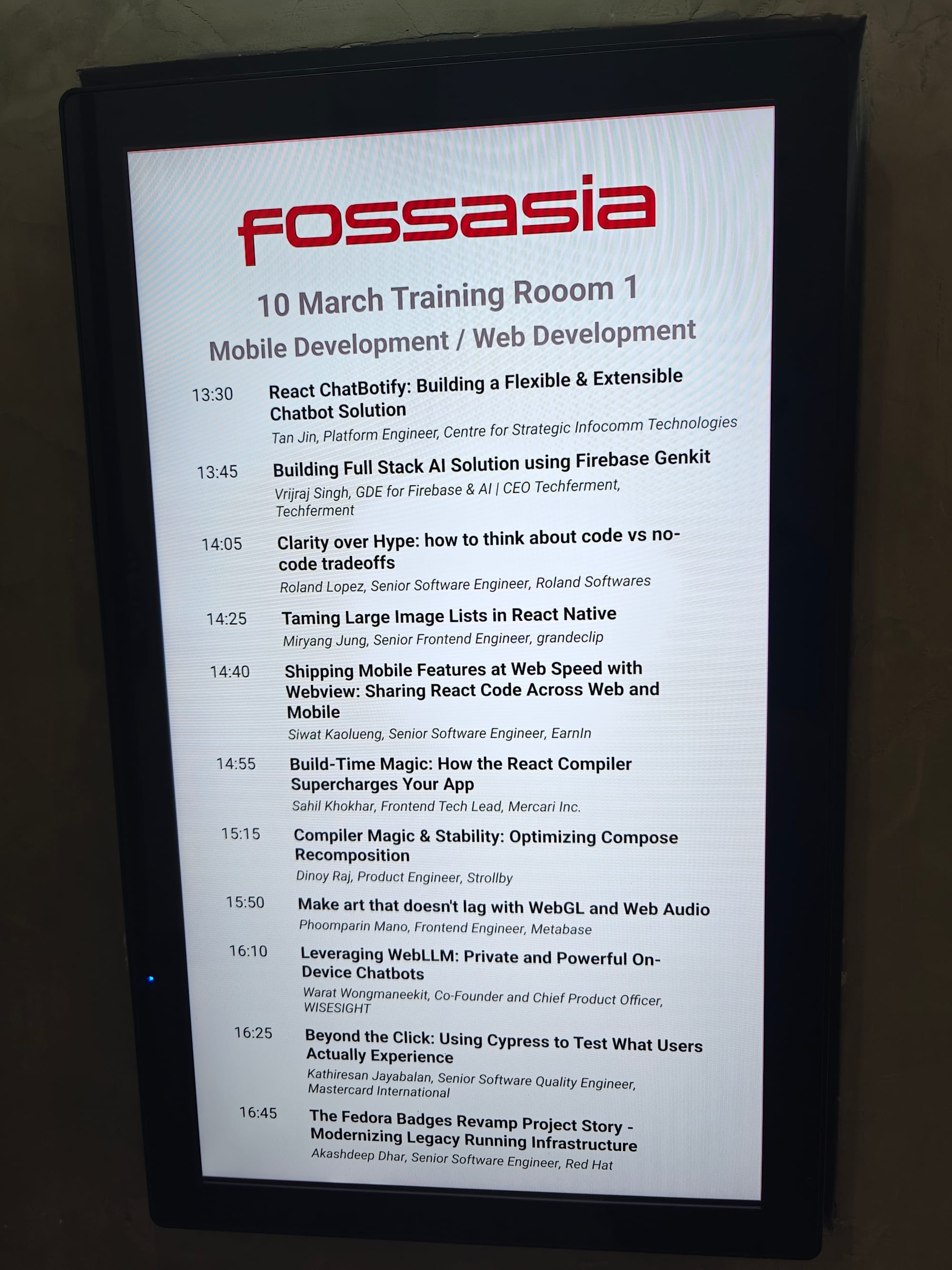
I was thankfully able to get myself caffeinated at around 0330pm Indochina Time, as with the activities moving slowly throughout that that day, I found myself zoning out every now and then. After addressing the livestreaming issue, I met up with some folks from AWS (Amazon Web Services) who were visiting our trinity community booth lineup and had previously worked with the likes of David Duncan and Rich Bowen. Since they had experience with Amazon Linux, they reflected on how Fedora Linux provided them with an innovation-driven upstream distribution to build upon. After that one last conversation with them, Aaditya decided to start packing up the booth at around 0430pm Indochina Time, while I kept myself busy helping him with the tooling. With the time being barely fifteen minutes away from my presentation's commencement, Samyak returned to the GNOME Foundation community booth. Pongsakorn also found his companion back when Tomas returned to the KDE e.V. community booth, and I was ready for my talk to be delivered at the tail end of the event.
Collection #3
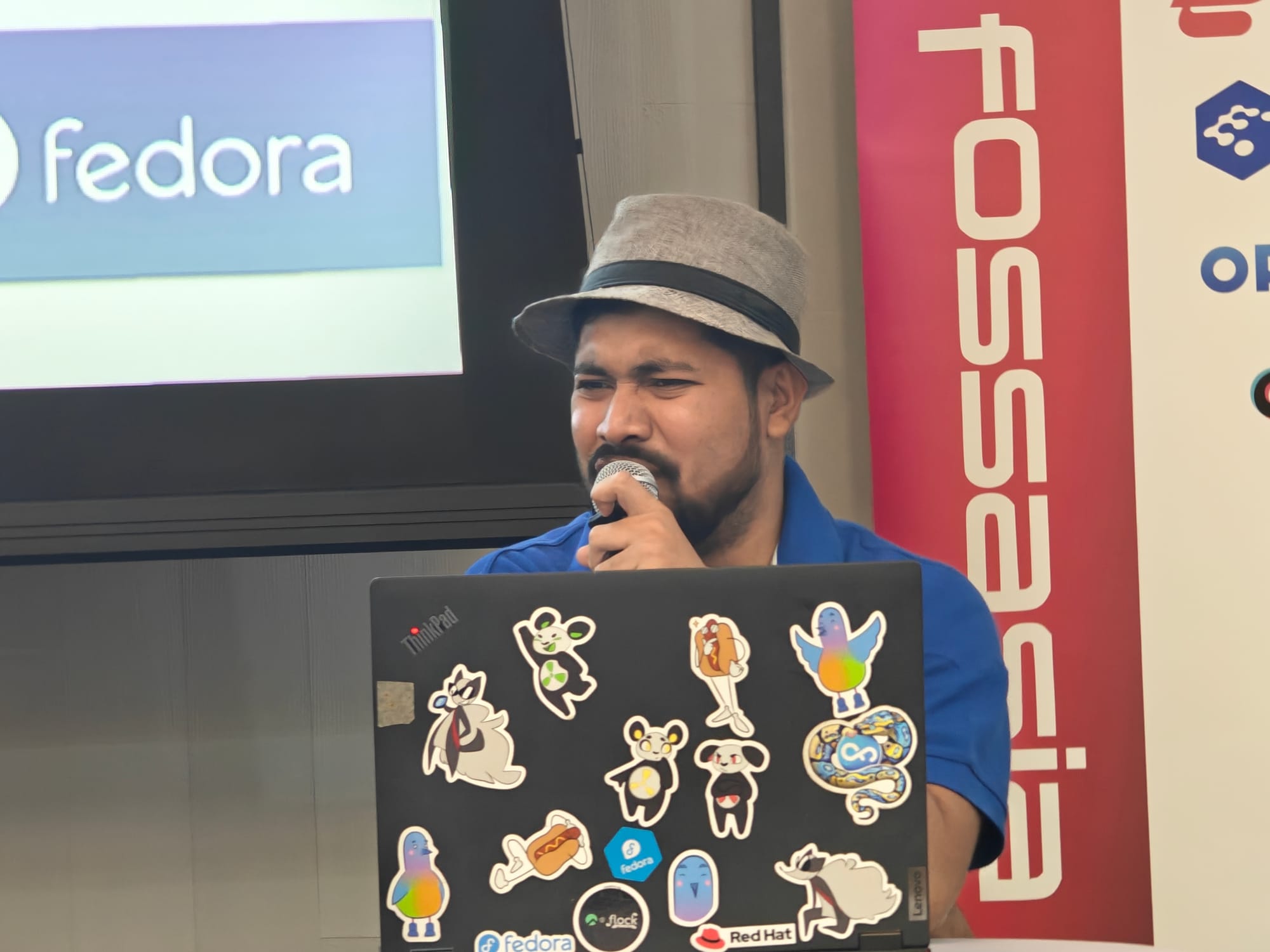
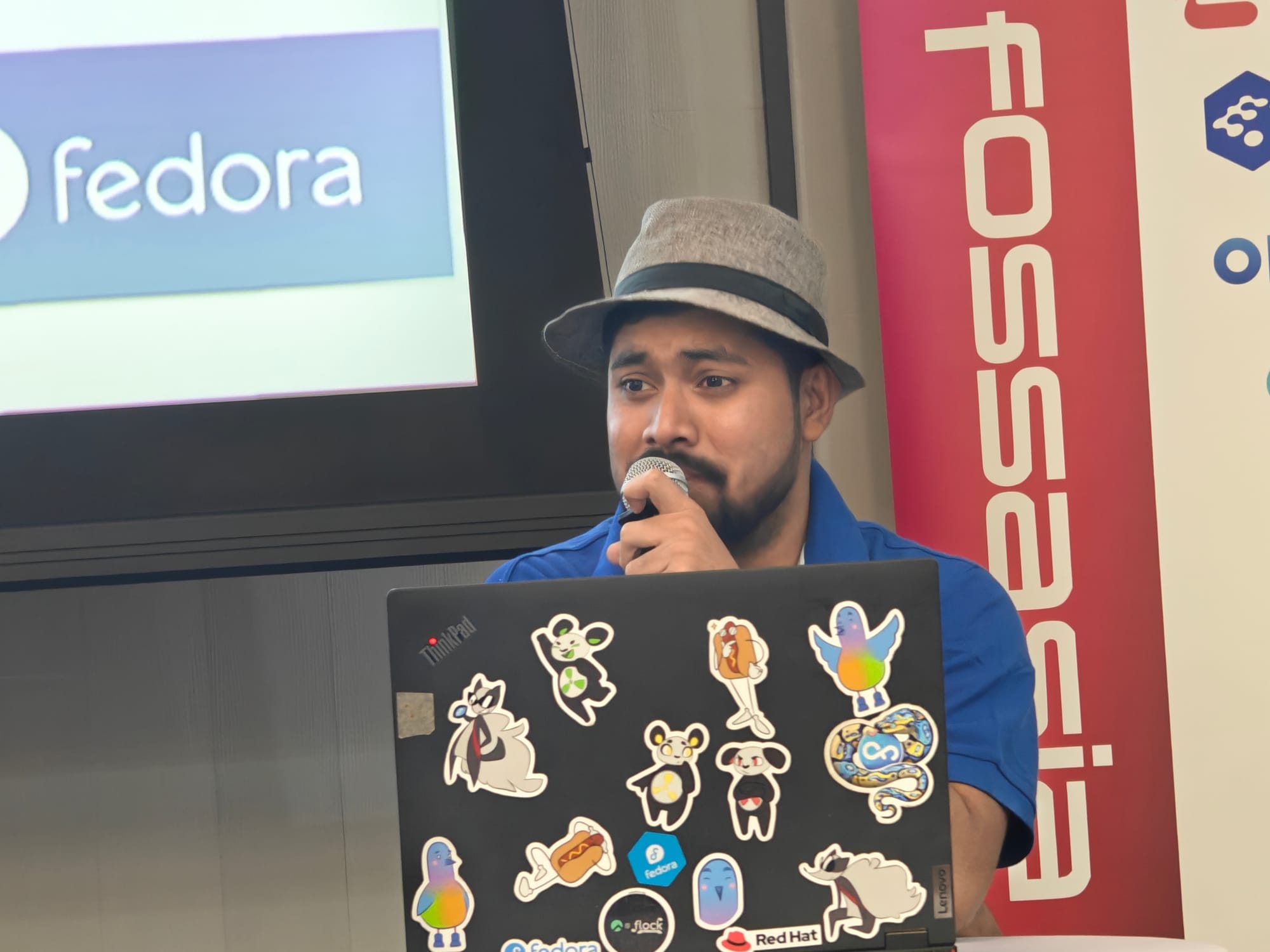
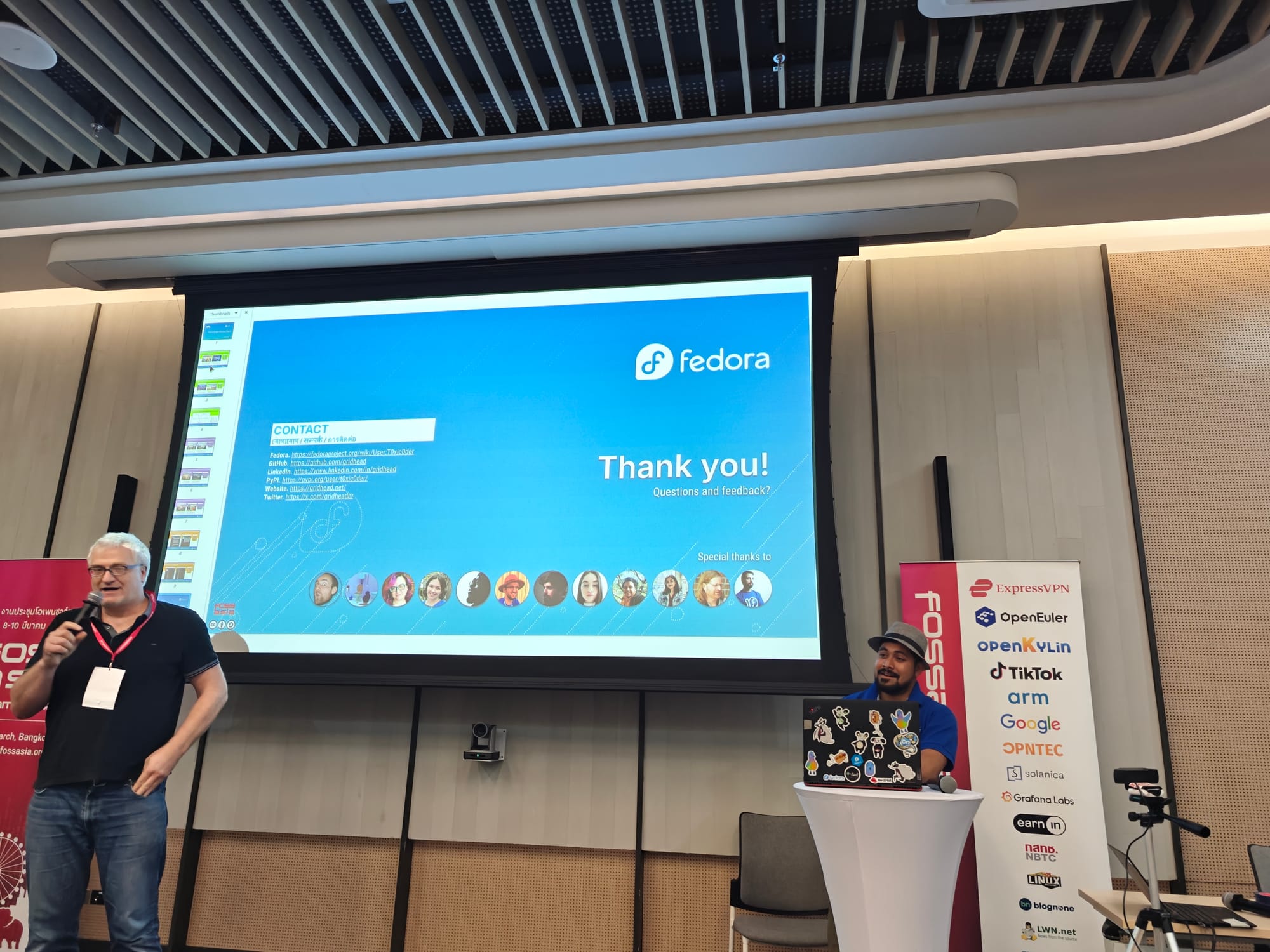
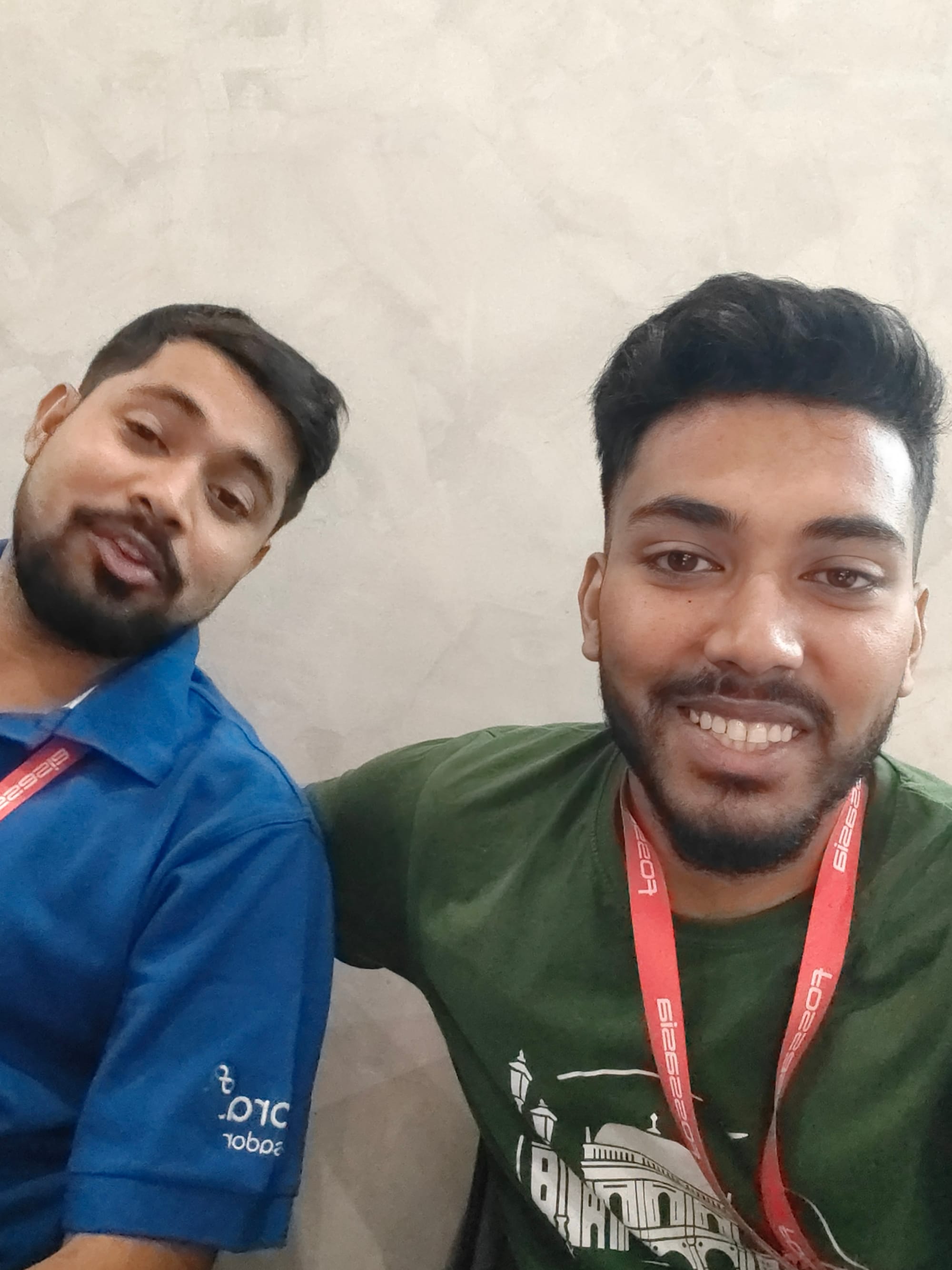
As the presentation designated training room had my slide deck already fetched, I did not have to bother with sharing my screen. There were some technical issues with the clicker device, though, as it failed to switch slides when the window was in fullscreen mode. I decided not to settle for windowed mode to save time, while Norbert Preining introduced me in the speaker area at around 0445pm Indochina Time. For a presentation scheduled at the tail end of the conference, it was reassuring to see that I still had around twenty attendees in the hall who were curious to know what I had to offer. Being the deciding moment that I had been practicing regularly for, I wanted to ensure that I was doing justice to their time (and attention) and that of the remote attendees. Thanks to Samyak's laptop and the regular touchups, the fifteen-minute-long presentation went largely well, and I also addressed some feedback and questions from both the in-person attendees and the hall host, Norbert. After finishing my talk, we headed into the competition hall where the four judges had assembled, by then.
Collection #4
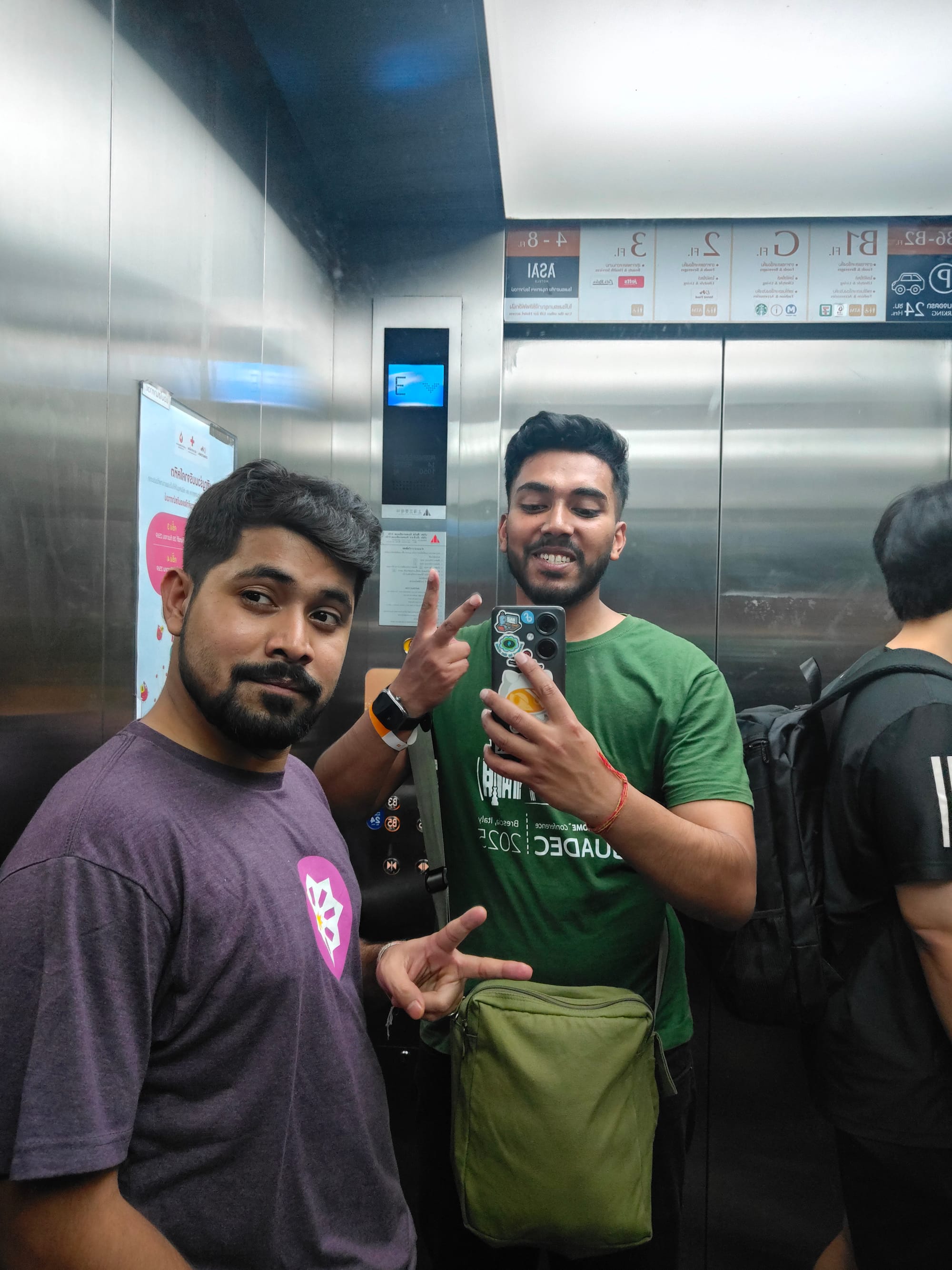
After briefly waiting for the participating teams to propose their project ideas and for the judges to complete their evaluations, our collective made our way into the main hall to witness the winner announcements at around 0530pm Indochina Time. As the winners were announced and the event concluded, Samyak and I deliberated on our evening plans, as we did not intend to continue our stay with the FOSSAsia 2026 attendees at the Night Market. After his proposal was turned down by the folks he was planning to invite, we formed a group of four, including him, Soundarya Rangarajan, Aaditya, and myself, to visit Bangkok Chinatown. This idea felt strategically sound as it had become a little too late to visit the riverside for a calming evening boat ride dinner, and coincidentally, Soundarya was staying at the same hotel as Samyak and me. After making a quick drop of Aaditya's belongings at my hotel room and taking some time to re-energize ourselves after the long second day, we started looking for cabs using the Grab application at around 0700pm Indochina Time.
Collection #5
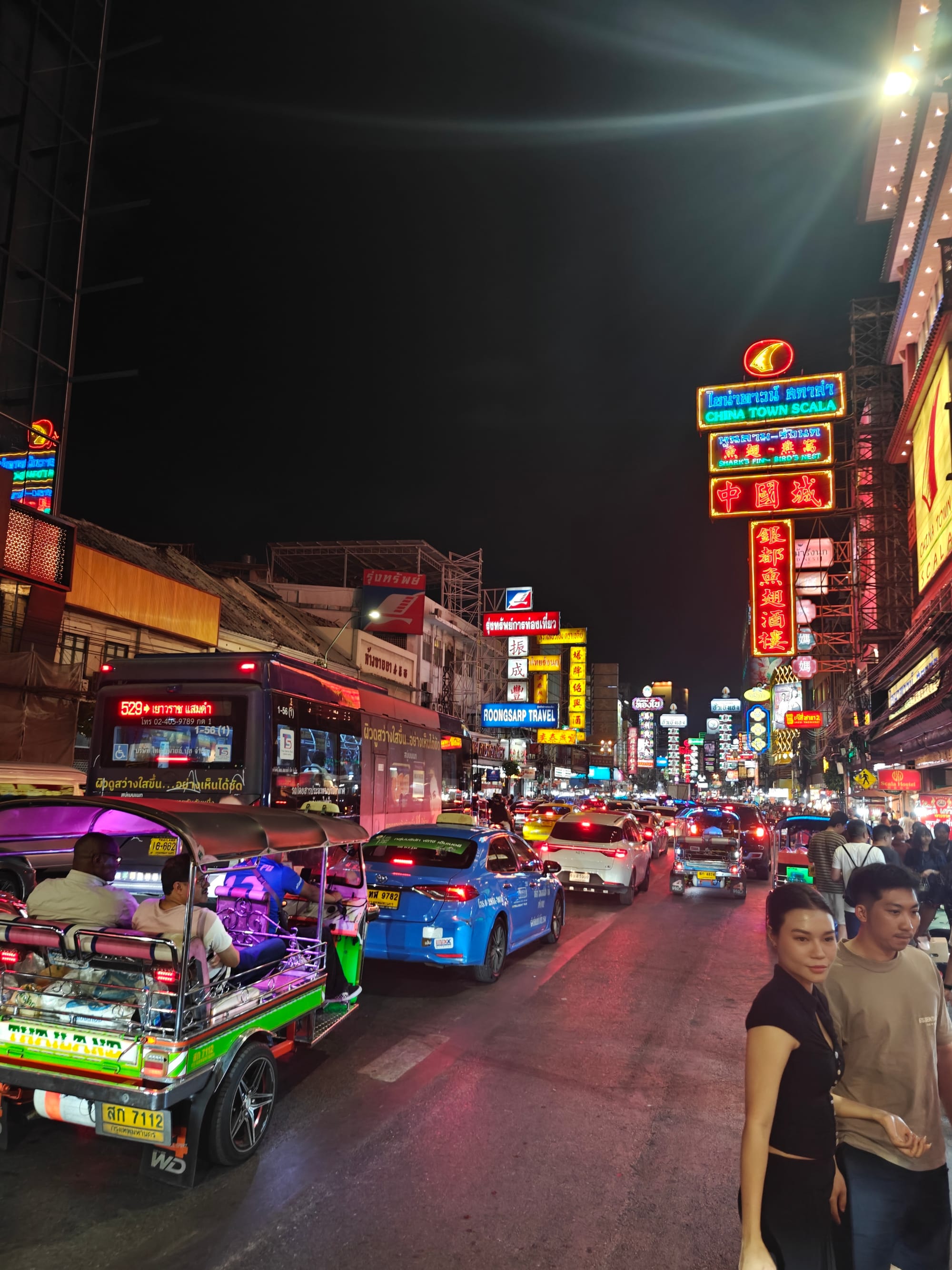
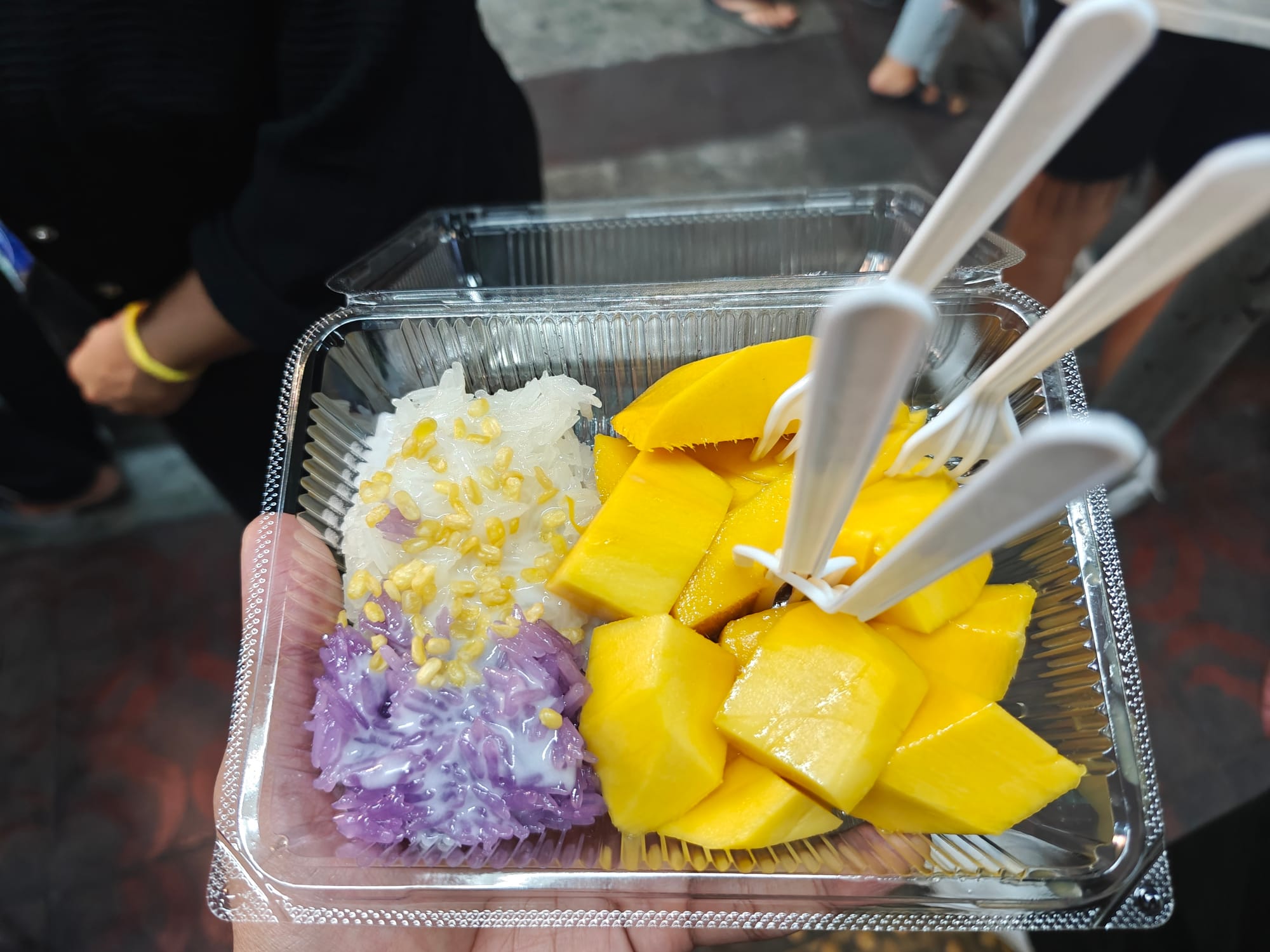
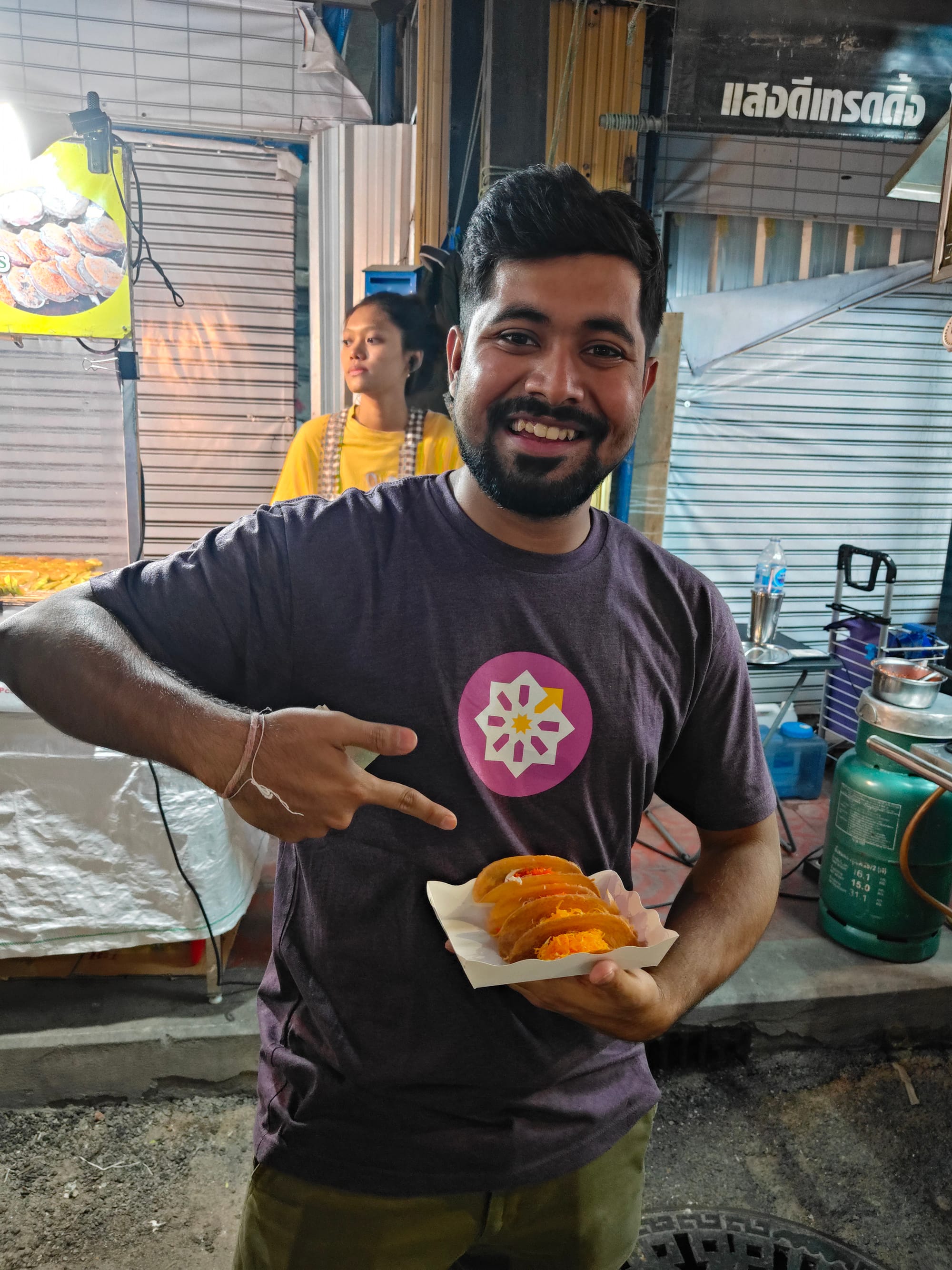
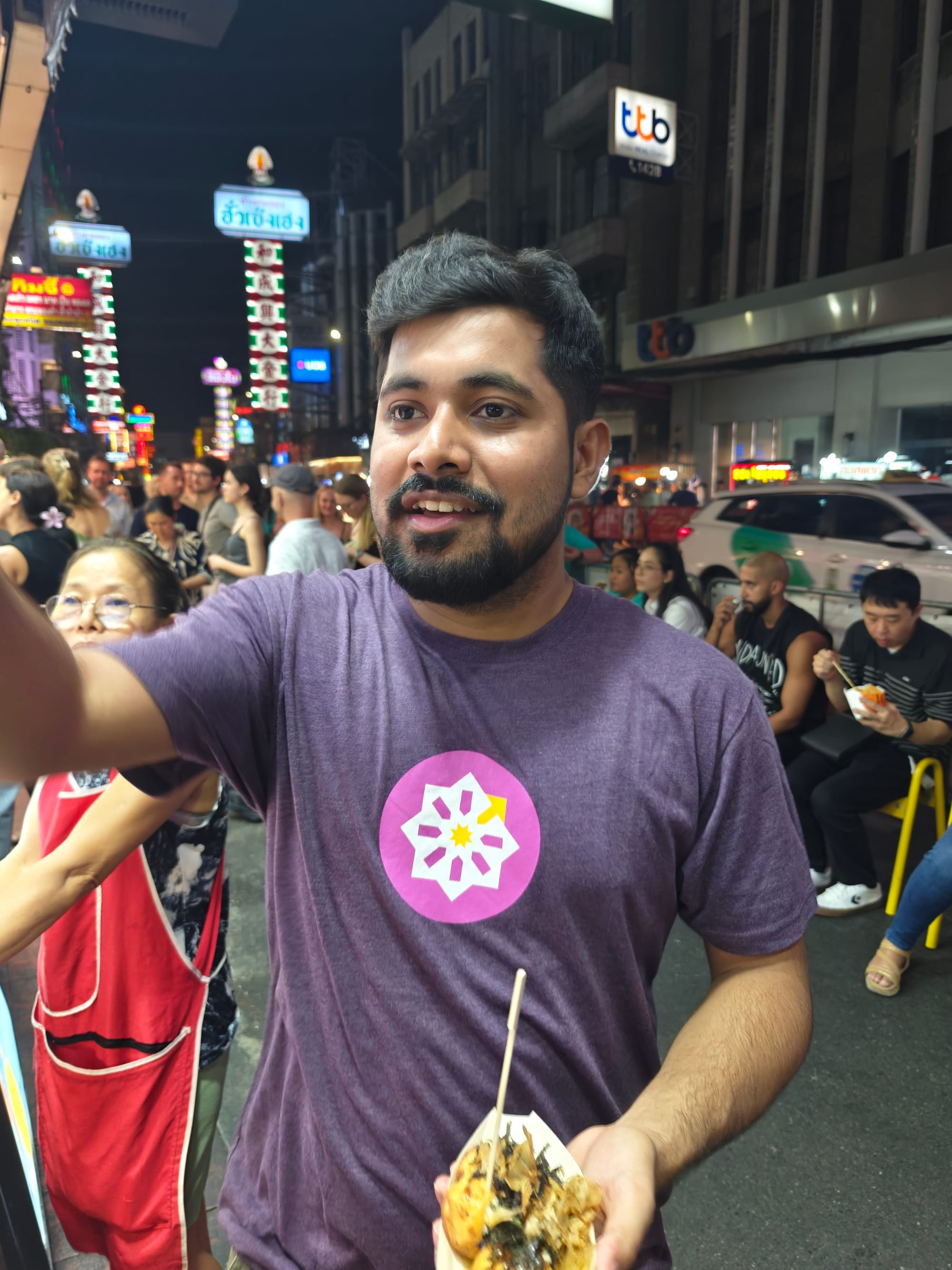
Amidst the heavy Bangkok evening traffic, we struggled to get a ride until we finally secured one after about thirty minutes of waiting through the Bolt service. I was not a fan of the service, as the toll expenses were not accounted for in the final billing, thus resulting in us having to pay for them separately. What I was a fan of, though, was the taxi driver assigned to us, as the cheerful person did not let the piling traffic and the linguistic barrier prevent him from having a friendly chat with us. With the use of Google Translate, he graciously helped us plan our course and described what we could expect in Bangkok Chinatown. And he could not have been more right - because when we got off the Bolt ride, the view of the neon filled, slightly humid hustle and bustle of Chinatown was a scene that nothing could even compare to. Weaving through the visitor crowd at the periphery, our first stop was, of course, a stall selling the world-famous Mango Sticky Rice for just 100 Thai Baht per plate. We finally got to experience firsthand just how true the people were who sang nothing but praises of this exclusive snack!
Collection #6
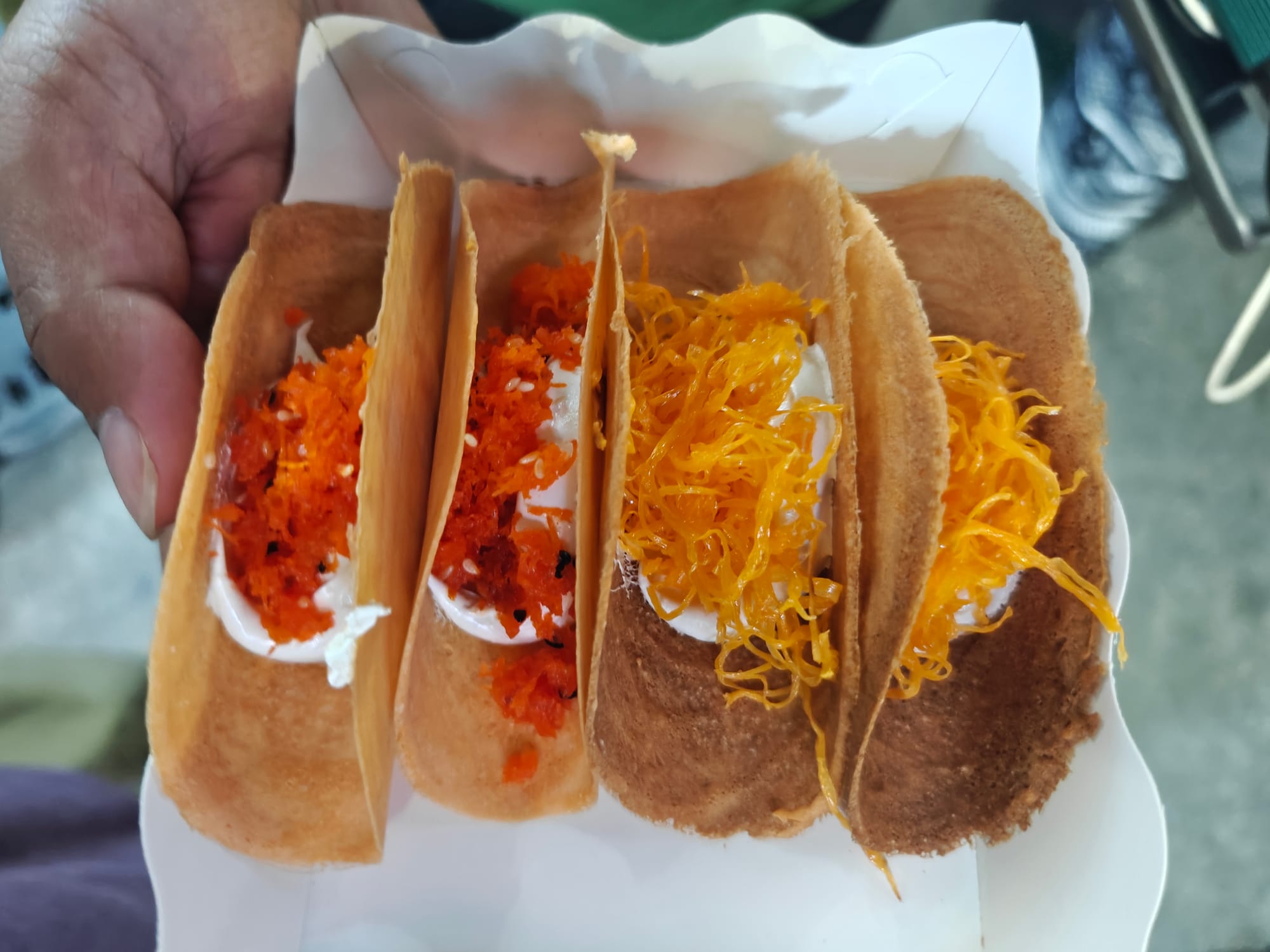
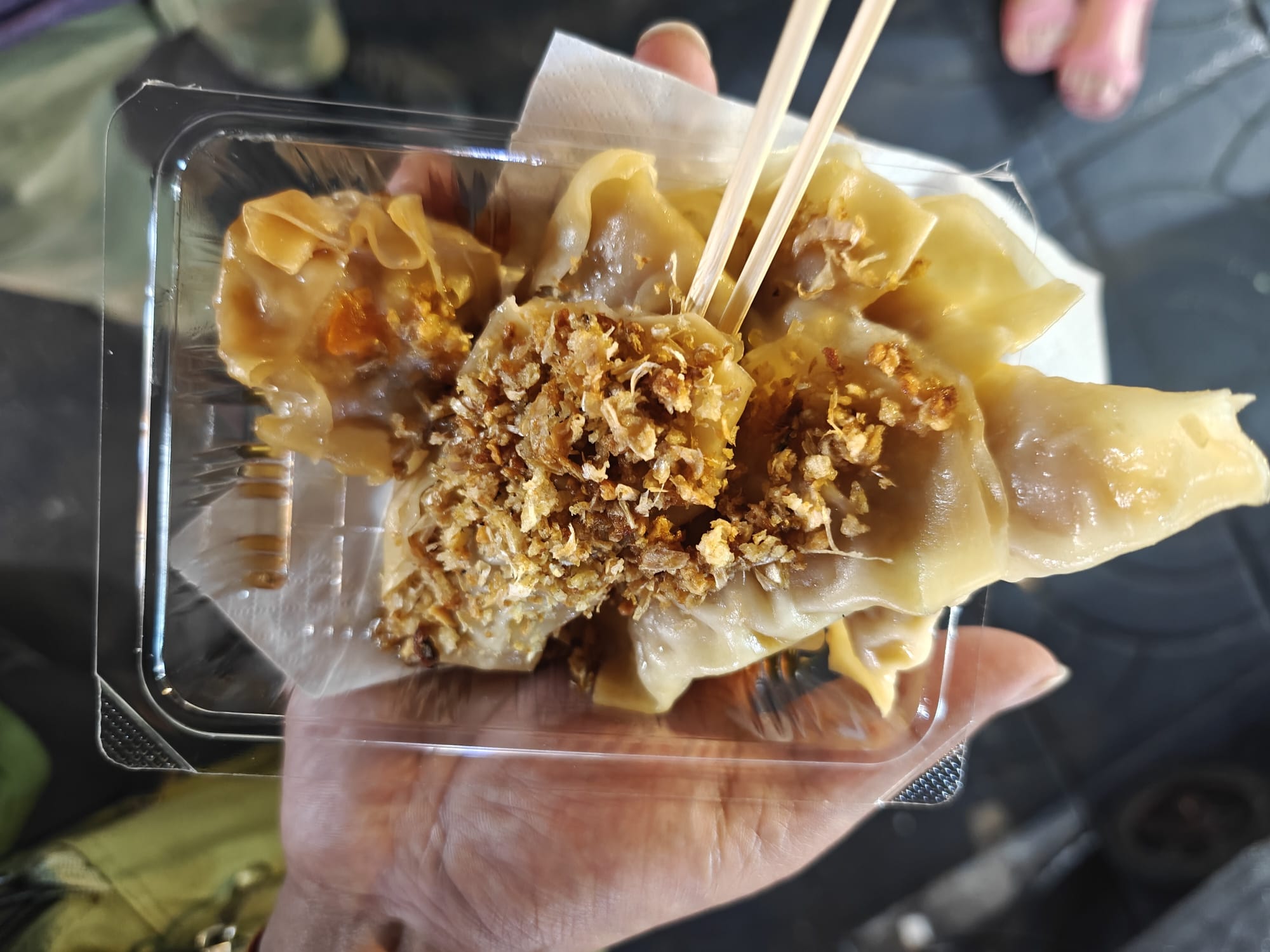
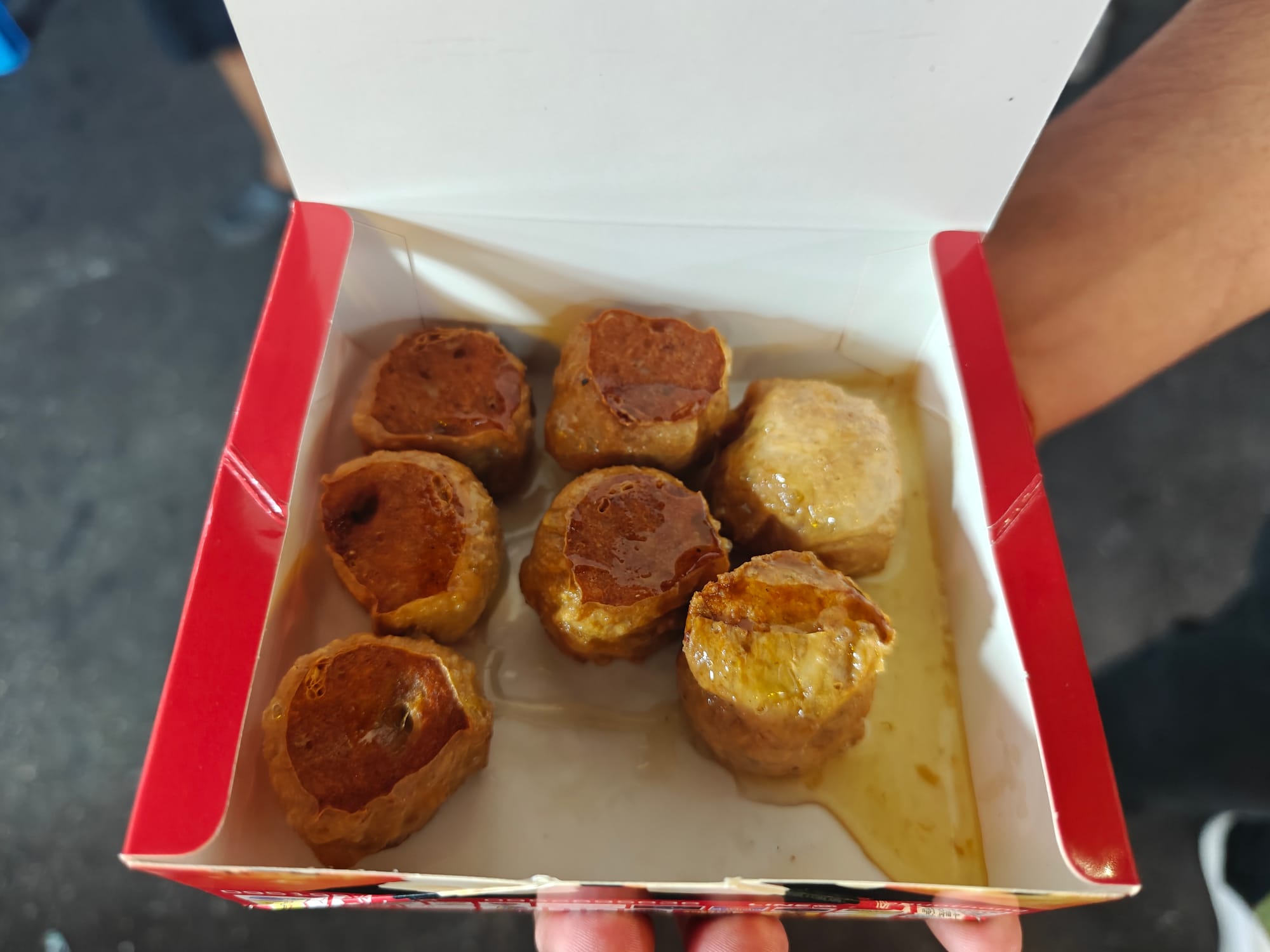
We dove deeper into our little roadside dining adventure with some Coconut Egg Sweet Crepes and Japanese Fried Octopus Balls before deciding to split into groups of two, as it did not sit right by Aaditya and myself, since the cuisines there were mostly non-vegetarian. As Samyak and Soundarya headed their way at around 0830pm Indochina Time, him and I decided to get even more creative by digging into some Shrimp Meat Dimsum Dumplings and Fried Crab Meat Rolls. After finishing off with some Fried Sweet Maple Fish and Ripe Alphonso Mango Slices, all for amazing bargains, we navigated the confusing pathways to reach Jam Jam Eatery Chinatown. As Aaditya's belongings were in my room, we left for the hotel at around 0915pm Indochina Time without waiting much longer. It was not that I had my fill of exploration, but I felt responsible to ensure he made it back safely at BTS Punnawithi to his hotel room. After hanging out in my hotel room and discussing industrial mentorship ideas, I decided to see him off and call it a day at around 1200am Indochina Time.