Day One - IndiaFOSS 2026
On the first day of IndiaFOSS 2026, Fedora Project attracted visitors at the Red Hat Community Booth through engaging activities and exclusive collectibles about Fedora Linux, while gathering feedback, addressing misconceptions, making friends and strengthening collaboration with other communities.

Theme
Experience
There are only so many hours that one could rest for, so, of course, calling it a day early on the previous day led me to wake up early on 26th September 2026. I knew that waking up at 0600am Indian Standard Time would help me reach the venue four hours later with the swags inventory. Since Samyak Jain had arrived on the night before and was planning on joining me for the next couple of days, one of the first things we did was to take the inventory of Ceramic Branded Coffee Mugs and Round Magnet Pin Combos that we had delivered to his relative's house. Working closely with Rajan Shah, we were able to secure the best location for the Red Hat booth and the best schedules for Fedora Project's community presence. We knew from the beginning that we would very likely be the major draw at the booth since we had engaging activities and enticing swags to keep the booth visitors occupied.
Finishing off the breakfast at around 0800am Indian Standard Time, I finally met Samyak at the reception area when he was just returning from the temple. Luckily enough, he had already taken care of having the swag inventories delivered to SRS Springs And Spa Hotel and, alongside that, he had also gone ahead with ordering some stationery after consulting with me. As we did not necessarily have a talk or discussion planned for that day, we wanted to be sure that we had everything we needed for a successful community booth representation. One could not stress just how important supplies like cellophane tapes, marker pens, plastic scissors, thumb tacks, etc., could be in times like these, not just to us Fedora Project folks but also to the neighbouring communities sharing the booth with us, like Ansible, PyTorch, Tekton, Virtualization, and Containers, for the next couple of days of the event.
I was not happy with the incomplete breakfast on that morning, but I did not have the luxury of expressing my dissent at the time. Making do with Boiled Idli and Coconut Chutney, paired with some Onion Pakodas and Hot Tea, I joined Samyak at the hotel reception at around 0930am Indian Standard Time. With the delayed delivery of the swag inventory eating up most of our time, we decided to skip the preliminary accounting and instead haul the entire inventory on our Uber ride to the event venue, NIMHANS Convention Center Bengaluru. Thankfully, Rajan's cohort was able to reach the venue earlier to help set things up amidst the early event rush hours, where we were going to dive right in after some time. Thinking on our feet allowed us to prevent any further delays in reaching the event venue and to take advantage of the first period of the flagship hallway track experience.
With the help of the concierge, we loaded up the heavy units onto the back of our Uber ride, and in the next fifteen to twenty minutes, we found ourselves arriving at the NIMHANS Convention Center Bengaluru. Samyak and I took turns lugging the heavy boxes, weighing 30-40 kg, from the parking area to the registration desk, where we checked ourselves in. Thankfully, our booth was located on the ground floor, right near the entrance, which not only meant that we did not have to play porters for long, but also ensured us the maximum footfall. It was crazy to think just how occupied the venue was, judging by the fact that it had paid registration. With crowd densities comparable to those of free events like FOSDEM etc., this was an expression of just how enthusiastic Indians and people from adjacent regions were about free and open-source software and the folks who maintain it.
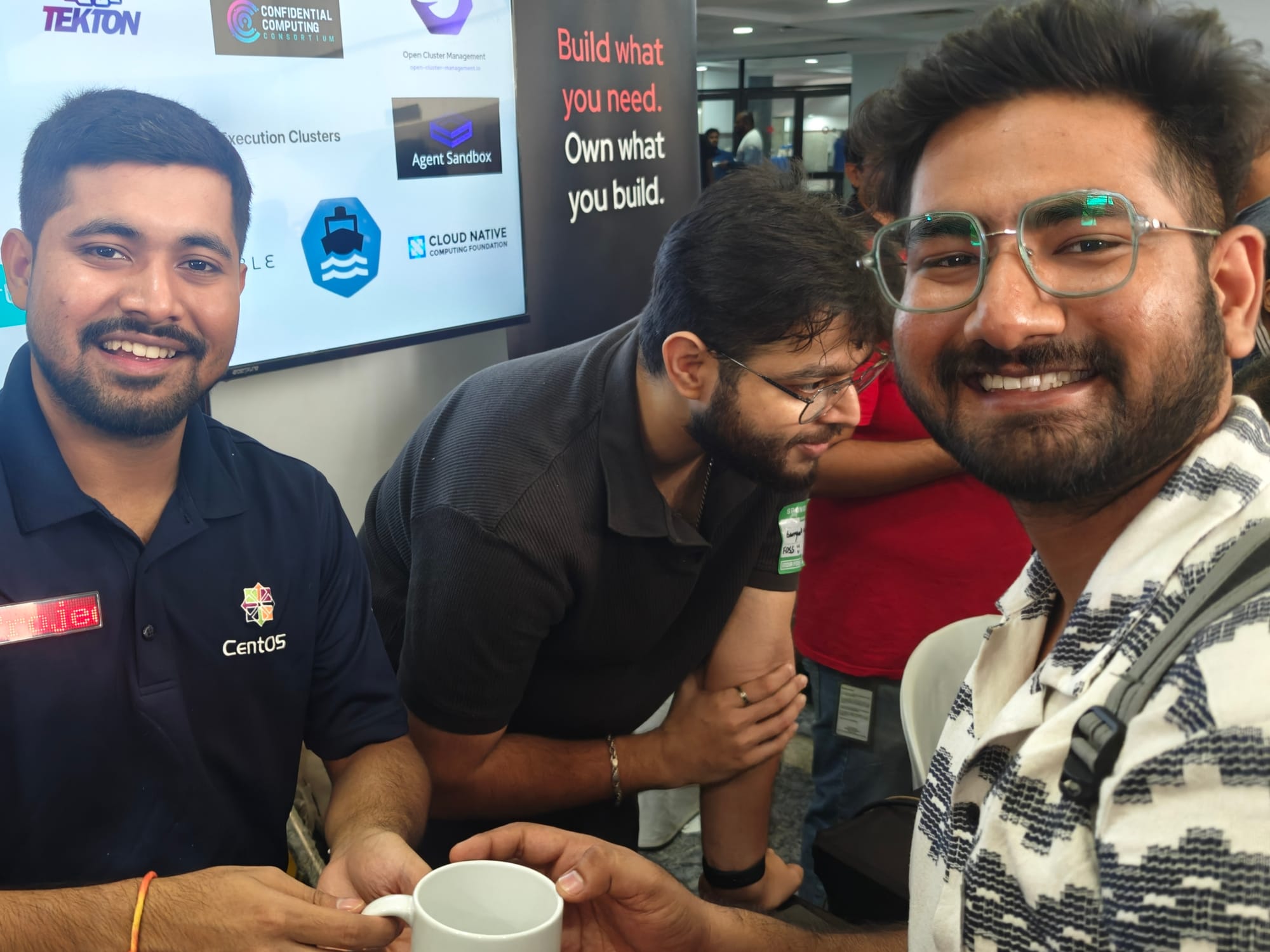
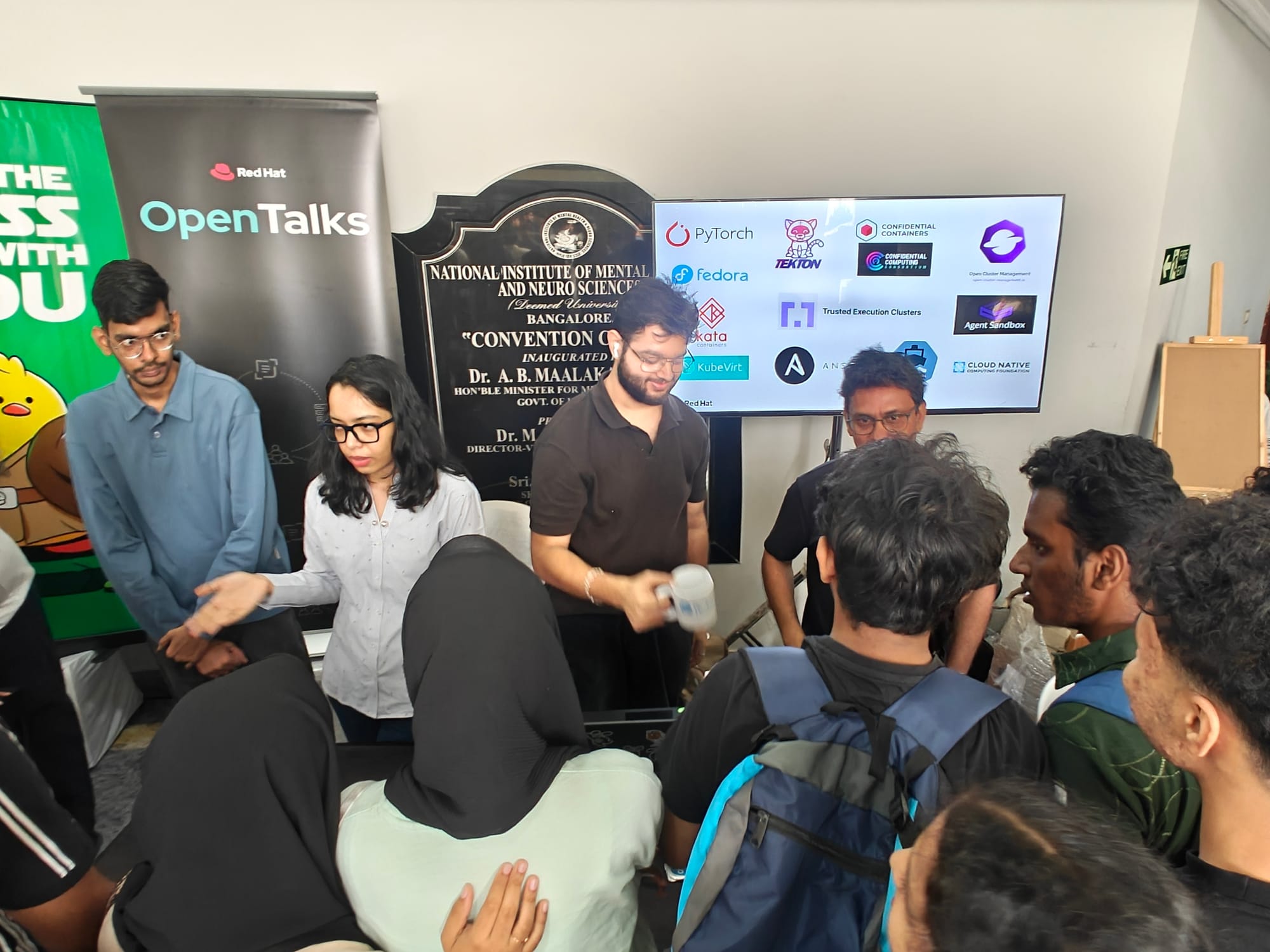
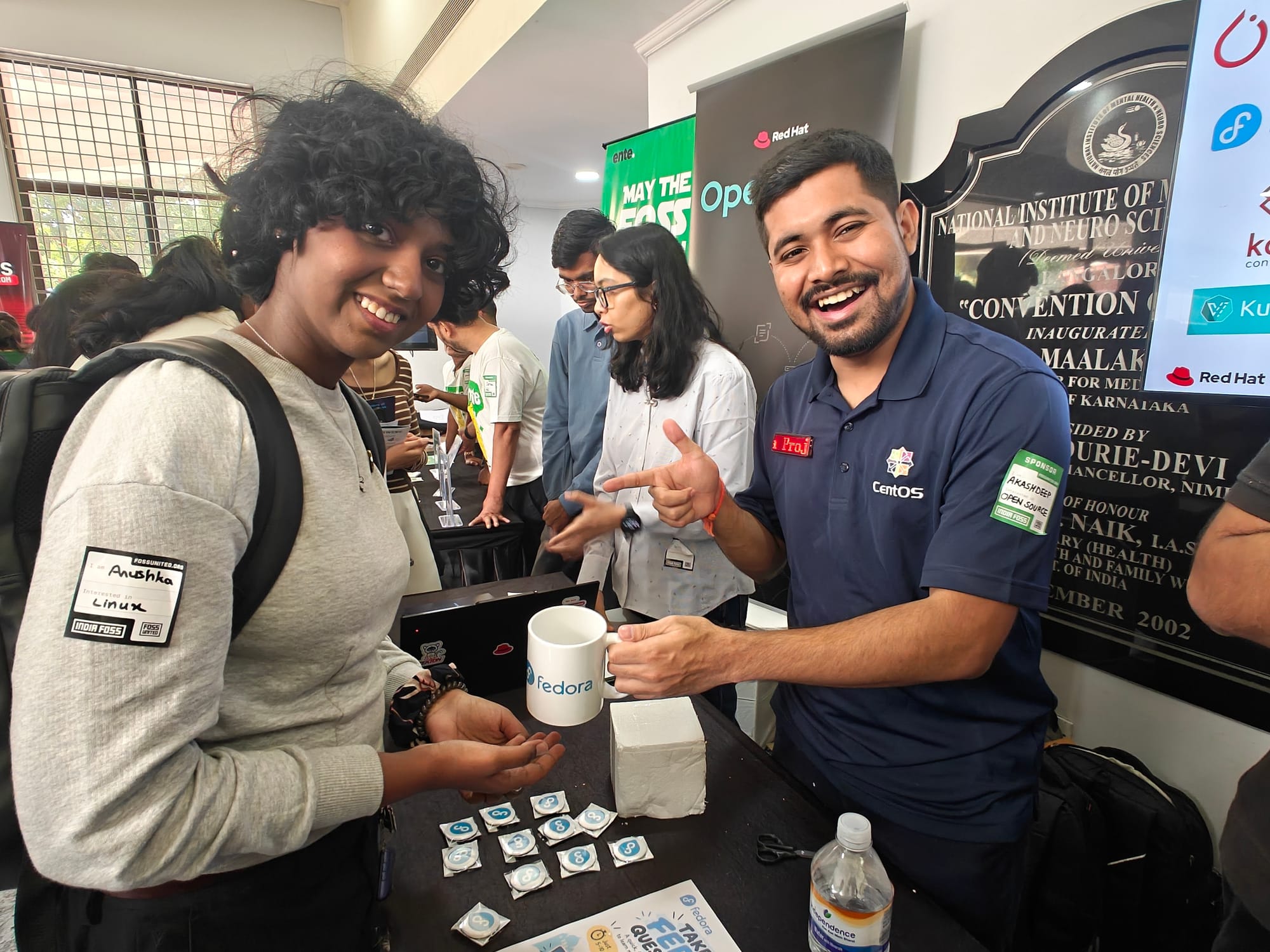
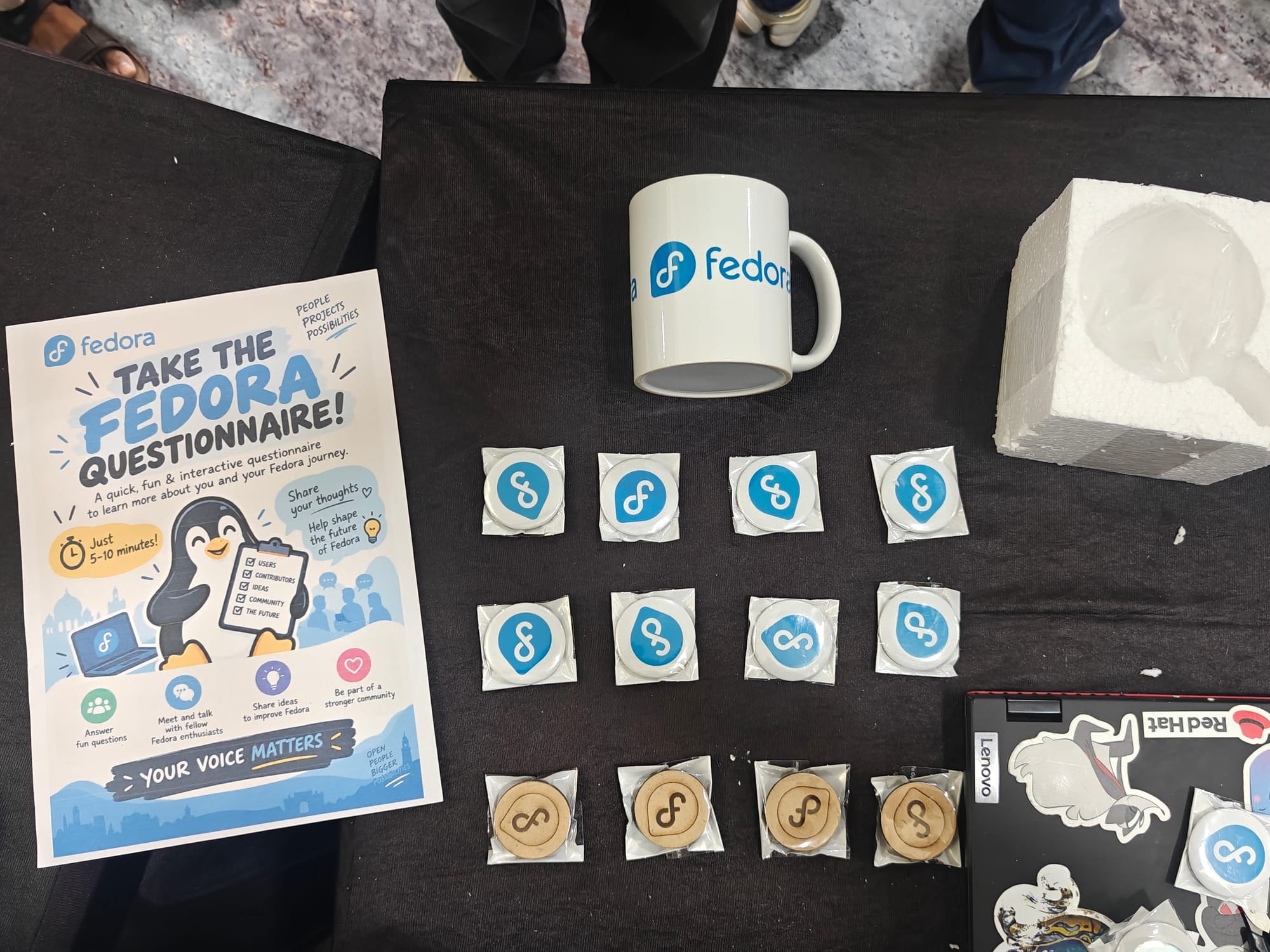
Getting to the Red Hat Community Booth was half the struggle – beyond which Samyak and I had to play it by ear to make it behind the already packed booth space. Samyak slowly made his way to the back of the community booth first, while I began unpacking our swag inventory on the desk. With him designing the poster for our community booth interaction activities using generative tooling, it helped us immensely in ensuring that we were able to make meaningful chats with our community of users and contributors at IndiaFOSS 2026 in our period. After a swift catch-up with the likes of Rajan, Deepesh Nair, Shivraj Patil, Veer Kumar Patil, and Gaurav Kamathe, I arranged the metallic Fedora Project-branded round magnet pin combos on the desk at around 1100am Indian Standard Time, which only led to the big crowd at the Red Hat Community Booth grow a whole lot more.
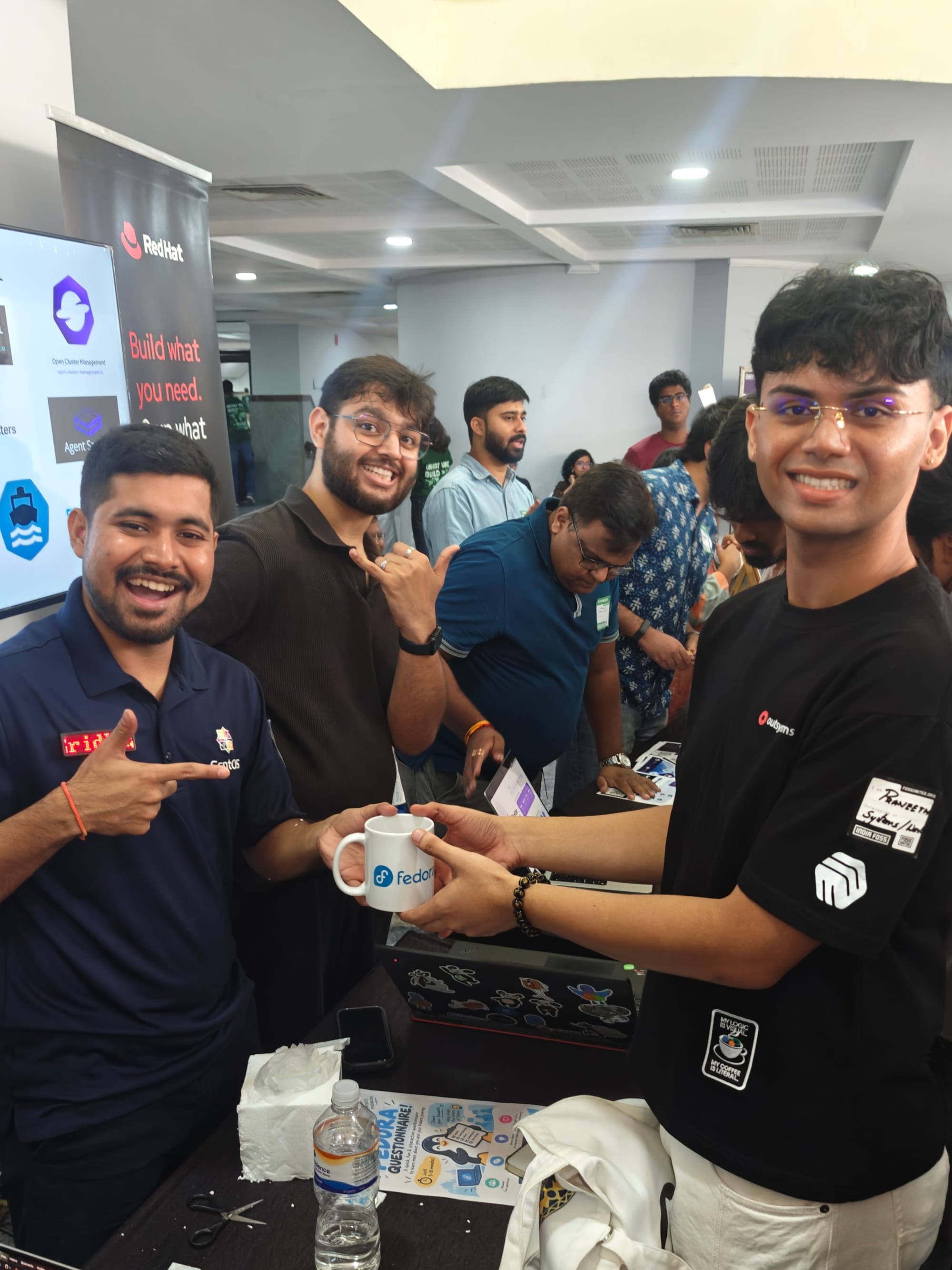
Both Samyak and I knew that we had to leverage the visitor footfall that we drew as the local Fedora Project ambassadors to channel visitors to our FOSS projects. As we were already at our capacity for handling visitors, we deferred handing out the rarer swags, such as Wooden Branded Pop Sockets and Ceramic Branded Coffee Mugs, until later, when the visitor crowd became manageable. Of course, that was a good problem to have, as not only Fedora Project but also the sister community projects could use the attention that we were bringing to the Red Hat Community Booth. Armed with the comparative study between Fedora Linux and other related GNU/Linux distributions, we helped the booth visitors understand the differences. We wanted to ensure that they had the knowledge before deciding on the one that they would want to settle on, instead of incessantly singing the praises of our own.
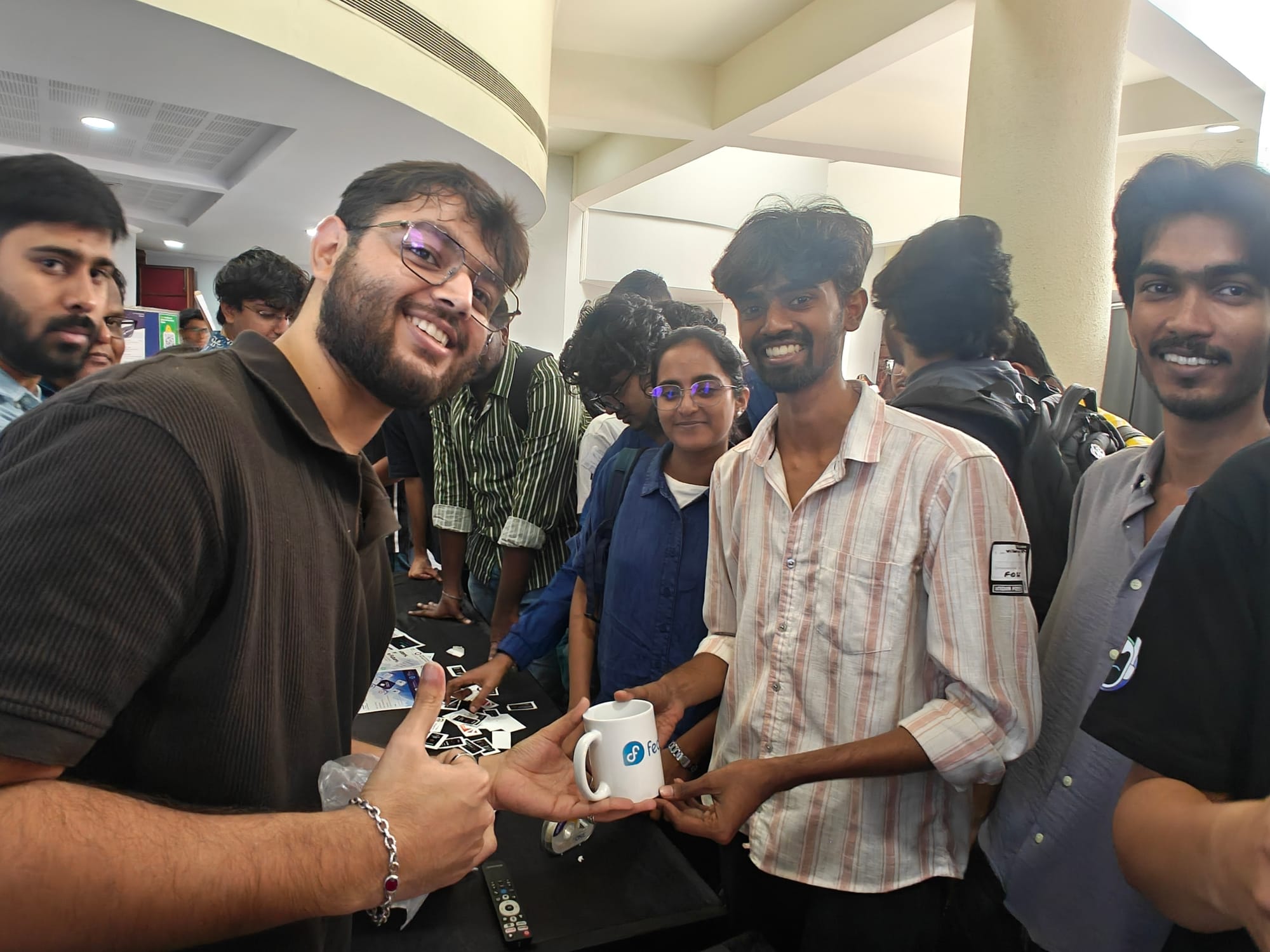
In the constantly fast-moving world of artificial intelligence, most booth visitors appreciated how Fedora Linux provided them with a curated collection of recent updates for the software applications they used. That, in turn, empowered them to architect solutions for the people of today and the future, instead of waiting much later for them. Being the general-purpose Linux distribution that Fedora Linux was, its appeal was universal among those people who wanted a middle-ground GNU/Linux distribution that was both stable and feature-rich. To our pleasant surprise, we met folks at the booth who learned about Fedora Project while using GNU/Linux distributions such as Bazzite and Ultramarine Linux. Among those questions, we also fielded misconceptions on the figurative death of CentOS Linux and misinformation around Red Hat Enterprise Linux becoming closed source.
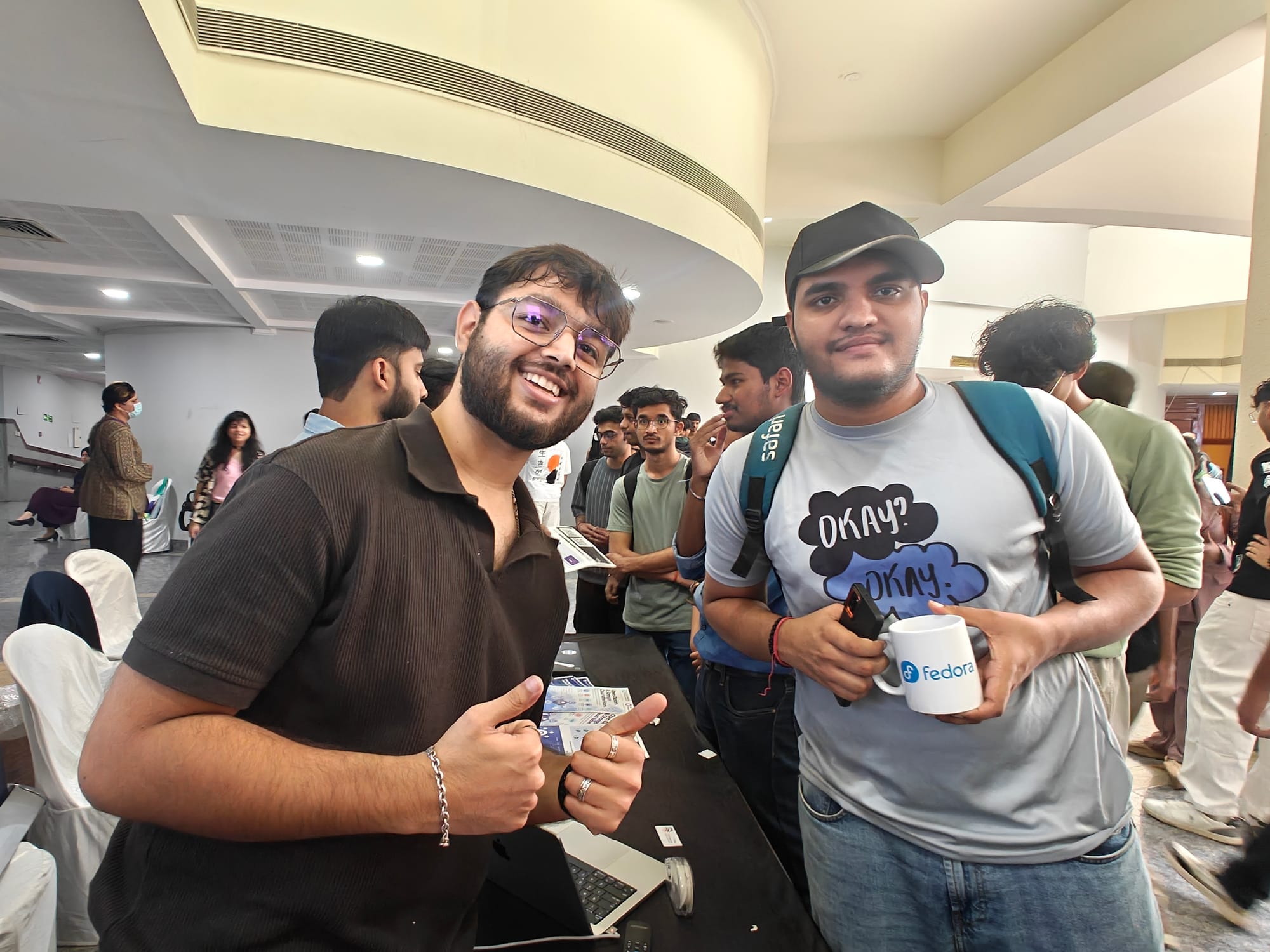
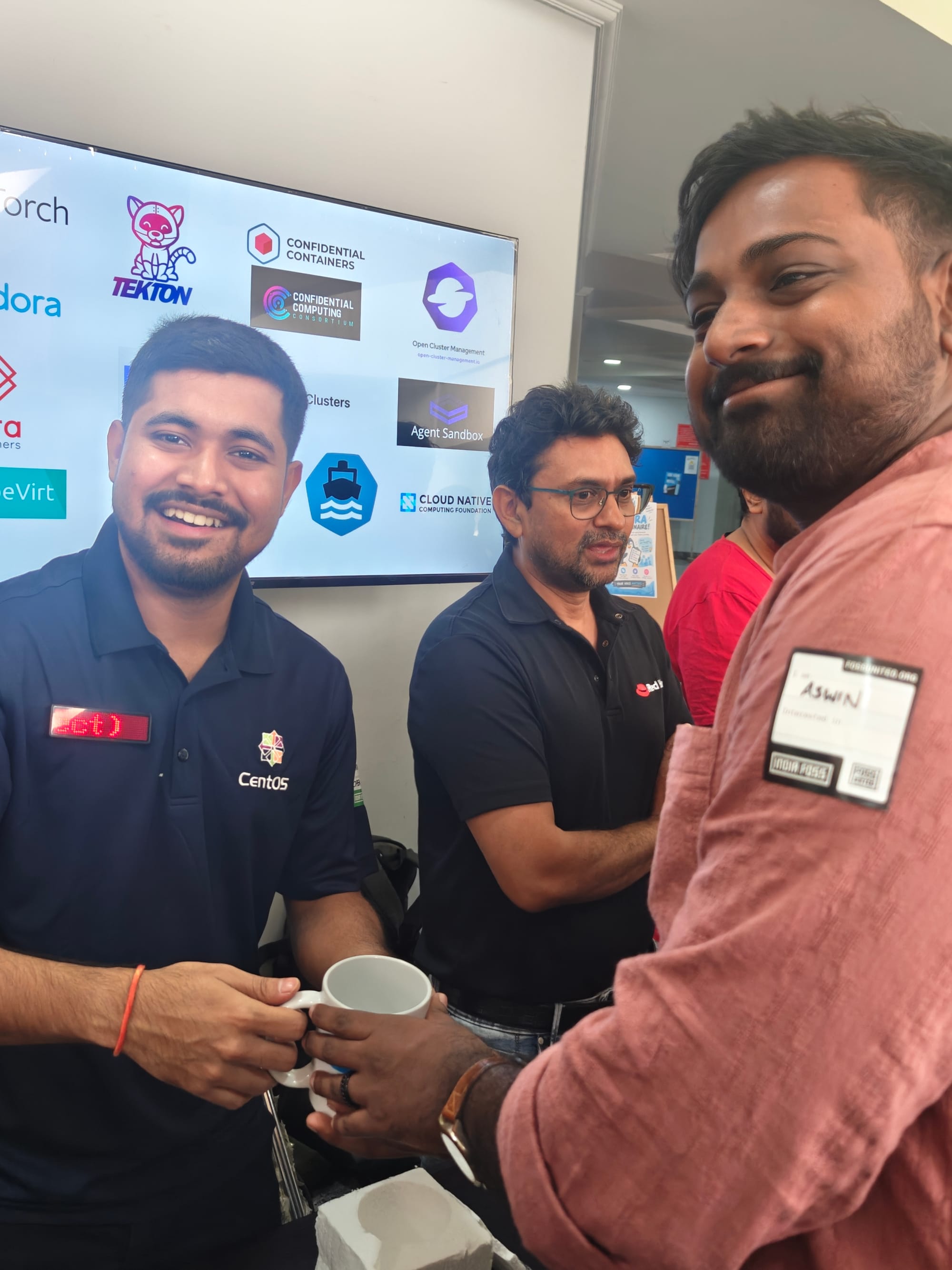
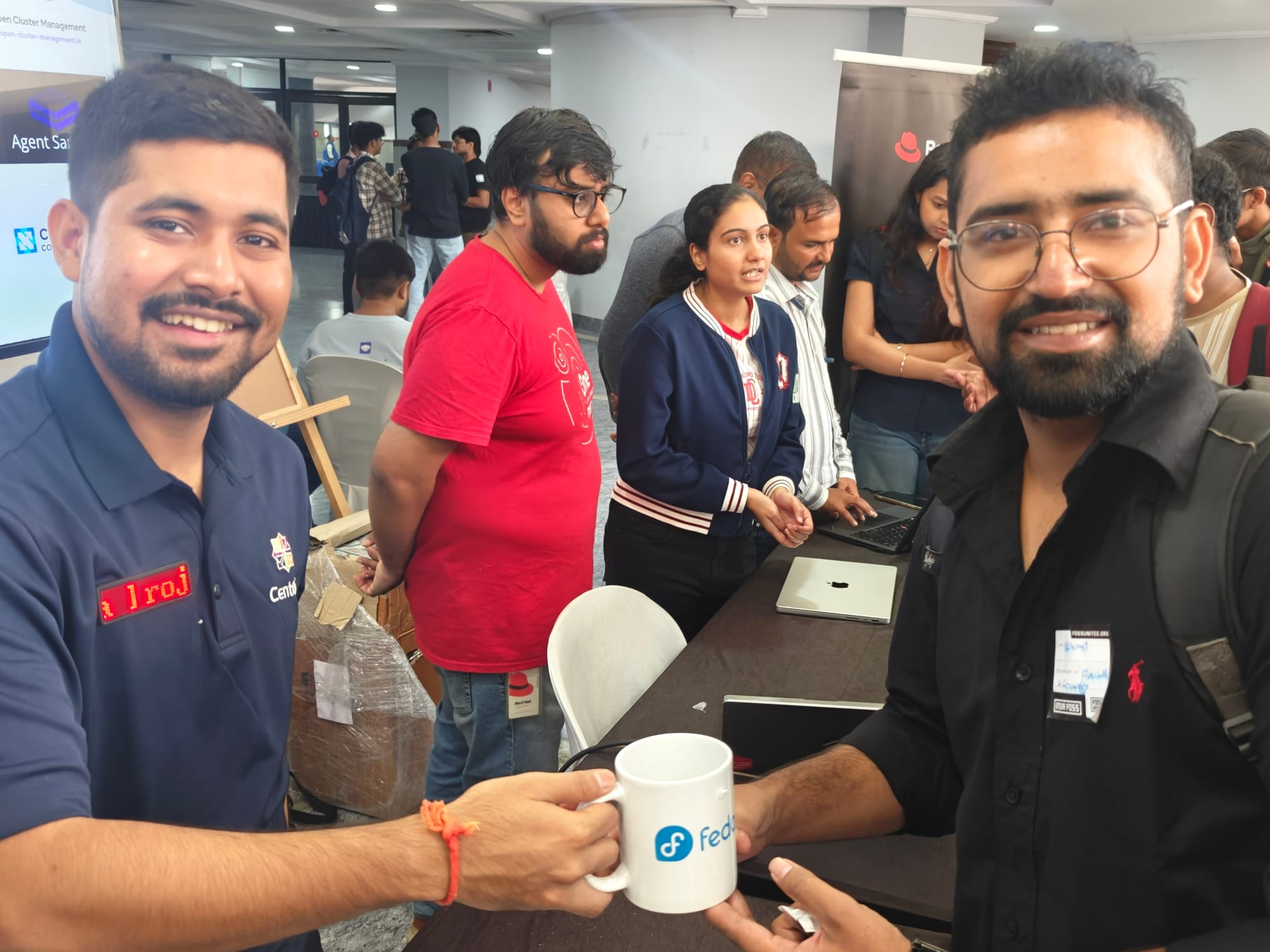
Taking one unit of the Ceramic Branded Coffee Mugs at a time to keep the booth conversations going, we were surely able to draw visitors into an interactive task for which Samyak had created the poster. Being this close to our community of users and contributors at an in-person event allowed us to have a unique approach towards gathering feedback. While our questions were subjective in nature and we strictly made a point of not collecting personally identifiable info, we were curious about how this feedback could help shape the future of Fedora Linux. I got to meet various people from both technical and managerial backgrounds who had thoughts on an ideal Linux distribution. As a gesture of thanks, we handed out the limited-edition swag units, all while introducing some friendly competition every now and then whenever a group appeared to keep things lively at our community booth.
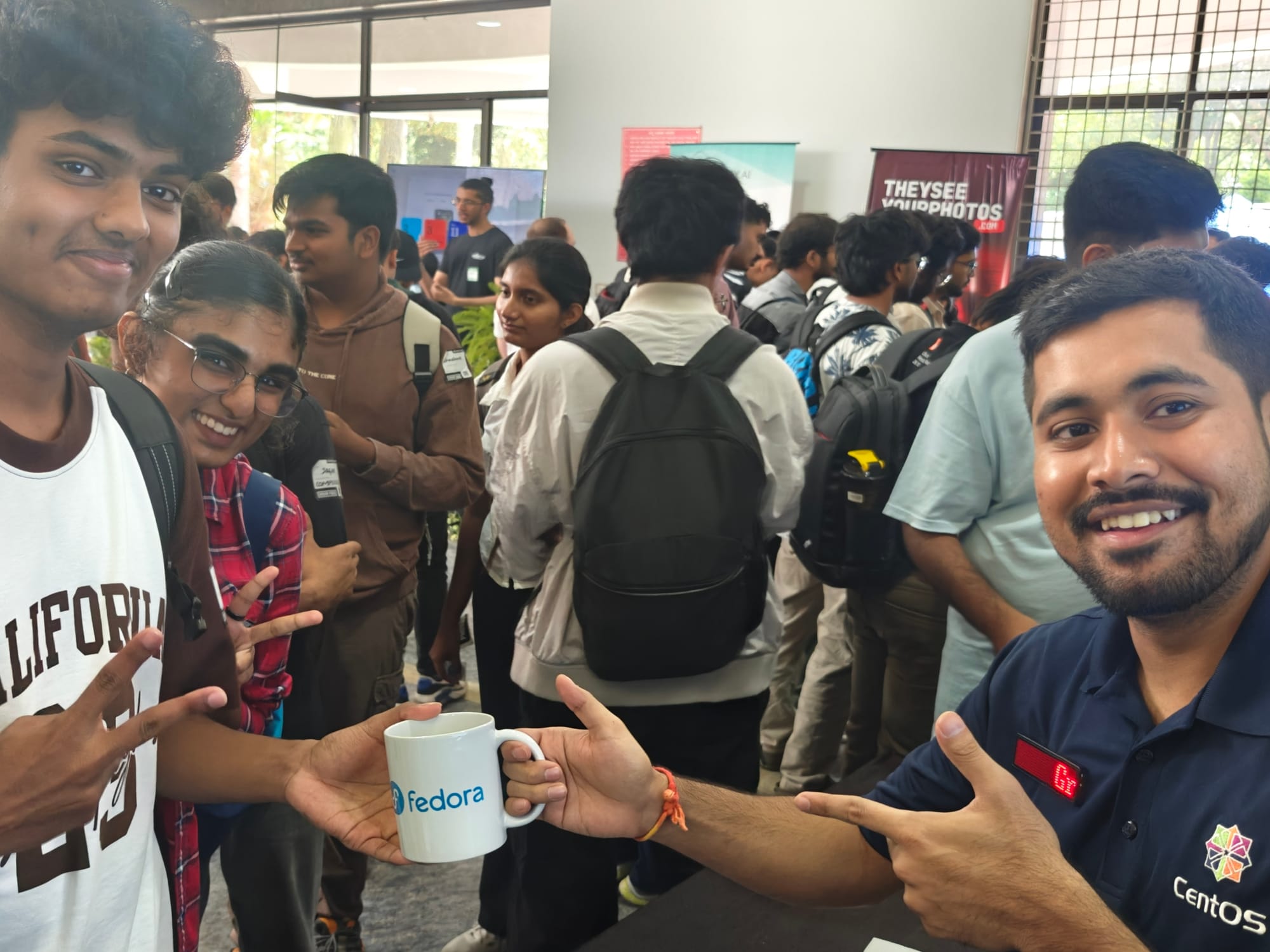
In hindsight, the change in our approach towards engaging visitors, from a more passive Google Form during DevConf.IN 2026 to a more active human interview at IndiaFOSS 2026, felt well-guided. While being joined by Sudhir Dharanendraiah, the PyTorch representative, I also got to catch up with him after having met him about six months back. Amidst engaging with the booth visitors, Samyak and I did not realize how we ended up spending most of our time at our community booth itself, even when the designated duty was for the first two hours alone. That was, of course, not a problem; as Rajan mentioned, it was extremely appreciated that we were going above and beyond in steering the crowd of nearby attendees at the venue entrance towards our community booth. The two of us did find ourselves at our energy's limits as we temporarily wrapped things up around the lunchtime.
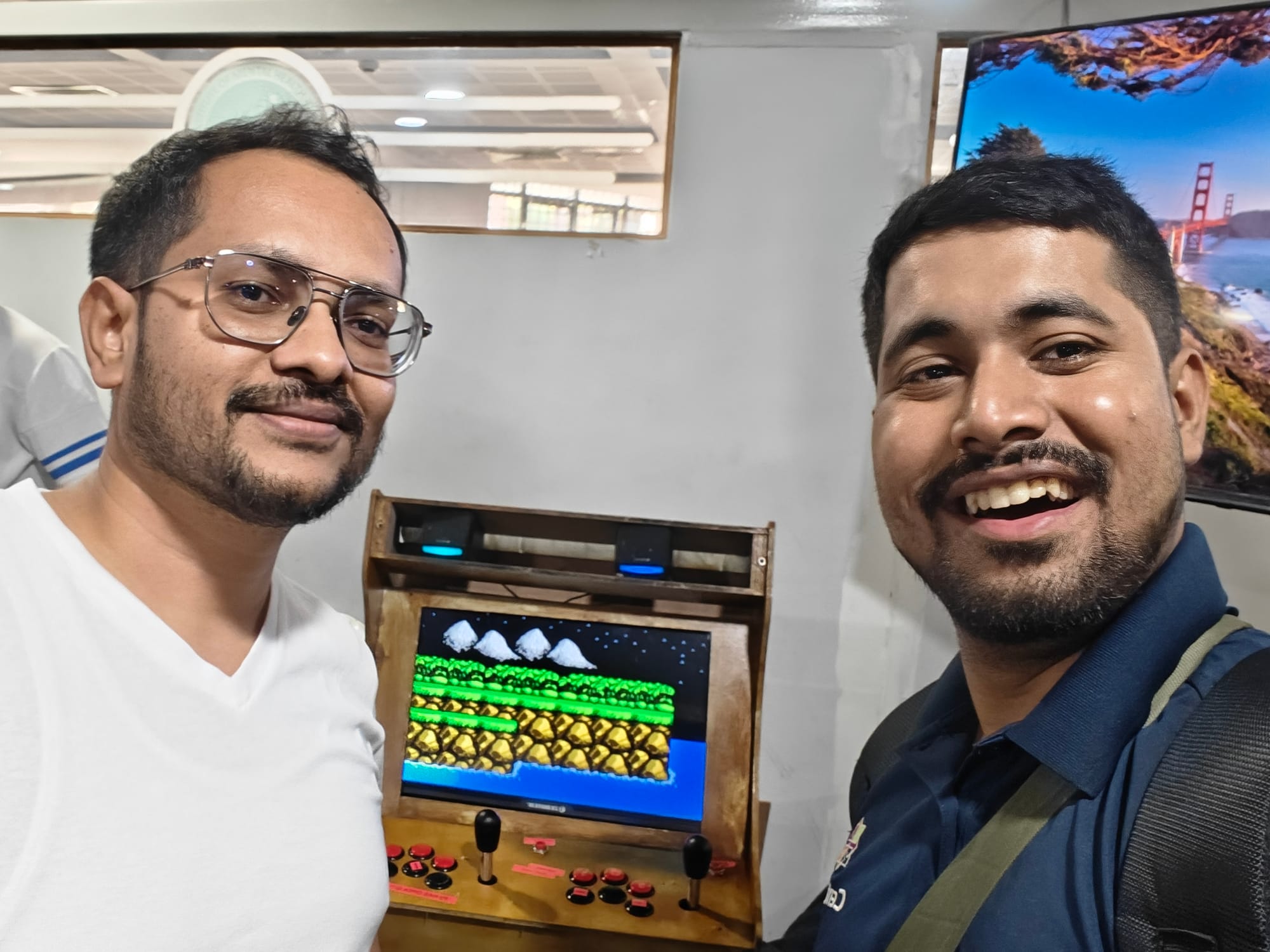
After a brief run-in with some familiar faces from the Debian Project, namely Ananthu CV and Abhijit PA, and also with some FOSSUnited organizers who came to us for sponsor feedback, we left for the food place. Getting visibly frustrated by the long queue at the serving area, we briefly considered heading out for lunch, only for us to realize later that there were few good places nearby. The closest one was a couple of kilometers away, and we would not be able to return in time if we were to travel there through Bengaluru's traffic. Turning back to the event lunch by around 0130pm Indian Standard Time, we found that the previously huge queue had subsided greatly by then. With no place to sit and eat, we resorted to refuelling ourselves with some Boiled Rice, Mattar Paneer, Mixed Vegetable, Chilled Raita, Warm Chapatis, and Gulab Jamun while standing near the rear exit of the venue.
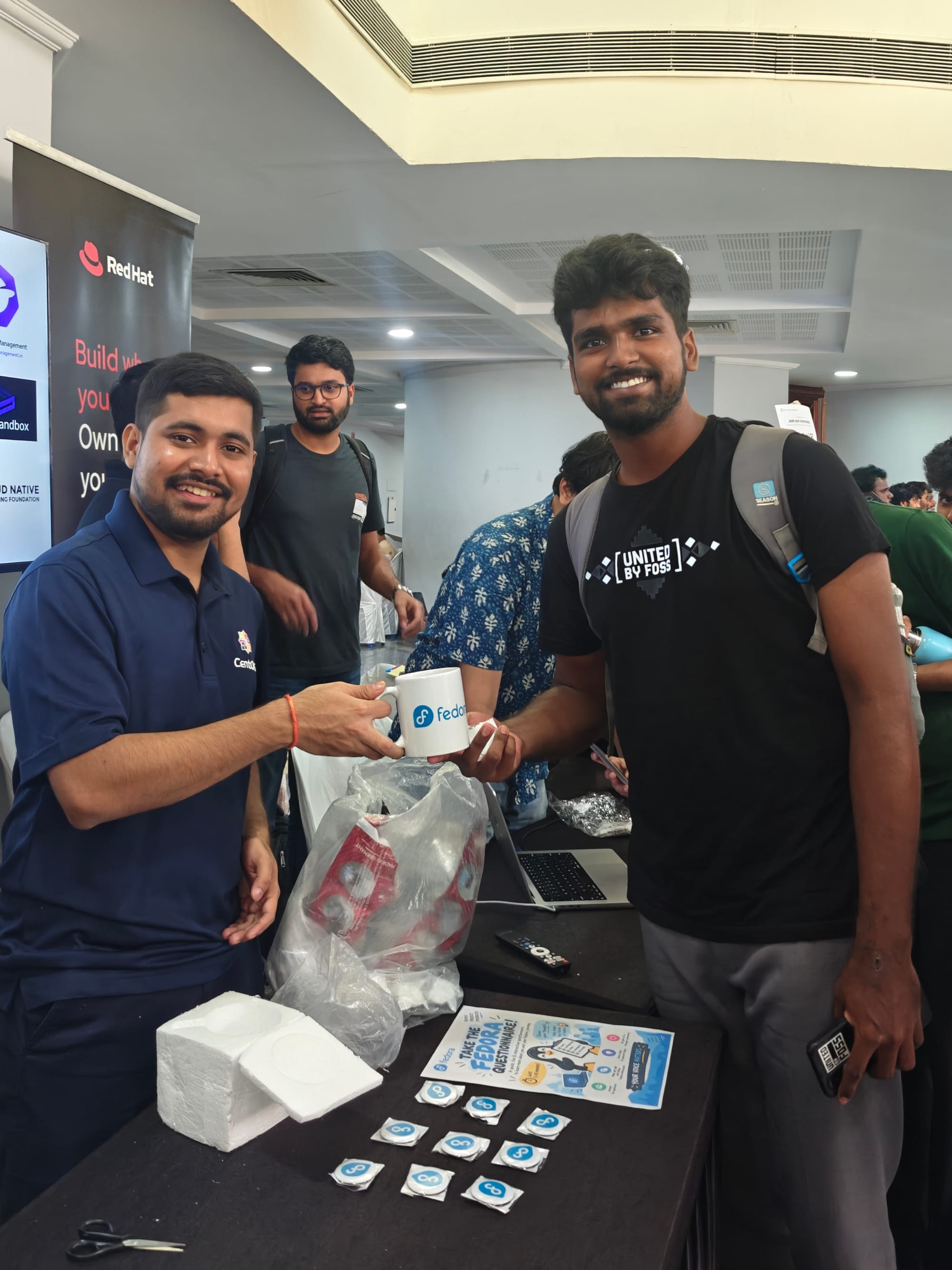
Finishing off our food by around 0200pm Indian Standard Time, we still had half an hour more to kill before heading back to the community booth. We used this time to explore other community booths that were located at the event venue. It would have been a waste not to interact with FOSS friends from various teams just because we were too occupied representing our own. There was learning to be had, not just from the enthusiastic visitors coming to our booth, but also from being one of the visitors to the neighbouring booths. That led me to having a lively chat with the folks representing F-Droid about the recent unfair restrictions introduced by Google on certified Android handheld devices. Leaving Samyak in a quiet hall on the first floor to recover, I continued by myself to explore the booths on the other side of the event venue, which were mostly about the embedded electronics.
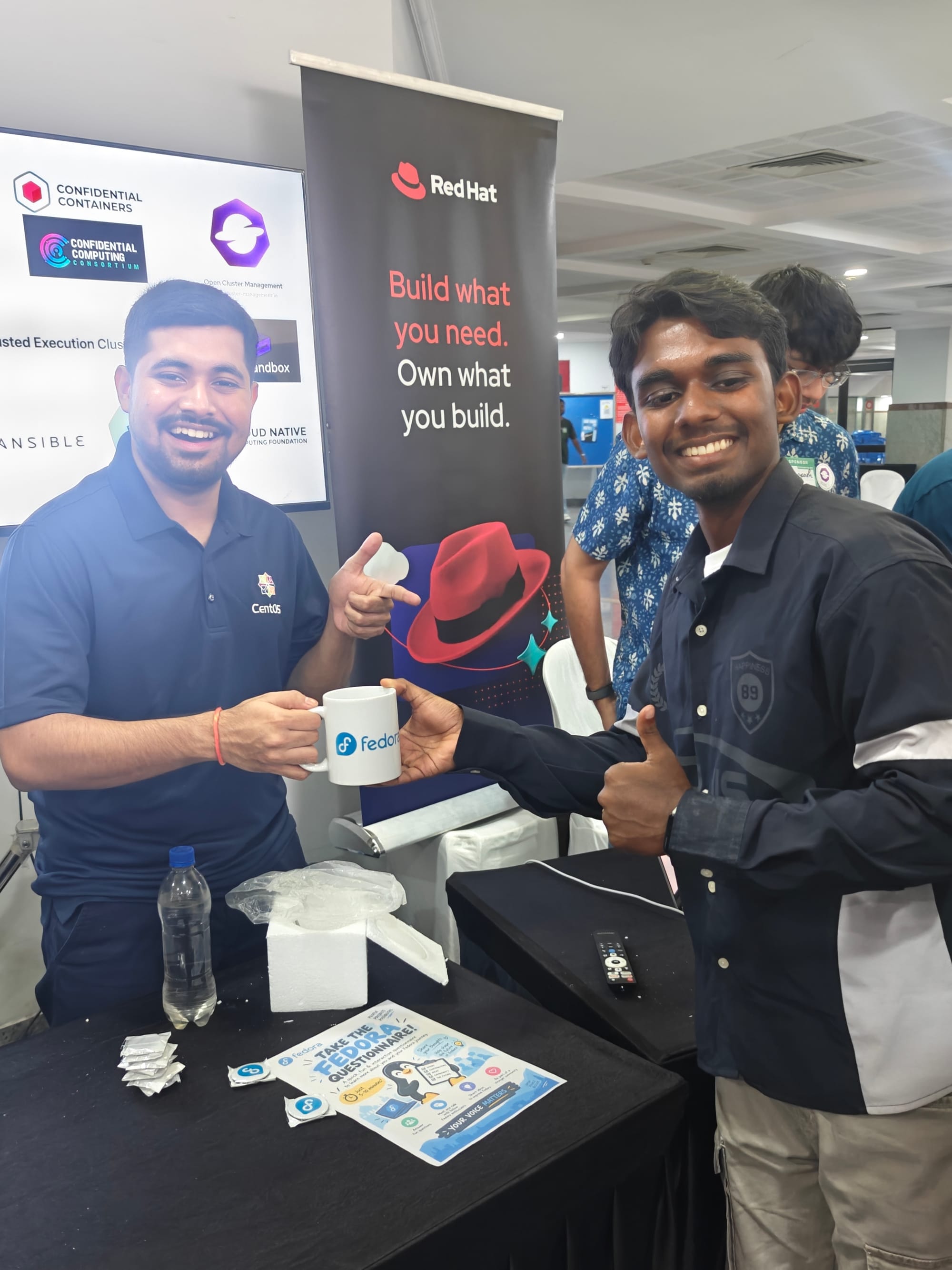
With its majority portion conveniently hidden behind thick vegetation, NIMHANS Convention Center Bengaluru was a deceptively huge location. I could not have guessed that there was an entire second part of the floor being shared by the Red Hat Community Booth with others because of the impressive floor planning. In the hardware section, the couple of event booths that caught my attention exhibited low-profile, manually crafted ergonomic mechanical keyboards and various useful ESP32-based trinkets. It was quite the coincidence to run into another FOSS friend whom we met during FOSSAsia 2026, Anuvrat Parashar, with whom I caught up and shared a few clicks. At around 0245pm Indian Standard Time, it was time for me to head back to our community booth for the second half of the Fedora Project representation duty and connect with Samyak for his assistance while returning.
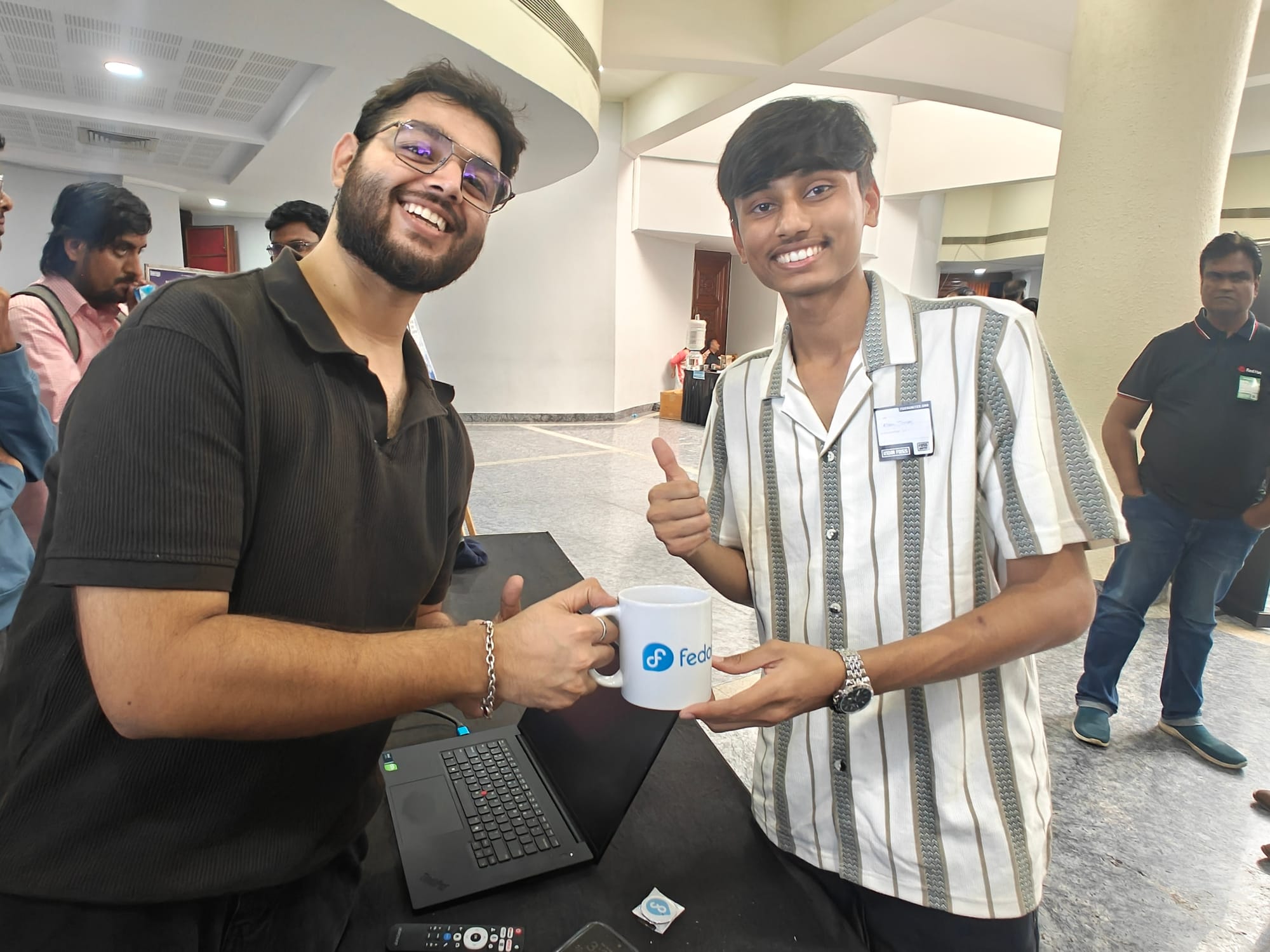
Manoj Kumar Gupta, who was representing the virtualization team, remarked on just how influential Fedora Project's presence was at the community booth, all while reflecting on how the activity nearly died down in both Samyak's and my absence. He was right, though, as swag collectibles can be conversation starters for a bunch of people who might arrive at the event booth for collectible trinkets but also stay back for the interesting conversations that we have to offer. With our swag units displayed on the booth desk again and Samyak started the discussions, I got the FOSSUnited tees for us that Rajan had kept aside for the event sponsors. Seeking coffee with Sudhir at around 0400pm Indian Standard Time led us to have a great catch-up with him at the dining area. On heading back, Veer Kumar even graciously offered his specialized audio recording device for our interviews.
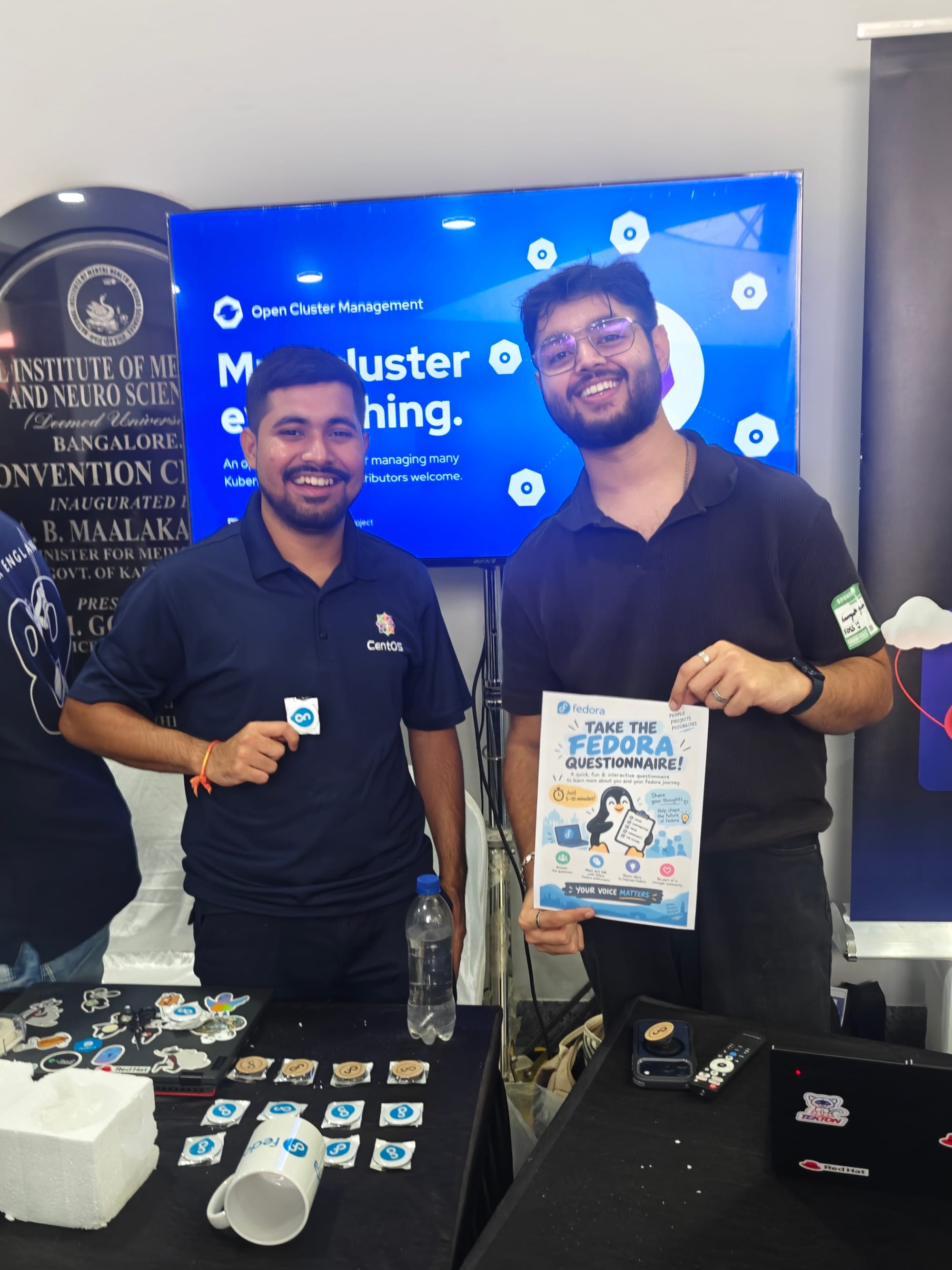
Being super occupied at the community booth, I could not attend Rajan's bite at the 2026 FOSSUnited GB Elections: Meet The Candidates Session. For someone who had been supporting Fedora Project's local presence in India as well as in the APAC region, it felt important to support him. Anyway, we started packing up the community booth at around 0515pm Indian Standard Time after attending to the booth visitors who had missed us during lunchtime. Thanks to Shivraj's query to the FOSSUnited personnel, we did not have to return to the hotel with all the booth supplies, as we could securely store them at the booth area. To ensure that Samyak had what he needed to organize the Fedora Linux 45 Release Party at a local university in the following month, I ensured that I passed on the limited swag units to him so that they could be returned before being used up on the next day.
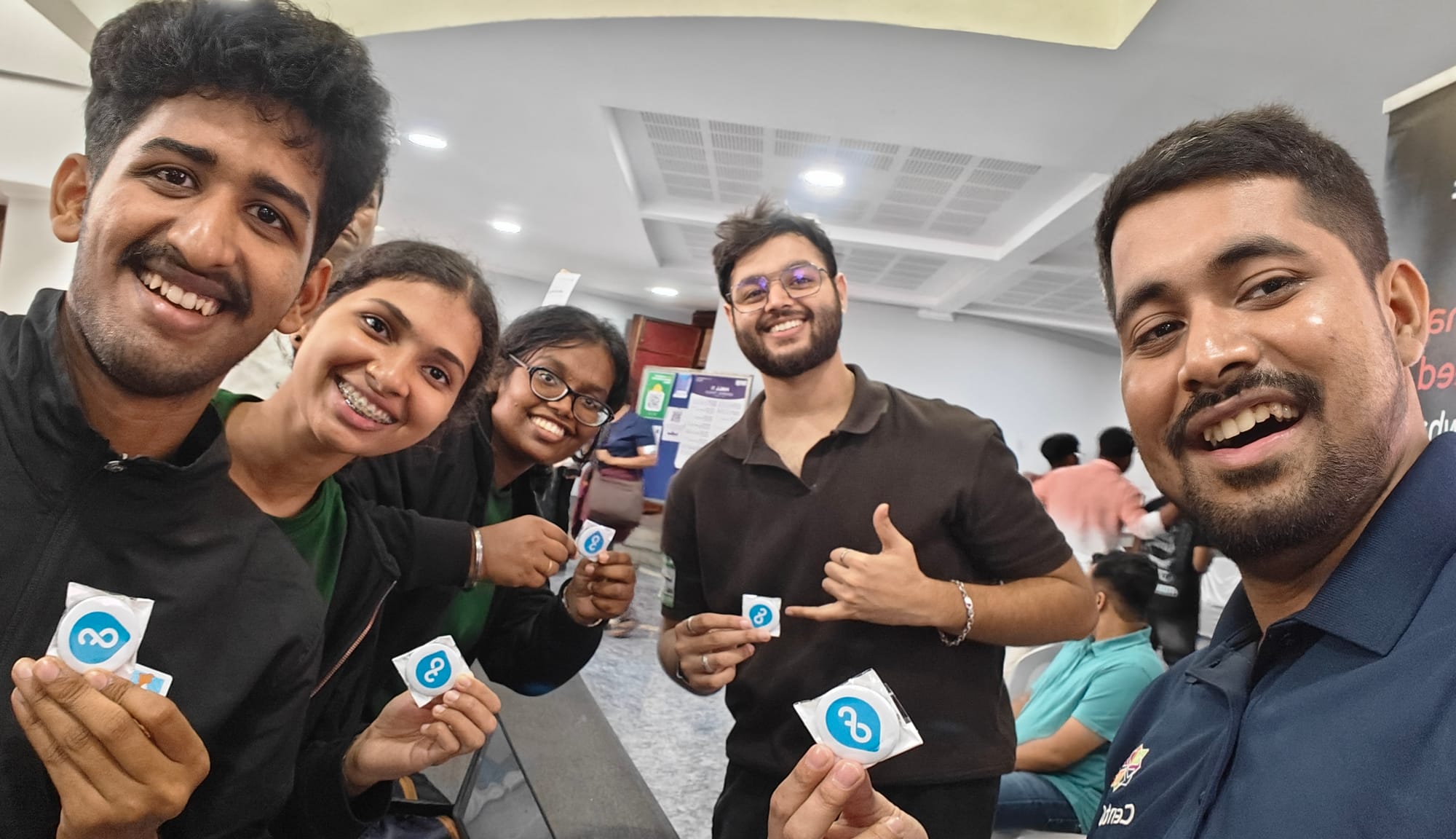
For an in-person FOSS conference where Fedora Project could not timely secure a separate community booth, I scarcely imagined just how much attention we would eventually end up getting. With the folks from Red Hat being mutually supportive, since even they utilized Fedora Linux-powered Corporate Standard Builds on their work devices, this had been an experience like none other. Nine times out of ten, when Fedora Project was a conversation starter at our community booth, it was endearing to observe how most folks stayed back to learn more about projects like Shipwright, PyTorch, Tekton, Confidential Computing, and Ansible, etc. With our evening plans still being tentative at the time, our little Red Hat group decided to have some coffee on our way out. At around 0530pm Indian Standard Time, Samyak was finally able to book a returning Uber ride to take us back to the hotel.
The Bengaluru traffic situation only drifted from bad to worse as the sun started going down, so it took us a while to make it to the other side of the road where the auto-rickshaw had been waiting for us. We headed out once more on Deepesh's invitation to Brooks And Bonds Brewery at around 0730pm Indian Standard Time. Even though I did not hear back from Samyak for a little while when I had booked an Uber ride for us, he was swiftly available in the lobby area after a couple of hours of resting. Moving through the evening Bengaluru traffic, we were able to make it just in time to see Rajan, Shivraj, Veer Kumar, Gaurav, and Deepesh on their way upstairs in the building's elevator. For a dining experience that had been overbooked on that weekend evening, Deepesh definitely made the right call in booking us a large table well in advance to ensure that we were able to secure one.
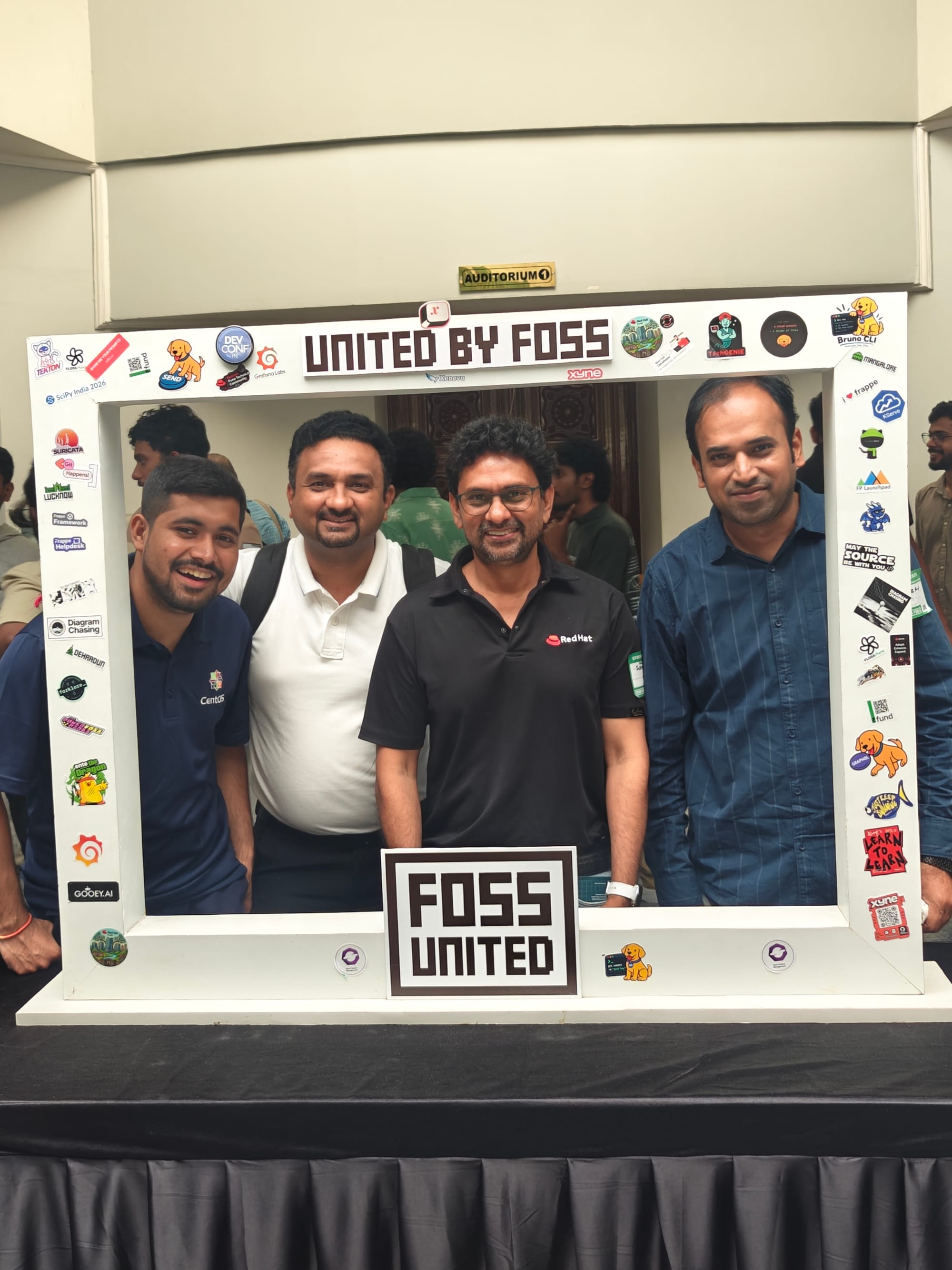
It was a lovely evening catching up with the folks over some nice drinks and tasty bites. Partitioning the dining table to place ourselves based on dietary preferences, we stuck around to see if we could get ourselves a table outdoors. With Samyak briefly checking with one of their attendees and returning empty-handed, we stuck around with the table that we had. Looking back on it, I would not have necessarily advised an outing like this in the evening if one was to wake up early the next day. I still found myself hanging back with the folks till 0130am Indian Standard Time. As luck would have had it, it was down to me again to set things up at the Red Hat Community Booth the next morning. I was uncertain about the task being fulfilled, so I wasted no time in falling asleep and recouping energy once Samyak and I were finally able to get an Uber ride back to the hotel at 0230am Indian Standard Time.